
HOW TO PLAN AN UNFORGETTABLE SERENGETI SAFARI
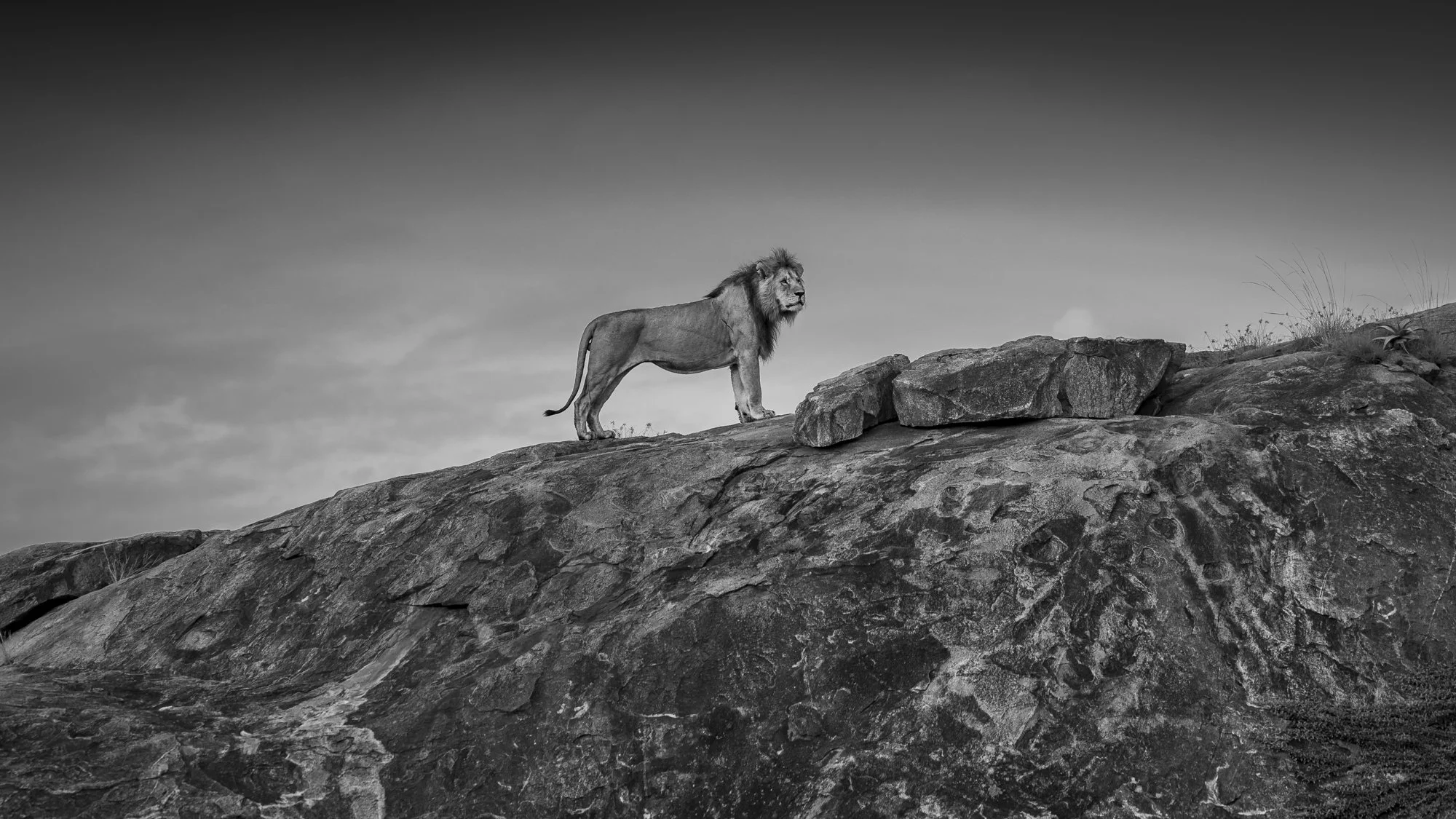
Male lion stands on top of kopje
How to plan the ultimate Serengeti Safari
As I reflect on the images from my fourth, and best yet, photo safari to the Serengeti I kept coming back what made it so unforgettable. Whilst the Masai Mara conservancies always feel like home, there is a grandeur to the Serengeti, a sense of being part of something truly ancient, that makes it one of my favourite destinations for wildlife photography. In a word: epic.
Ever since I discovered the work of Nick Brandt and Federico Veronesi, with their images of lions standing majestically on the ancient granite kopjes, the Serengeti was on the top of my destination list. That was a decade ago. It didn’t disappoint then, and it hasn’t since. And that leads me to my first tip.
Finding the right photography guide for your Serengeti safari
I had long admired Federico Veronesi's fine art photography and knew that the Serengeti was one of his key destinations for small-group photo safaris. Given his deep knowledge of both the ecosystem and the art of maximising photographic opportunities, I booked a private safari with two friends, and have since returned three more times with Federico, mostly on the same itinerary.
Federico is, in my view, one of the finest photographers specialising in African Wildlife, so I can’t imagine doing a Serengeti safari without him. However, as he is in high demand there are other excellent photographers as options such as Will Fortescue, Harry Skeggs and Edward Selfe. All have been leading their own groups across the same plains in the last few weeks.
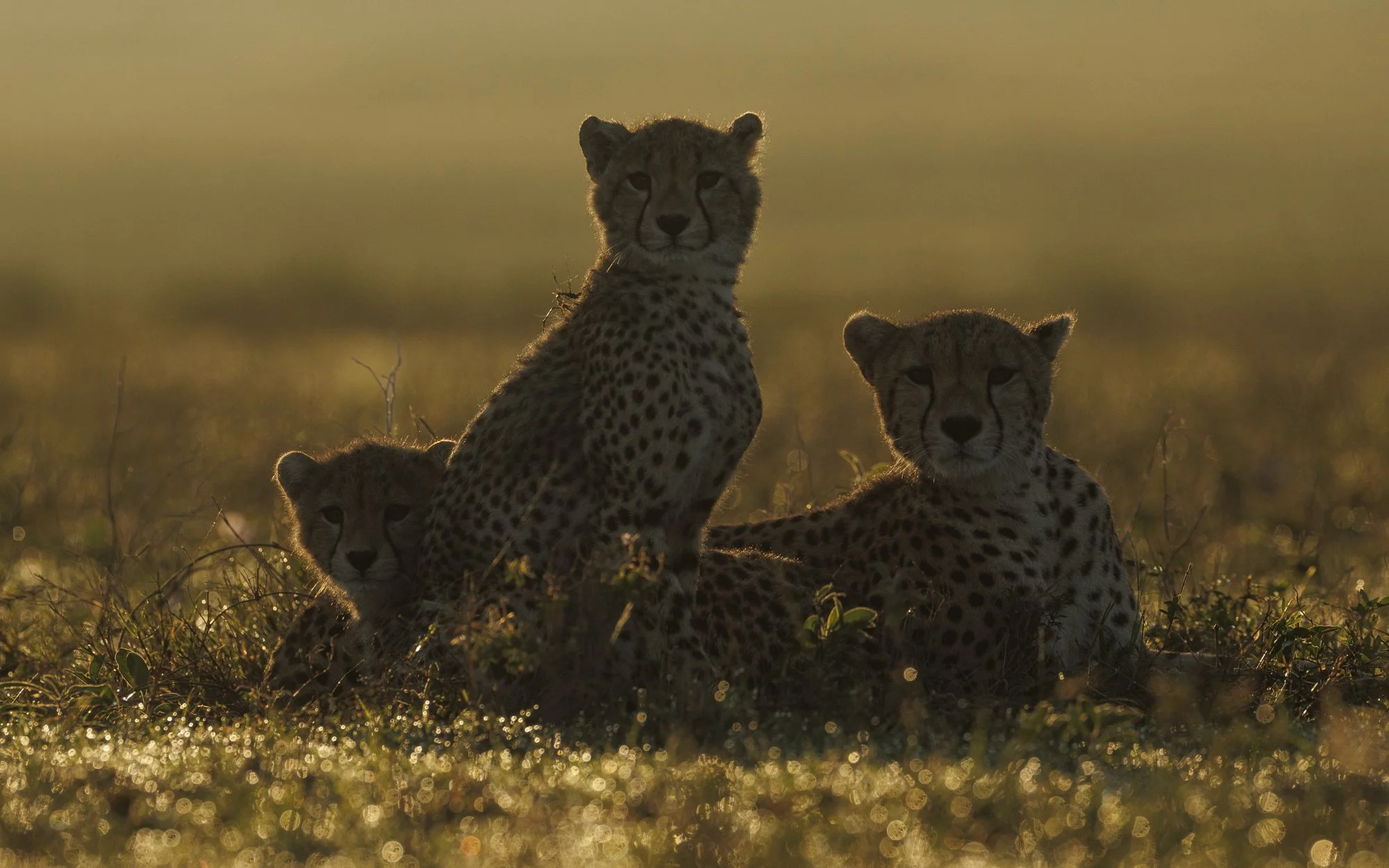
Cheetah family on the Serengeti plains
Why local guide knowledge is the secret weapon on any safari
However skilled the photography leader, what truly makes or breaks a safari is the local driver-guide. Whether sourced from the camps themselves, particularly those run by Asilia or Elewana, or through specialist operators such as Maasai Wanderings, these are the people who know where the cats are likely to be at dawn, and where they are likely to be at dusk.
One significant advantage of working with a company like Maasai Wanderings is continuity: you keep the same guide across a 10-day itinerary, regardless of how many camps you move between. That ongoing relationship, understanding what you are looking for, and accumulating local intelligence I think is invaluable.
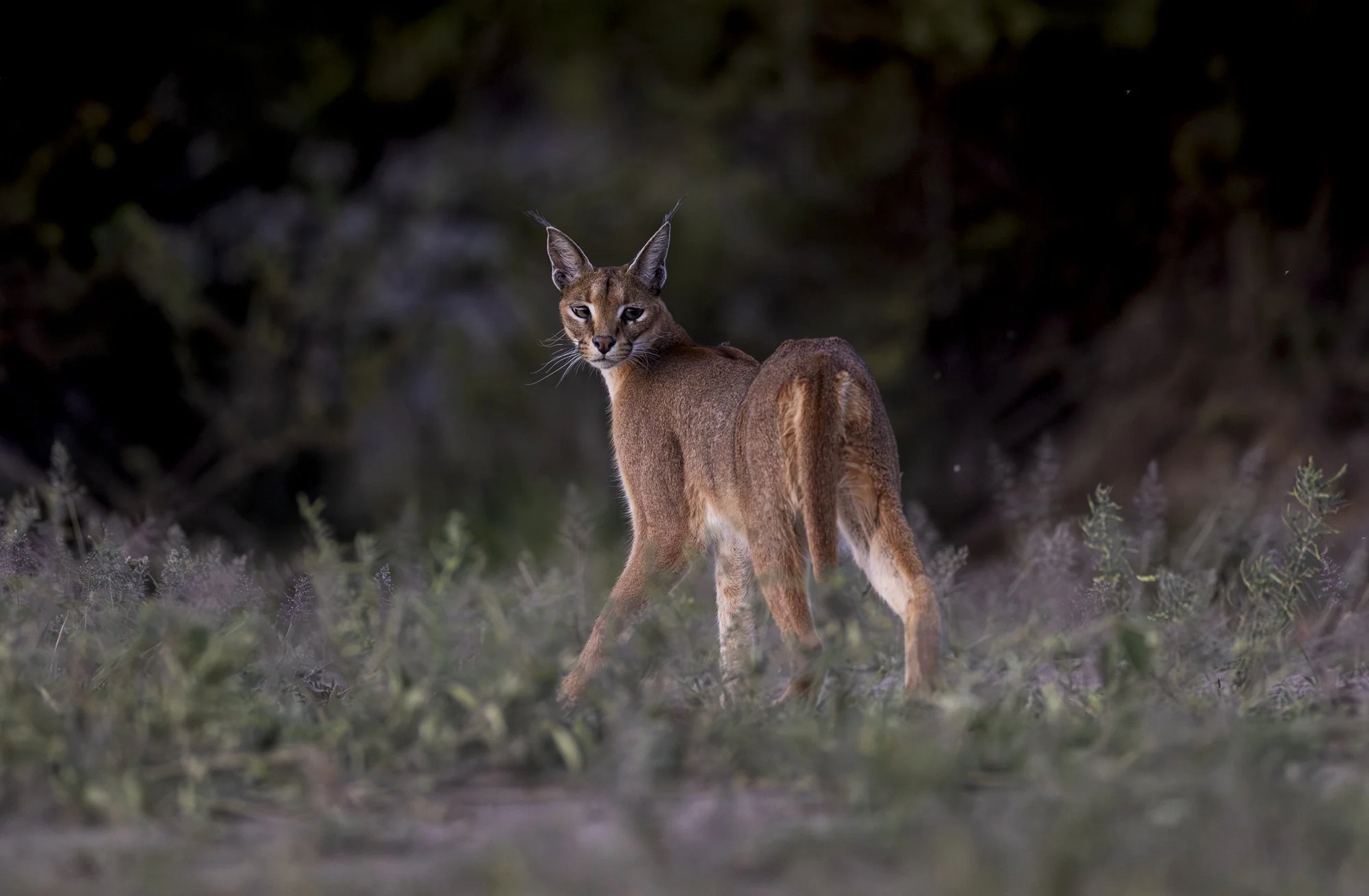
Rare sighting of a Caracal in Ndutu
The best Serengeti safari route: from Arusha to the central plains
Federico's recommended route which he has used consistently for many years, and for good reason. It balances variety, wildlife density and photographic opportunities in a way that works equally well for first-timers and repeat visitors. It also gives you a full appreciation of one of the worlds oldest ecosystems on the planet.
• Arusha — 1 night (gateway and starting point)
• Ngorongoro Crater — 1 night
• Ndutu — 4 nights (calving season and big cat country)
• Southern & Central Serengeti — 5 nights
If budget allows, my single strongest tip is to extend your time in the southern or central Serengeti. I stayed on for five nights after my most recent group safari and had some of the most extraordinary sightings of the entire trip, with several entirely to myself. It was a perfect way to end a Serengeti visit.
Why each destination on this route is unmissable
Ngorongoro Crater: Africa's most spectacular wildlife amphitheatre
Every time I descend from the crater rim to the floor below, I am stopped in my tracks. The sheer scale of this ancient volcanic caldera, and the knowledge that wildlife has roamed here for millennia is genuinely humbling. For any nature lover I highly recommend visiting the Crater once in your lifetime.
Photography inside the crater does present real challenges. As a UNESCO World Heritage Site, strict rules apply: windows cannot be fully open, there are no open-roof vehicles, and off-road driving is prohibited. Shooting with a long telephoto lens without full freedom of movement means you are often waiting for the wildlife to come to you.
What the crater lends itself to beautifully, however, is environmental storytelling. This is where my 70-200mm lens came in useful to create wide shots that convey the drama of scale. A male lion in the foreground with the crater walls rising behind him. A herd of elephants tracking up towards the rim. These are the images that capture what makes Ngorongoro so singular.
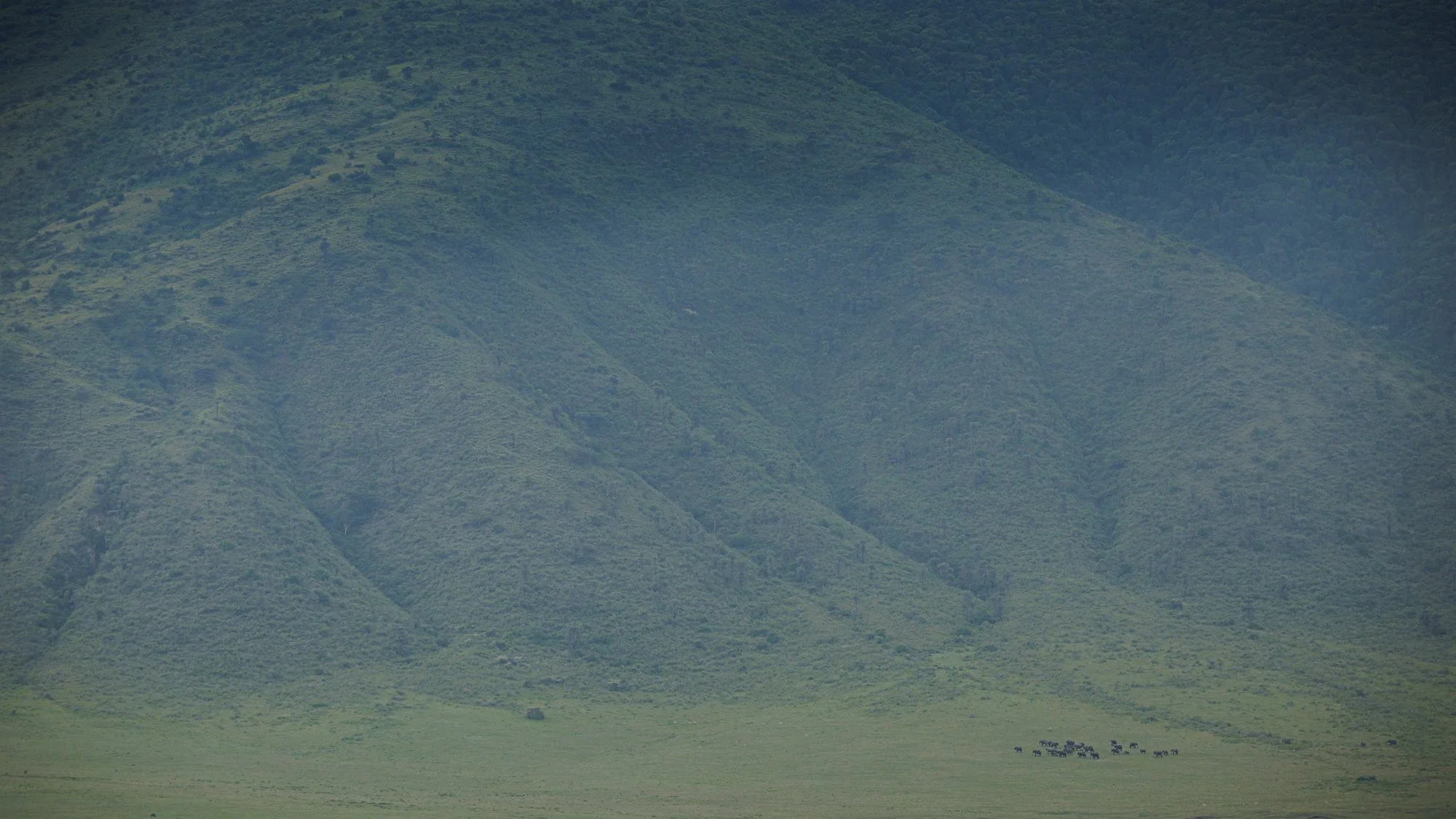
Family of elephants in Ngorongoro Crater
Ndutu: Serengeti's big cat hot spot during calving season
Ndutu during calving season, which is broadly February to March each year, can be extraordinary place to be for wildlife sightings. At this time the annual wildebeest migration is typically in full swing, with hundreds of thousands of animals spread across the savannah plains. Females are giving birth in vast numbers, attracting predators such as lions & cheetah. It also has some wonderful scenic areas particularly the shoreline and woodlands around Lake Ndutu.
This year, however, unusually heavy rains across Tanzania and Kenya shifted the migration further south, concentrating the wildebeest in the southern Serengeti rather than around Ndutu. The result was a quieter savannah than in previous years, which is a reminder that even the best-planned safaris are ultimately at the mercy of nature.
We still had exceptional lion sightings around Lake Ndutu, including one of the most unusual pieces of lion behaviour I have ever witnessed: a lion charging towards wildebeest crossing the lake from the opposite bank, before locating and retrieving a drowned wildebeest calf. Truly extraordinary.
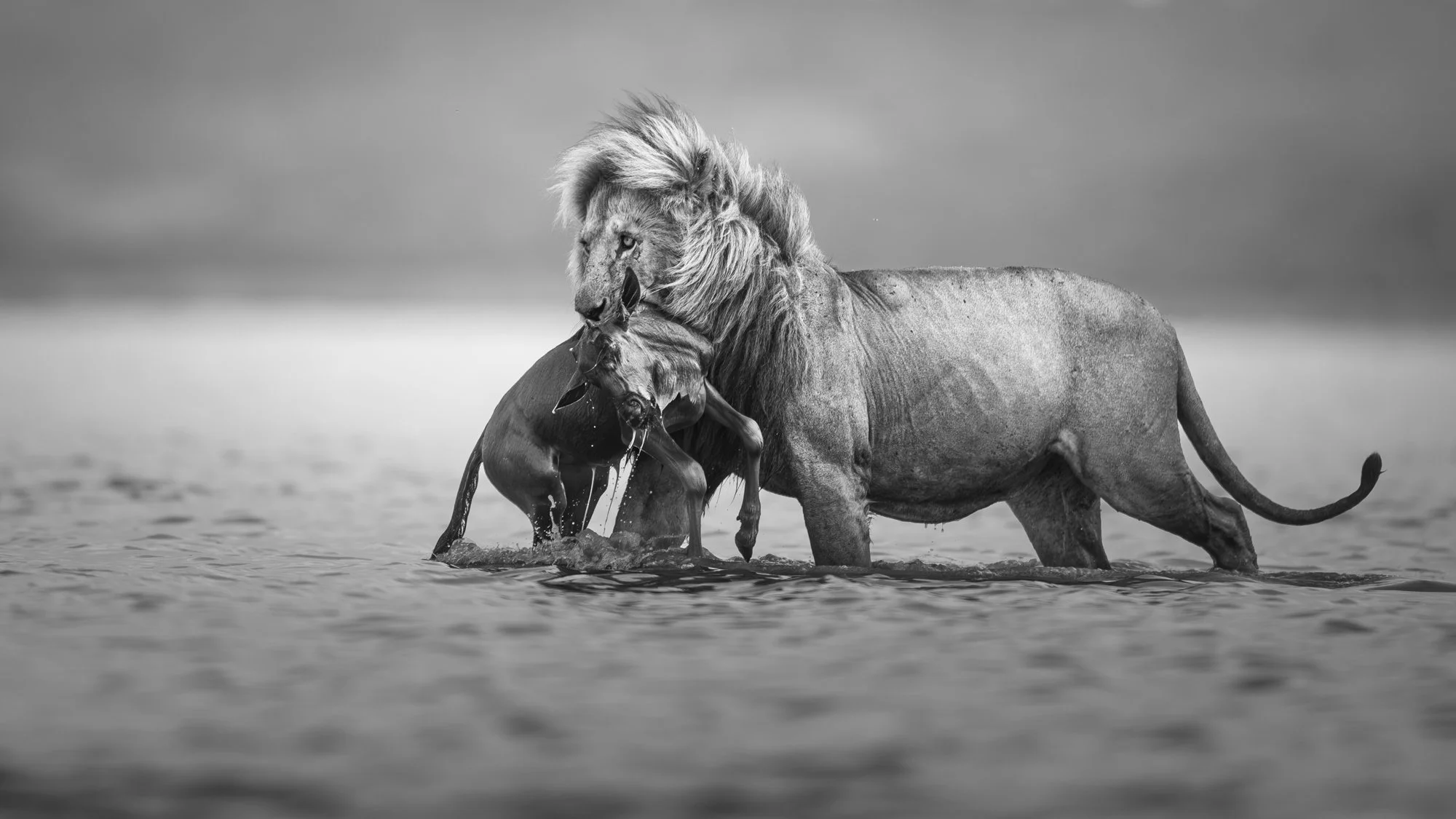
Lion in Lake Ndutu with wildebeest calf
Ndutu is also one of the few places where you can encounter tree-climbing lions — a behaviour far more associated with Uganda's Queen Elizabeth Park or Tanzania's Lake Manyara. We had a sighting of several lionesses in a tree entirely to ourselves. It is also historically a good area for caracal and serval sightings, though this year proved the exception.
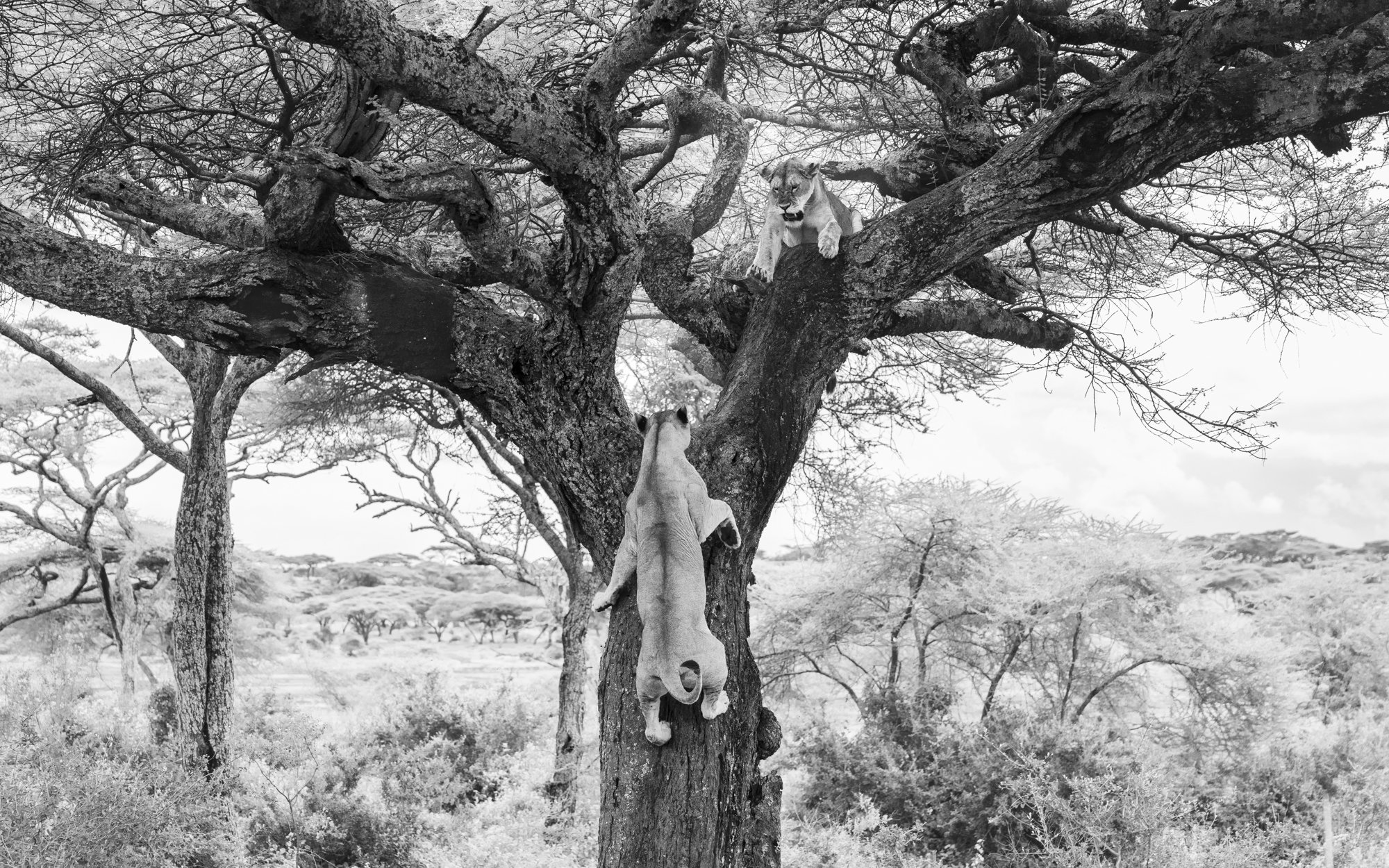
Tree climbing lions in Ndutu
The main event: southern and central Serengeti lion photography
The endless plains. The vast open skies. The ancient granite kopjes rising from the savannah like majestic monuments. And often, just your vehicle becoming part of that scenery.
It was everything I had hoped for on my first visit over a decade ago, and that feeling has not dimmed. Lions have roamed these plains for over 500,000 years and when you are sitting at the base of a kopje at Sametu watching a mating pair at the summit while the legendary lion Bob Jnr makes a brief, regal appearance, I felt humbled to be part of that history for a moment.
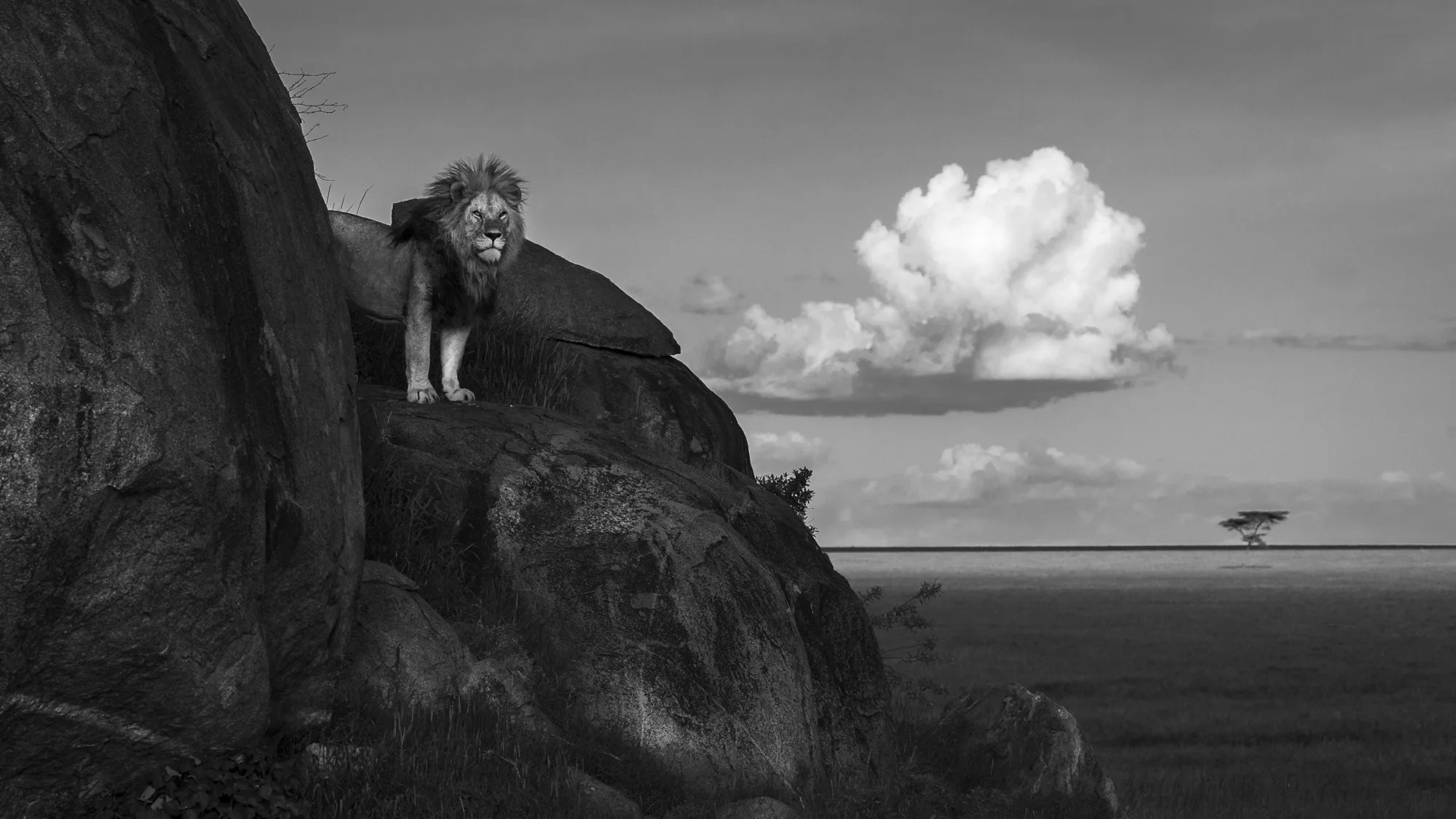
Male Lion Bob Jnr stands on kopje
This year, because of the rains and the resulting grass growth, the migration, and with it the apex predators had concentrated around Gol Kopjes, close to our base at Karibu Woodlands. The consequences of this led to exceptional wildlife encounters with lions and cheetah both on the plains and on the kopjes. Three separate cheetah trios were actively hunting during our stay, a couple successfully plus I got to saw an incredible athletic wildebeest kill from a lioness which was extraordinary to witness. All this plus a serval and a caracal to round out what was the most productive big cat safari I have experienced.
Pro tip: Staying in camps in both the southern and central Serengeti spreads your odds. Each area has its own kopjes and its own resident prides — and the density of sightings will follow the wildebeest. By splitting your nights between two zones, you hedge against the migration's unpredictability.
This year, flooding in the central Serengeti kept the migration anchored in the south, meaning guests at Ol Mara and Namiri Plains were making longer daily drives to reach the action around Gol Kopjes. Something worth factoring into your camp selection.
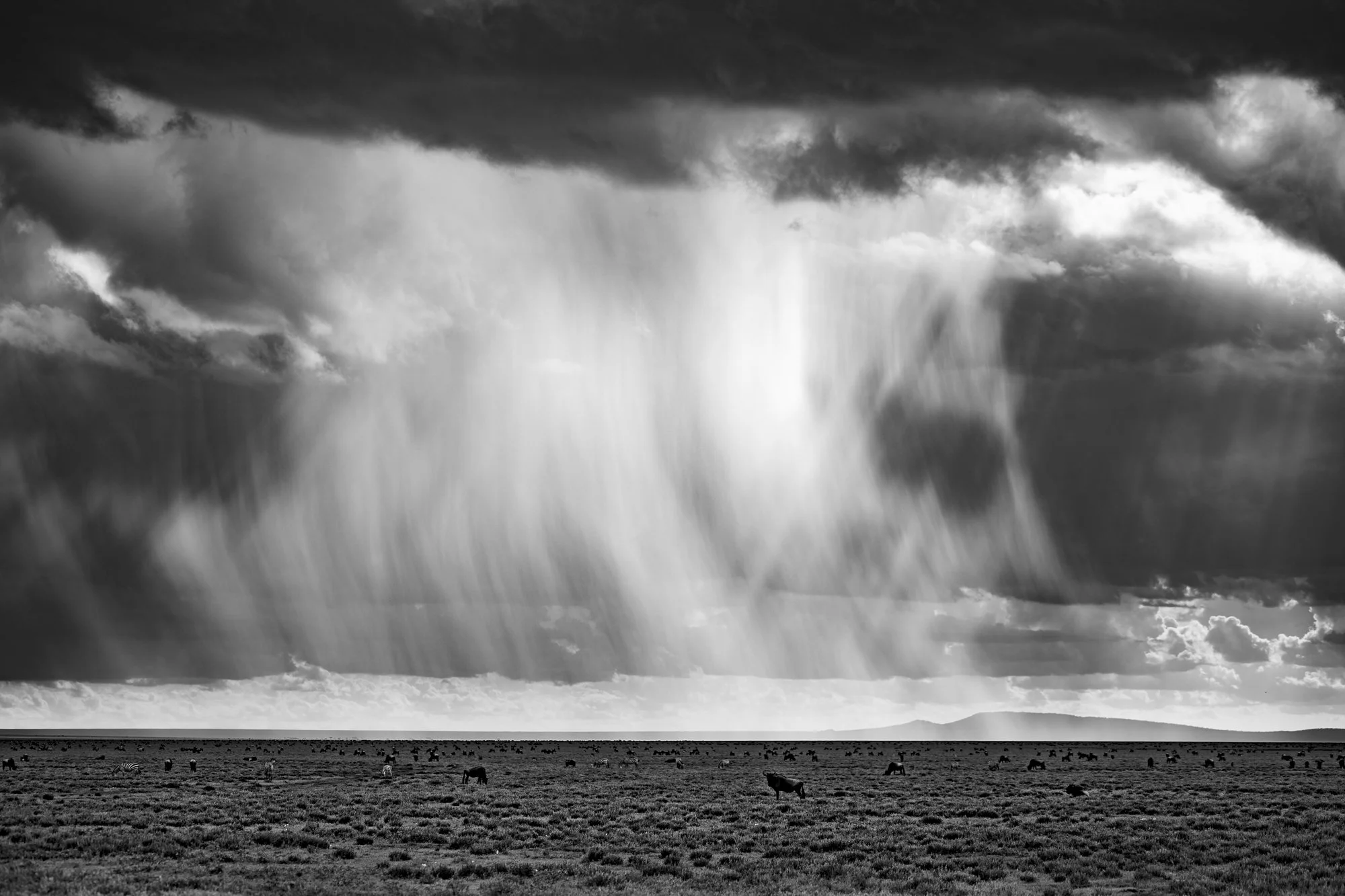
Serengeti storm skies over the plains
Best time to visit the Serengeti for wildlife and big cat sightings
My own Serengeti safaris have all fallen in February or March, and fir many reasons highlighted above it remains my personal recommendation for anyone prioritising the wildebeest migration and big cat activity.
That said, the broader window of November through April offers consistently strong conditions. The short rains (November) freshen the landscape, and by December the migration begins its southward push towards Ndutu. From January, calving is underway in earnest.
Outside of this window, which is roughly May to October, the migration is usually moving north towards the Masai Mara for the river crossings, and while the Serengeti's resident wildlife remains, the concentration of plains game that drives predator activity is reduced. Sightings can become less predictable, though the drier conditions do make for easier game viewing in some respects.
My recommendation: February and March for calving season and peak big cat sightings. November to April for the full migration experience
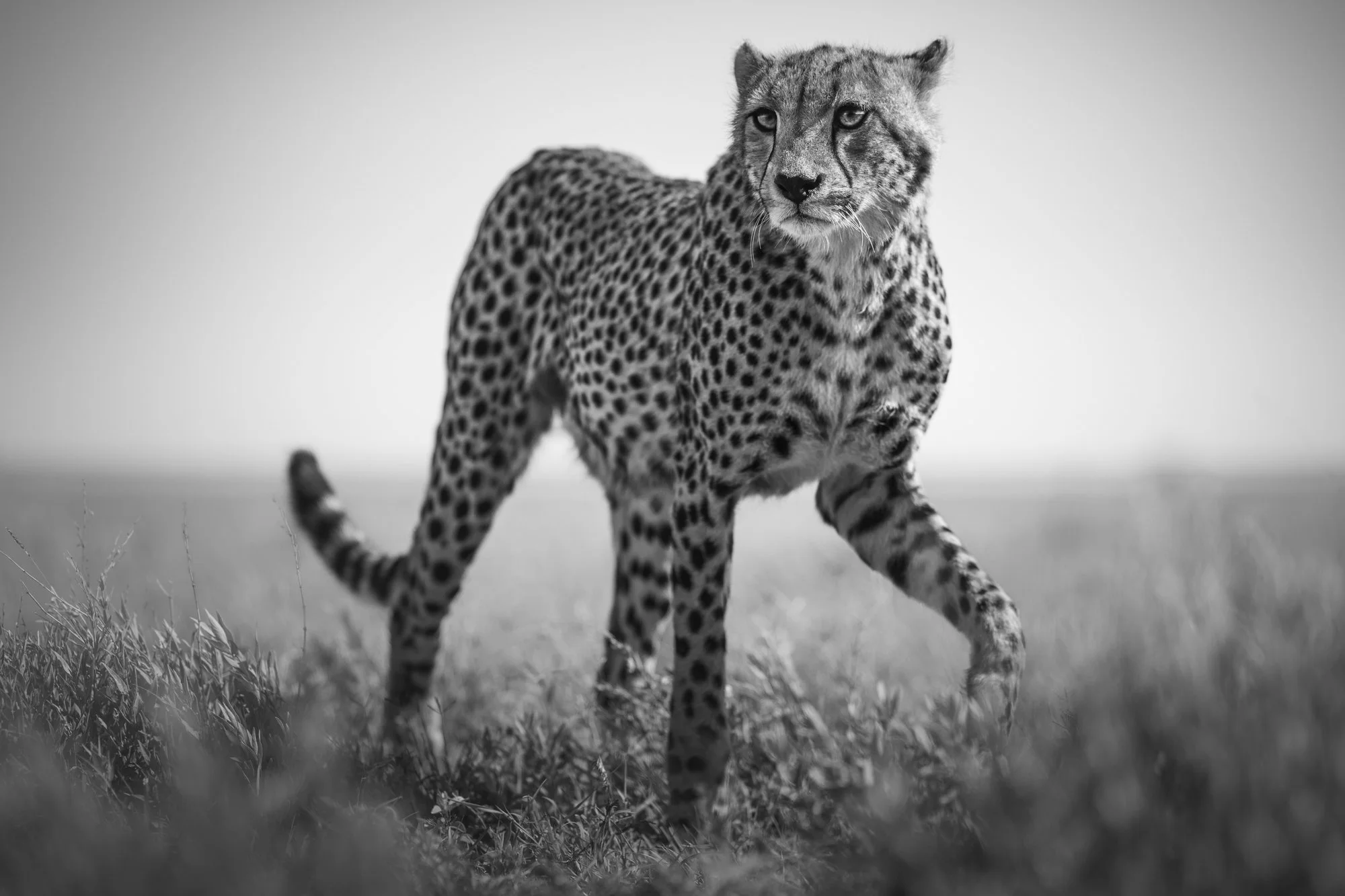
Cheetah mother on the hunt on the Serengeti plains
Best safari camps in the Serengeti: where to stay on your route
Every camp on this route offers comfort, good food, WiFi and laundry, so the basics are well covered. Here is my honest assessment of each:
• Mount Meru Lodge, Arusha — A comfortable one-night stop before heading into the field. Friendly staff, attractive grounds with excellent birdlife and the occasional Colobus monkey. Does the job well.
• Ngorongoro Serena Lodge — A large lodge catering for high volumes of guests, so service can be stretched. Its main advantage is proximity to the park gates at the crater rim, which saves time on early morning descents.
• Lake Ndutu Luxury Tented Lodge — A lovely camp in an excellent position close to Lake Ndutu, ideal for early morning lion drives at sunrise. Attentive staff and good food, with lunch the standout meal as it is freshly cooked to order as opposed to buffet dinner.
• Karibu Woodlands Camp, Southern Serengeti — A fantastic camp close to Naabi Gate and the Gol Kopjes. Spacious, comfortable tents and excellent staff. Loved my stay here though some tents are a long walk from main lodge. Highly recommended.
• Ol Mara Camp, Central Serengeti — Top-tier luxury in the central Serengeti. Exceptional food, with a warm intimate atmosphere
• Namiri Plains — Another top-class property, though slightly less intimate than Ol Mara or Karibu Woodlands. Namiri is particularly favoured by photographers for the quality of its dedicated guides, with many choosing it as a single base for the entire central Serengeti stay.
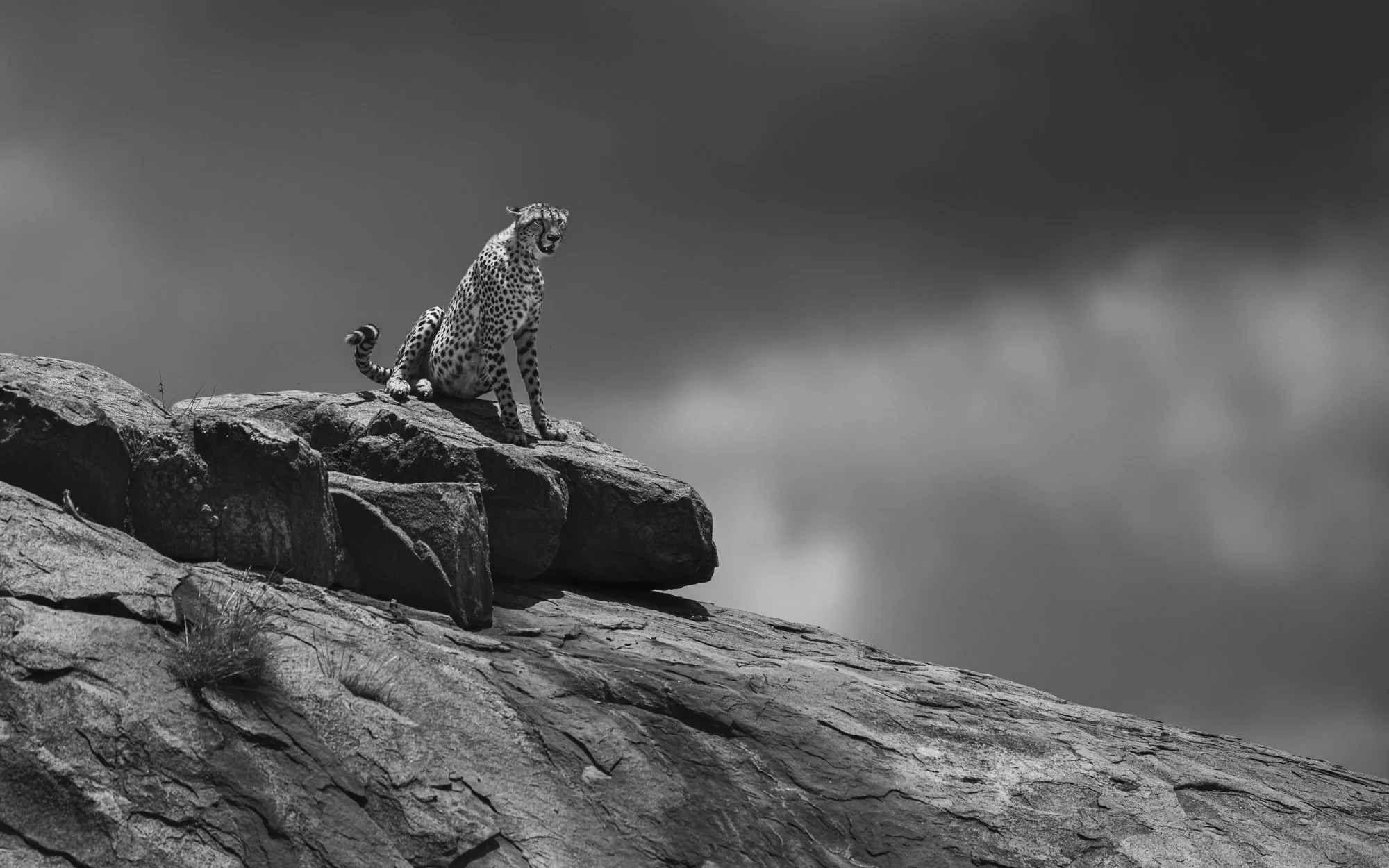
Cheetah on Kopje, Serengeti
Safari photography gear: what I use and what I'd recommend
I travelled with three bodies, the Canon R5 II, R3 and R5, which I paired with 400mm, 70–200mm and 24–70mm lenses respectively. If I had to single out one workhorse lens for kopje photography in the Serengeti, it would be the 70–200mm: versatile, fast and superb in low light.
For those travelling lighter, a 100–500mm lens covers most scenarios well and removes the need for a second telephoto body.
I also made extensive use of a monopod and remote shutter release for low-angle images, particularly effective for lions and cheetahs at ground level. Our vehicle had been specially modified for photography with the left-side door removed entirely, which makes a significant difference to both comfort and composition. If photography is your primary objective, it is well worth asking your operator or camp whether dedicated photography vehicles are available.
Tip: Always ask in advance whether vehicles can be configured for photography. Not all operators offer this, but those that do make a measurable difference to your results.
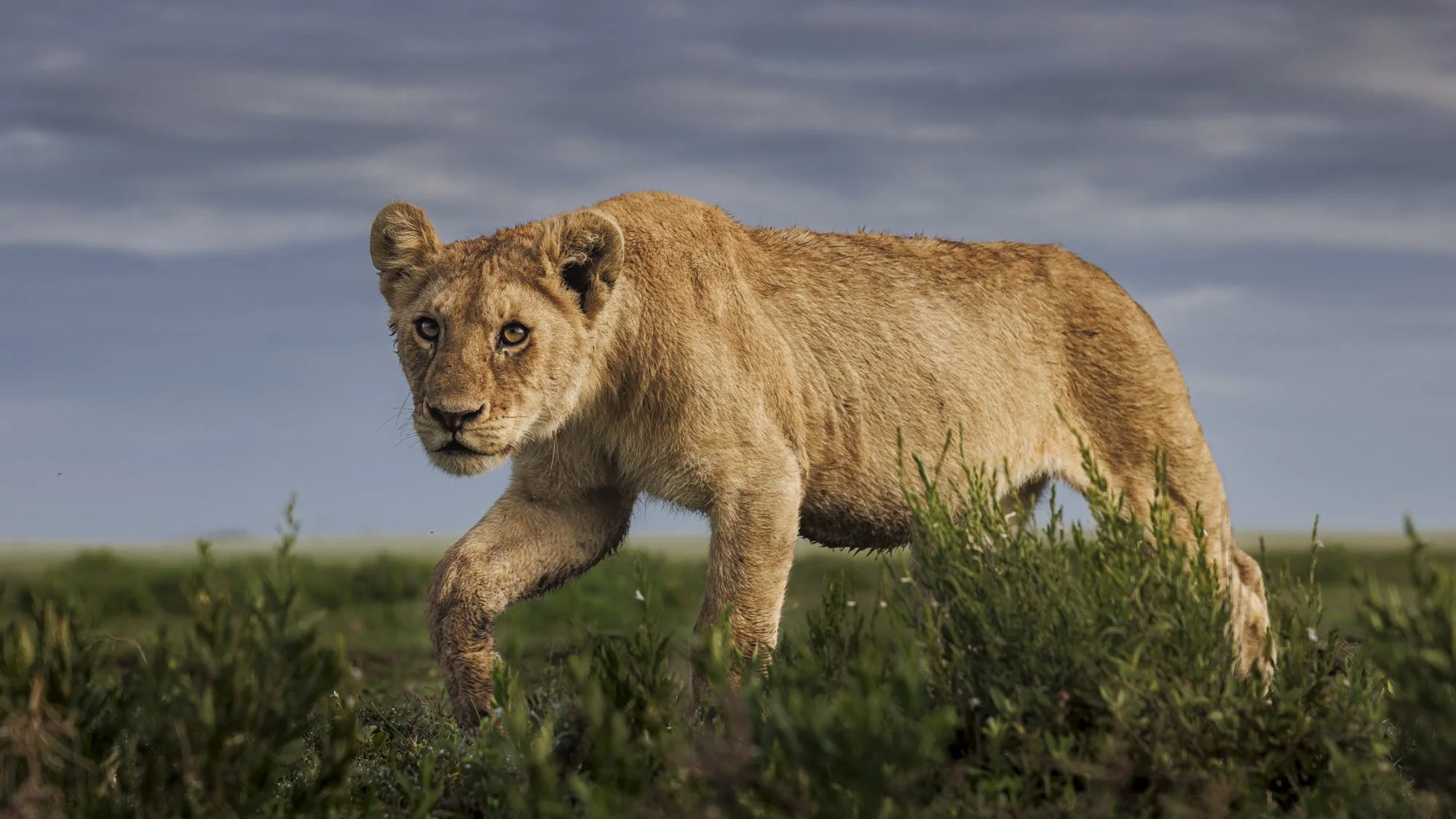
Low angle image of lion cub using monopod
Why the Serengeti remains unmissable for lion photography
When so many wildlife destinations are becoming over crowded, there is something genuinely rare about setting off across the Serengeti before sunrise in search of lions, with no other vehicle in sight. Just you, the wildebeest and zebra on their endless circular movement across the plain, and the kopjes, Serengeti’s sentinels in the distance.
For lion photography, I do not think there is anywhere quite like it. The combination of ancient landscape, extraordinary light and the sheer variety of photographic scenarios, but especially the kopje lion portraits, makes the Serengeti a destination I will keep returning to for as long as I am able.
I hope this guide helps you plan a safari that stays with you long after you land home. If you have questions about any of the destinations, camps or gear I have mentioned, feel free to get in touch.
If you would like to see more of my work from the Serengeti, my fine art photography series Lions of the Serengeti is available as limited-edition prints in my Print Shop.
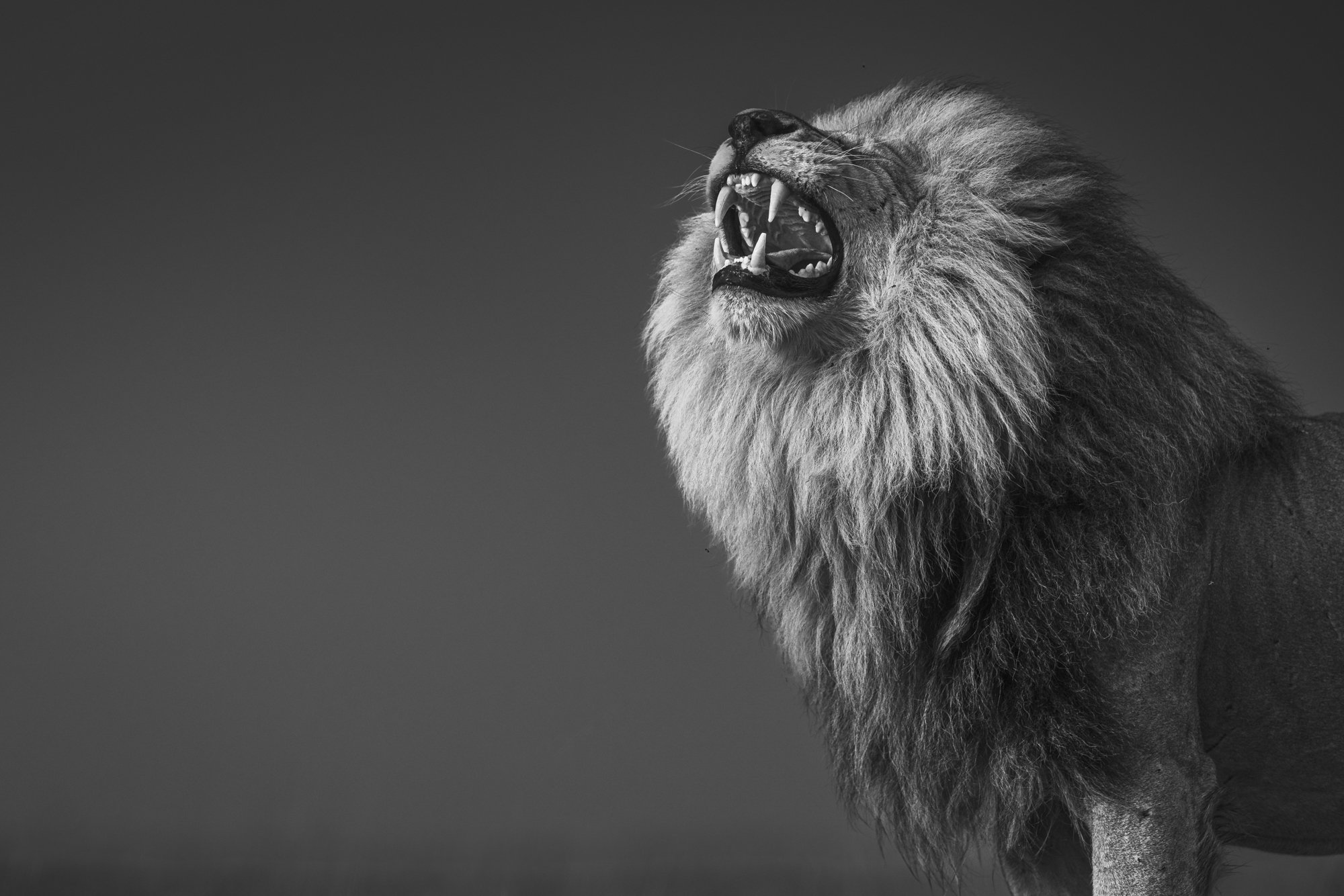
Male lion in flehmen response
As always thank you for taking the time to read this blog. And as always please drop me a line here if you have any questions here.
Jules

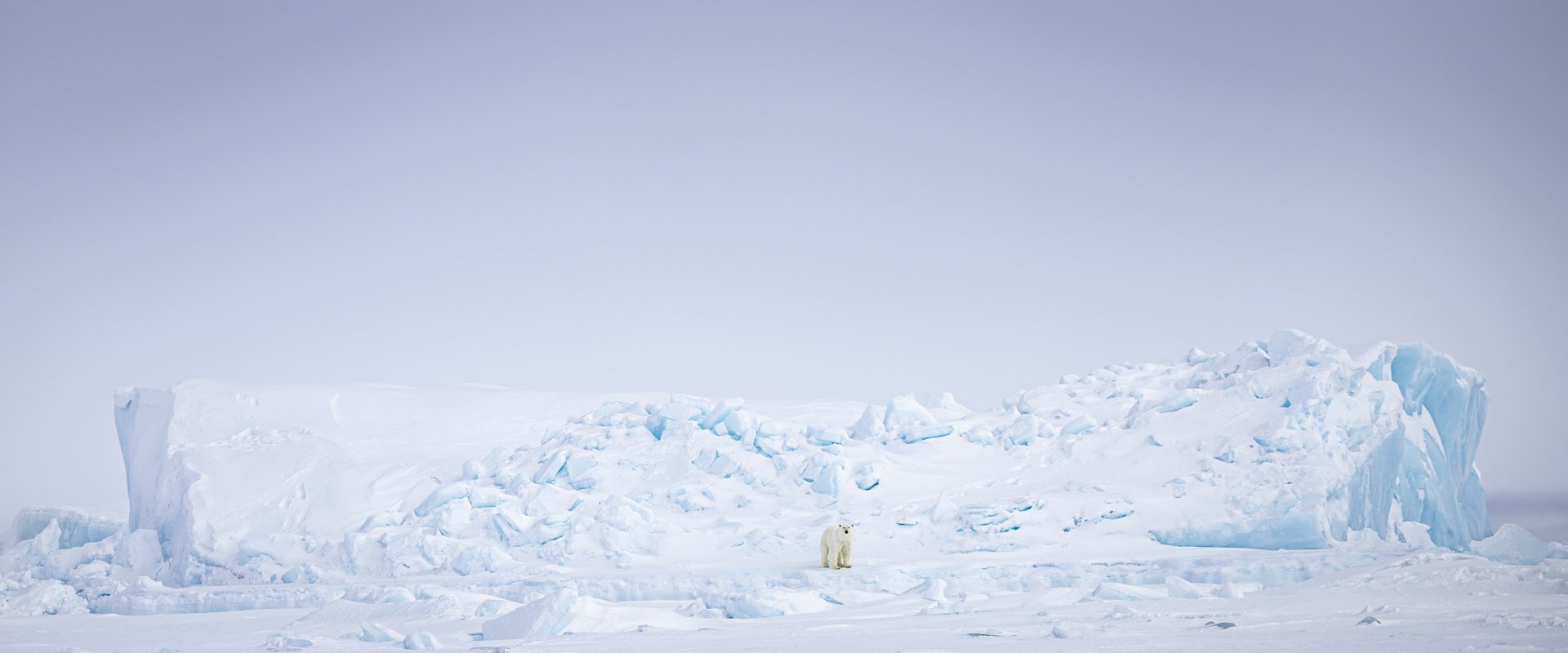
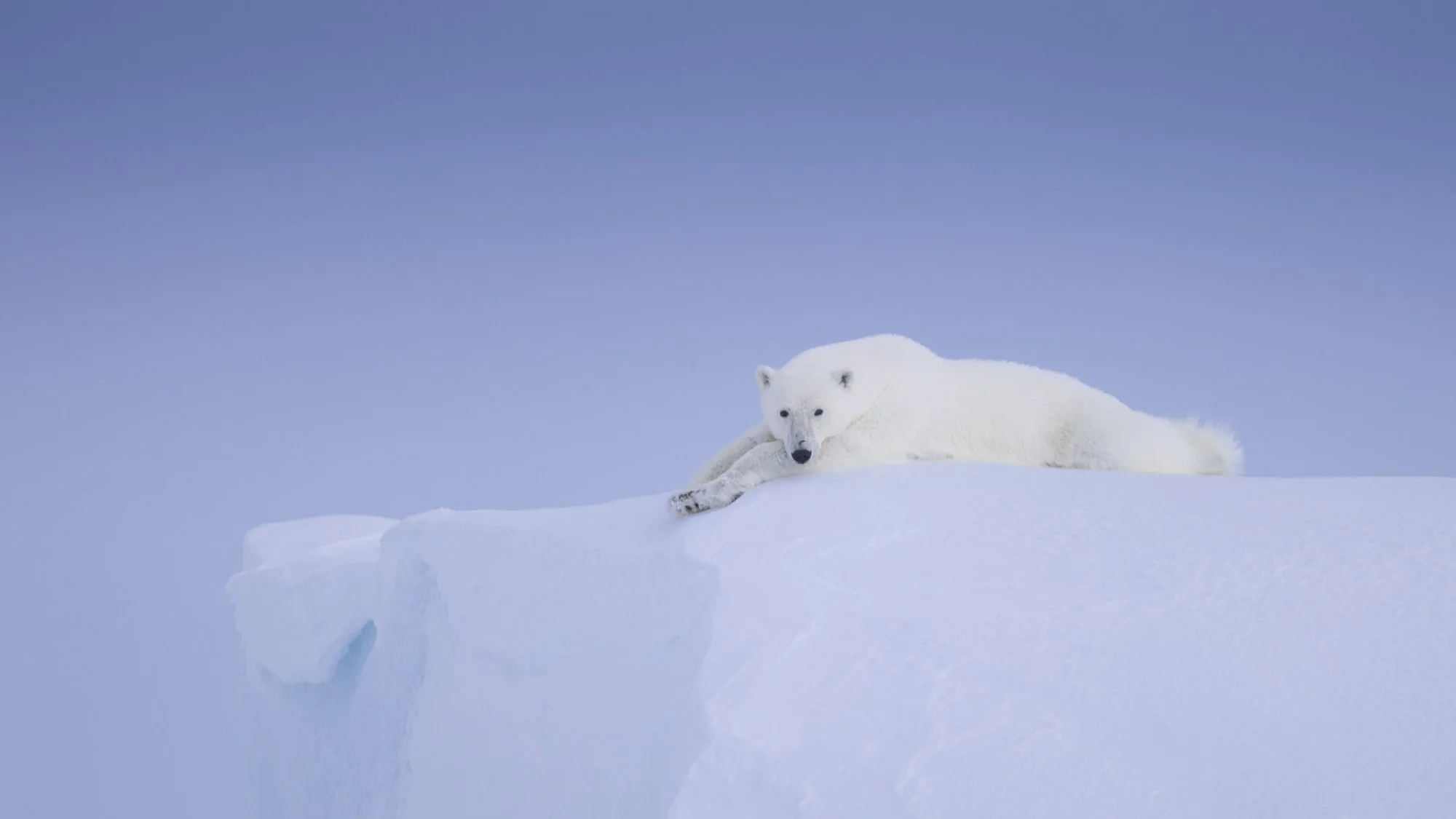
Svalbard, 2009
This was my first sighting of a polar bear taken nearly 20 years ago and I couldn't have asked for a more epic Arctic vista for my first encounter in Svalbard.
✓ Museum archival giclée paper
✓ Hand-signed & numbered by Jules
✓ Certificate of authenticity
✓ 15% to conservation
✓ Worldwide shipping
✓ Free UK delivery
The Full Story Behind The Photo
This was my first sighting of a polar bear taken in Svalbard nearly 20 years ago, yet I still remember it vividly. The excitement onboard our icebreaker the Vavivlov was palpable, especially as the scene itself was so breathtaking. The polar bear looked tiny as it walked along the shoreline framed by the towering glaciers. I couldn’t have asked for a more epic Arctic vista for my first Polar Bear encounter. I’ve had closer sightings of bears in Svalbard, but this image holds a special place for me as one of my favourite “animal in environment” images and reflects why it is so important to not only protect polar bears but also this pristine Arctic environment.
Print Specification
All prints are printed on Canson® Infinity Rag Photographique which is a 100% cotton museum grade white Fine Art and photo paper.
Canson® Infinity Rag Photographique offers a unique extra smooth surface with a sensual feel. It has been developed to address the need for continued longevity requirements in the Digital Fine Art market.
Shipping & Delivery
Delivery is from the United Kingdom and is included free with the purchase of all prints. Delivery is by FedEx, DHL, UPS, or DPD depending on location. Once your order is shipped you will receive an email with your tracking number. Please allow up to two weeks to fulfil your order plus one week for delivery.
Conservation Impact
As with all images in the collections, 15% of the proceeds from each image will be split between four charities- Kicheche Community Trust, Great Plains Foundation, Big Cat Initiative & Sheldrick Wildlife Trust. Learn more about giving back, here.