
PHOTOGRAPHING WILDLIFE OF YELLOWSTONE IN WINTER
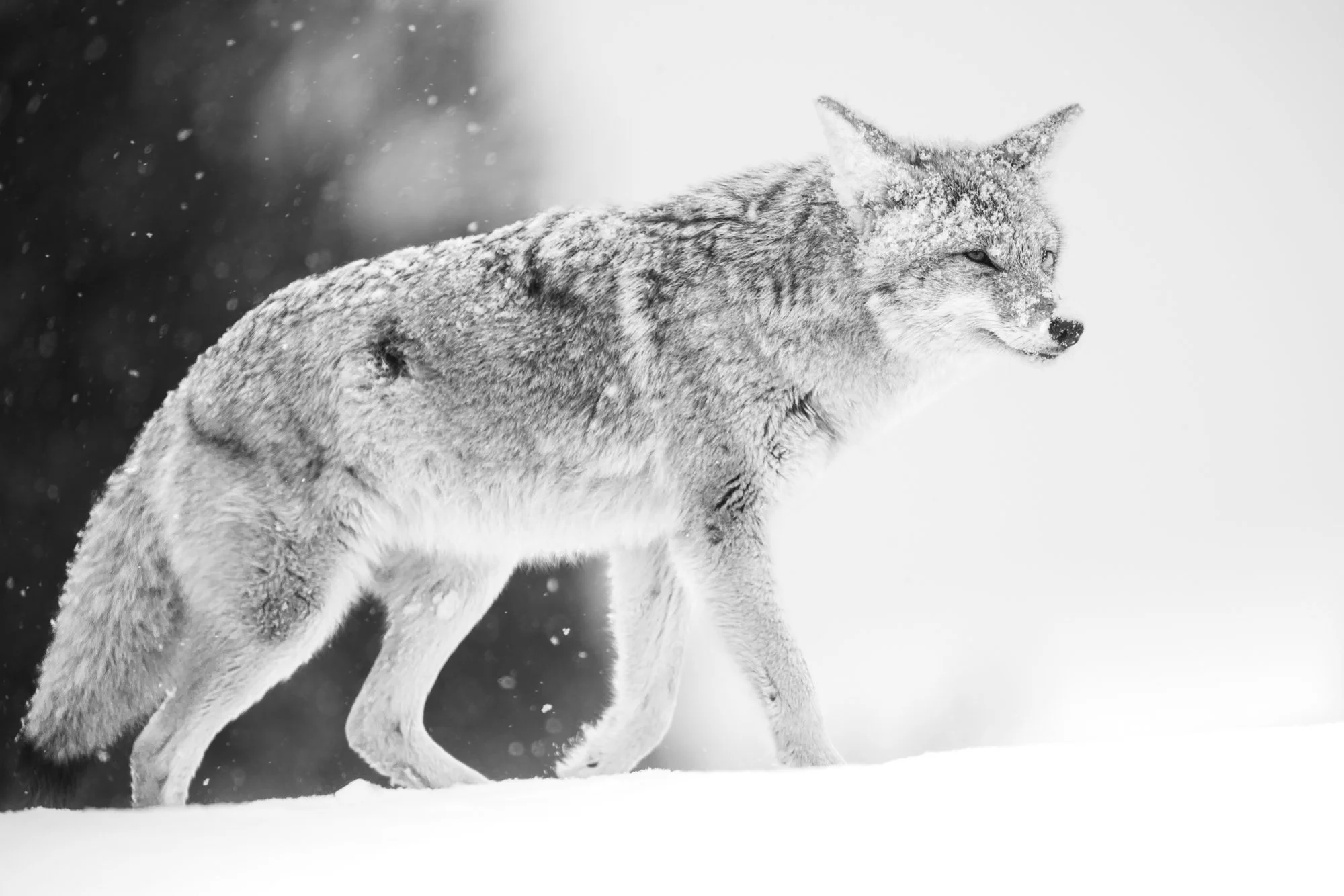
Yellowstone coyote in falling snow
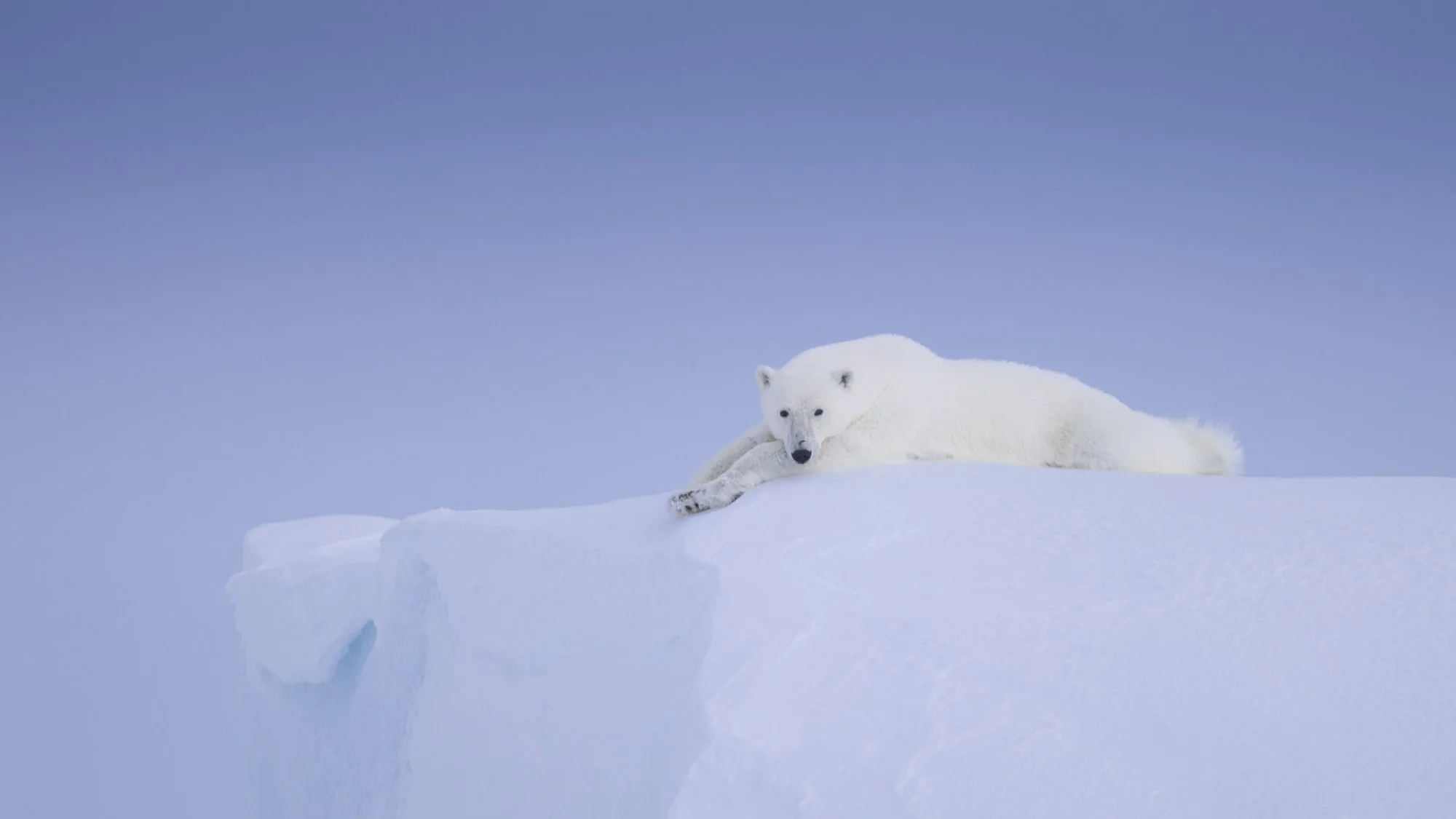
As an experienced Polar photographer having photographed Polar Bears across the Arctic over the last decade, I am drawn every year to the purity of Arctic light, landscapes and of course the magnificent wildlife.
Looking to add to my portfolio of Winter “animal in landscapes”, Yellowstone National Park in winter has long been on my list. For 18 months, I planned this trip with friends, drawn by the promise of photographing the wildlife of Yellowstone, including wolves and bison in the stark, frozen landscape often referred to as America’s Serengeti.
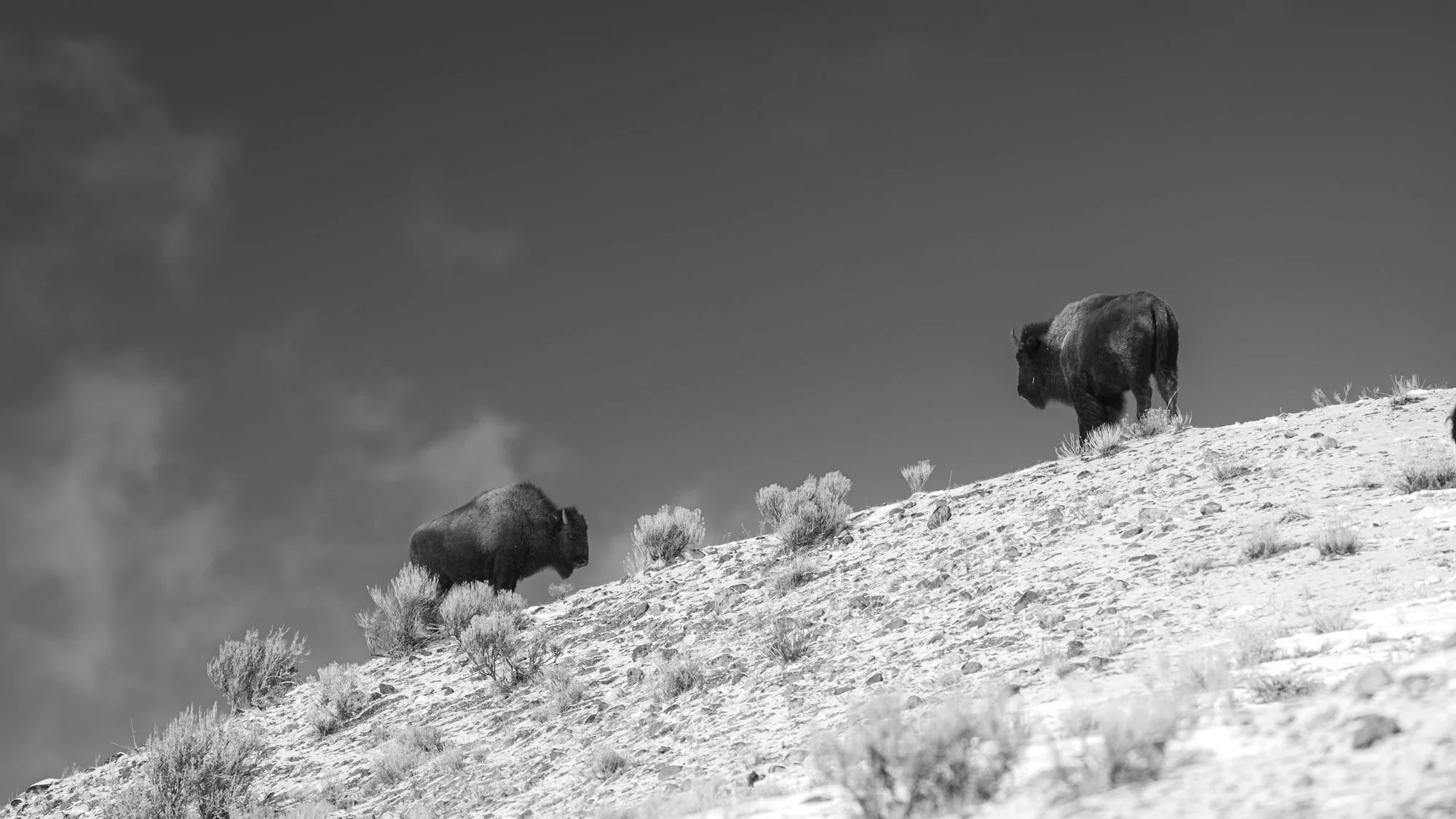
Bison in Yellowstone Winter landscape
Yellowstone Wildlife Photography in Winter
With the largest concentration of wild, free-ranging mammals in the Lower 48, Yellowstone has long been one of the most compelling destinations for wildlife photography in North America. In my mind, the anticipation of massive herds of bison and elk moving through the Lamar & Hayden valleys, tracked by Wolf packs was an intoxicating prospect.
I booked this photo safari in 2023 after seeing the evocative wolf imagery of renowned UK wildlife photographer Danny Green. Danny has been coming to Yellowstone in Winter for almost 20 years. Wolves are his obsession, so I knew I was in safe hands making this Yellowstone wildlife tour and expedition with him. His Yellowstone wildlife photography tours are highly regarded, and I was excited to visit for the first time under his guidance.
I expected valleys and landscapes covered with deep snow and sub-zero temperatures. A minimalist white canvas. Having photographed in Baffin Island, and most recently Antarctica, I was prepared for extreme cold.
Instead, Yellowstone delivered something entirely different.
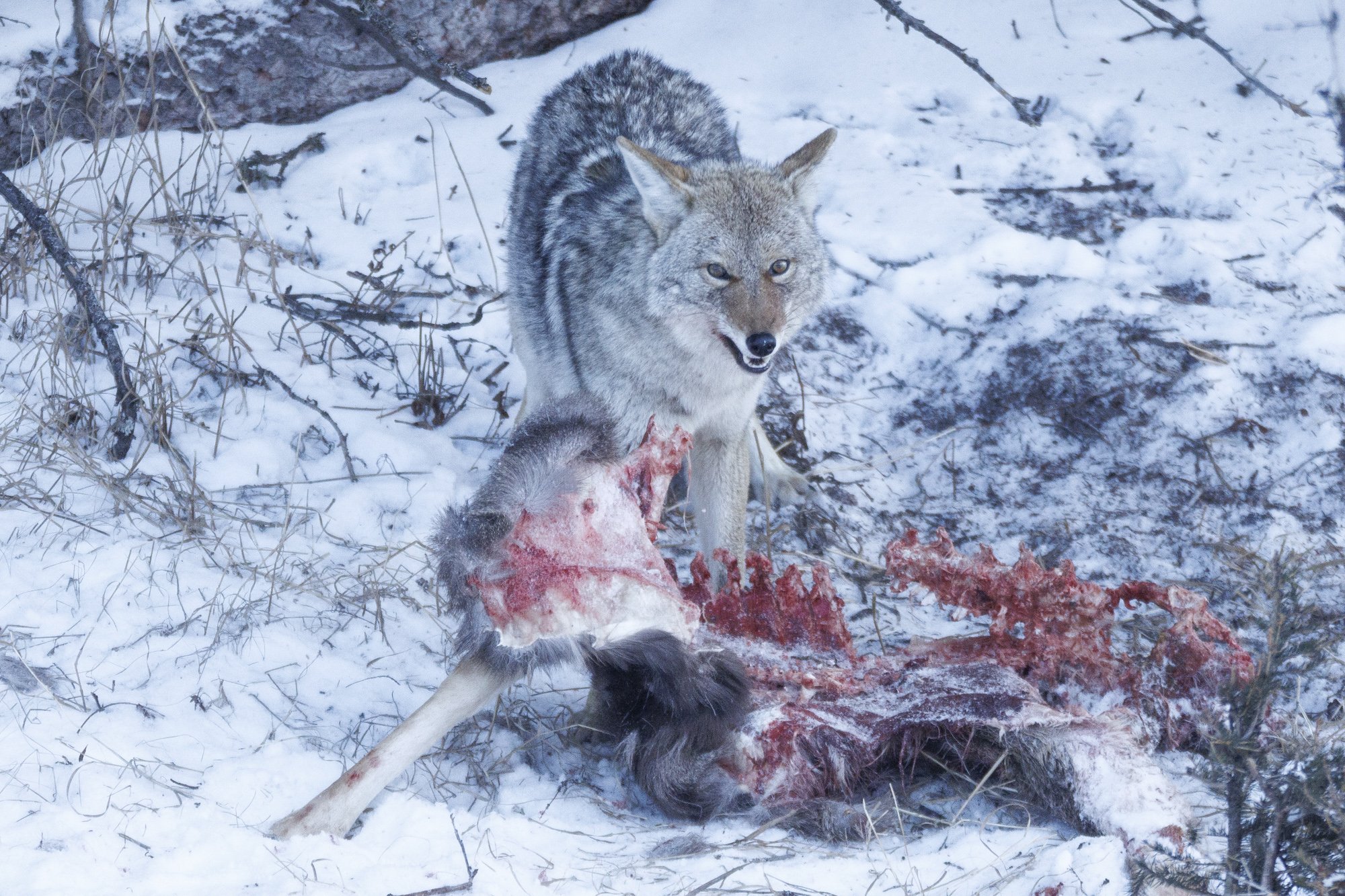
Yellowstone Coyoyte on mule deer kill
Yellowstone Wildlife Sightings: Expectations vs Reality
This was one of Yellowstone’s lowest snowfall winters in over 30 years. Temperatures were often spring-like on some days. The Lamar Valley and Hayden Valley weren’t blanketed in white as I’d imagined, but rather the light green of sagebrush punctuated the landscape. The scenery was still beautiful, but it wasn’t the stark winter scene I had expected.
The lack of snow also impacted wildlife behaviour. Elk and bison dispersed more widely rather than congregating in valleys, which had the effect of wolf encounters. Across ten days in Yellowstone, we didn’t see a single wolf.
Early on, I sensed luck & timing weren’t quite with us. Wildlife sightings were better around West Yellowstone, on the second part of our Yellowstone adventure, particularly for coyote and bison photography. However, this was often at a big distance. I love “small in the landscape” compositions, but when it’s at 800mm, even that has its limits.
So, what do you do when your expectations of seeing wildlife of Yellowstone bump against reality?
You adapt.
Winter Photography in Yellowstone: Adopting a recce mindset
I decided that I should reframe the trip as a “recce” for future winter photography in Yellowstone.
Rather than chase what wasn’t there, I leaned into what was and enjoyed experimenting with high-key minimalism, particularly with coyotes against muted snow and sage. I made notes of landscapes that would be extraordinary with the right subject and the right winter conditions.
Gear-wise, I was using my favourite lens Canon EF 400mm F2.8 with extenders, but I suspect a 600mm f/4 would have worked better, like what I use to photograph polar bears in Baffin.
Even without wolves, Yellowstone’s stillness was mesmerising and awe-inspiring. Days spent searching the Hayden & Lamar Valley for wolves and coyotes were peaceful, almost meditative. I would return for that alone.
And despite the challenges, there were powerful moments.
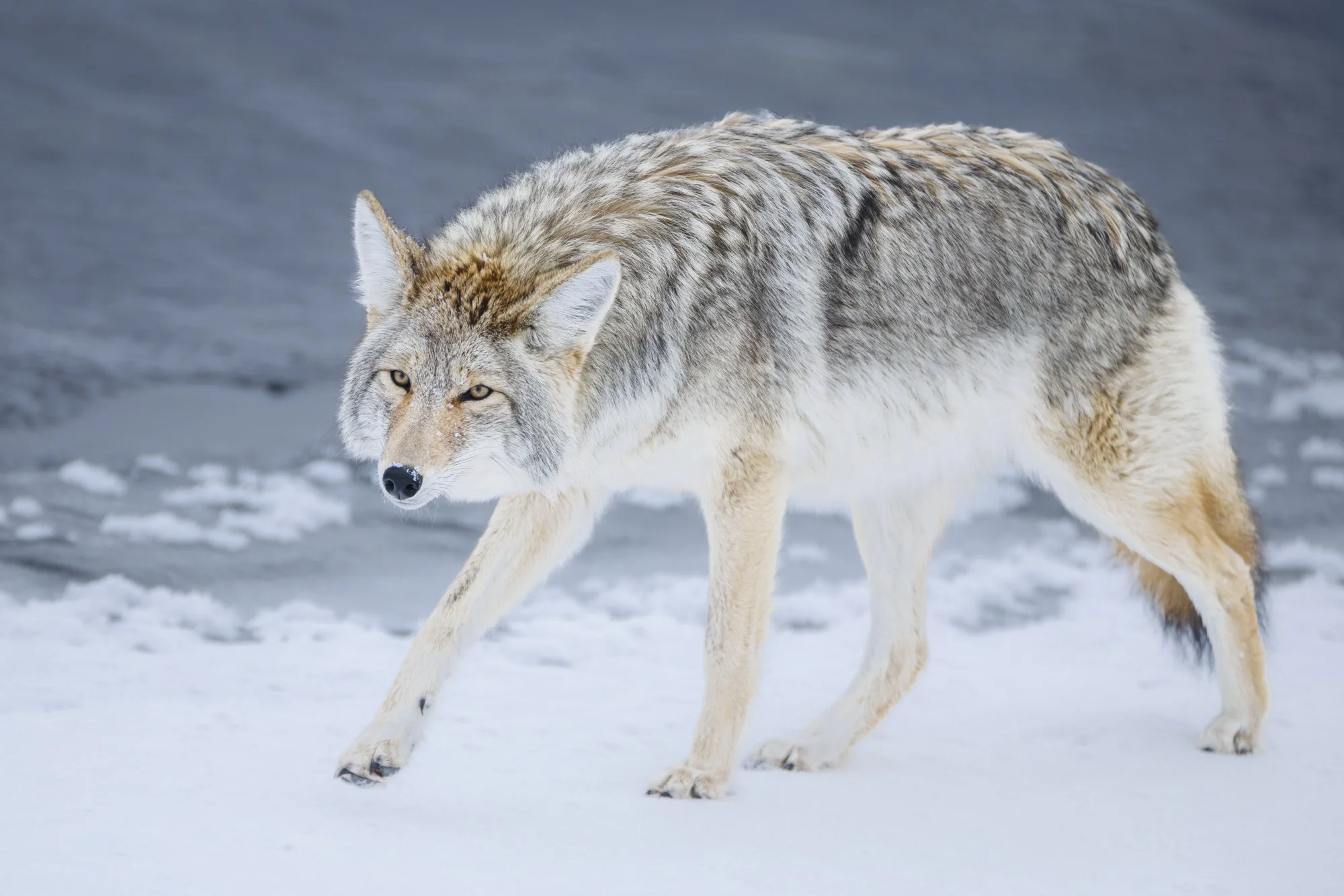
Coyote photographed in Hayden Valley
My top wildlife photography highlights from Yellowstone and the Grand Tetons
1) Coyote Photography in Yellowstone
Read any book or look at the news, and Coyotes are often vilified by ranchers and farmers in the United States — around 500,000 are killed annually. Yet within Yellowstone National Park, they move with relative protection (except when crossing paths with wolves, who dominate 91% of encounters).
To others, coyotes symbolise adaptability and endurance. Indigenous tribes revere them for intelligence and resilience.
Over 10 days in Yellowstone and the Grand Tetons, I had more than a dozen sightings of coyote which were varied. In some, they were on the hunt, or on an opportunistic kill. Others were more social, in mating pairs or hearing their haunting howls when they at least could see or sense wolves close by.
But the standout moment came in Hayden Valley.
What began as a distant speck along the Yellowstone River became a 50-metre encounter. Guided by biologist and photographer Stan Tekiela, we stayed with him as he moved steadily closer. He rolled in the snow, scenting the air, then remarkably it started to move up the banking towards us, forcing us to retreat to give him space.
It wasn’t fazed by our presence at all. It was calm, curious and entirely wild. It might not have been a wolf, but it was totally thrilling to be so close to one of Yellowstone’s prime predators. Having such extended time also allowed me experiment creatively with minimalist compositions, high key exposures and behavioural storytelling. Some of my strongest Yellowstone wildlife images came from that hour.
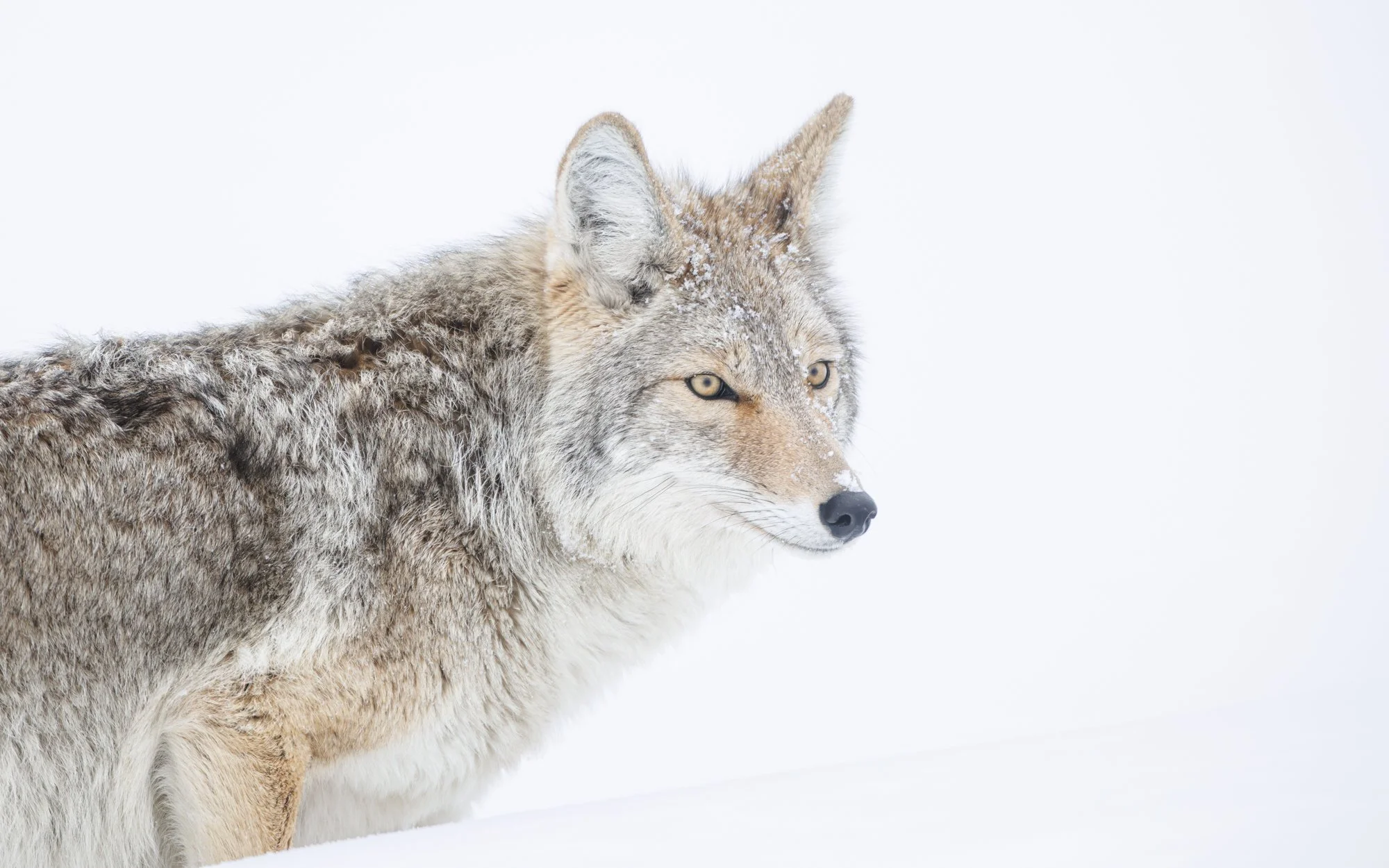
Coyote winter portrait
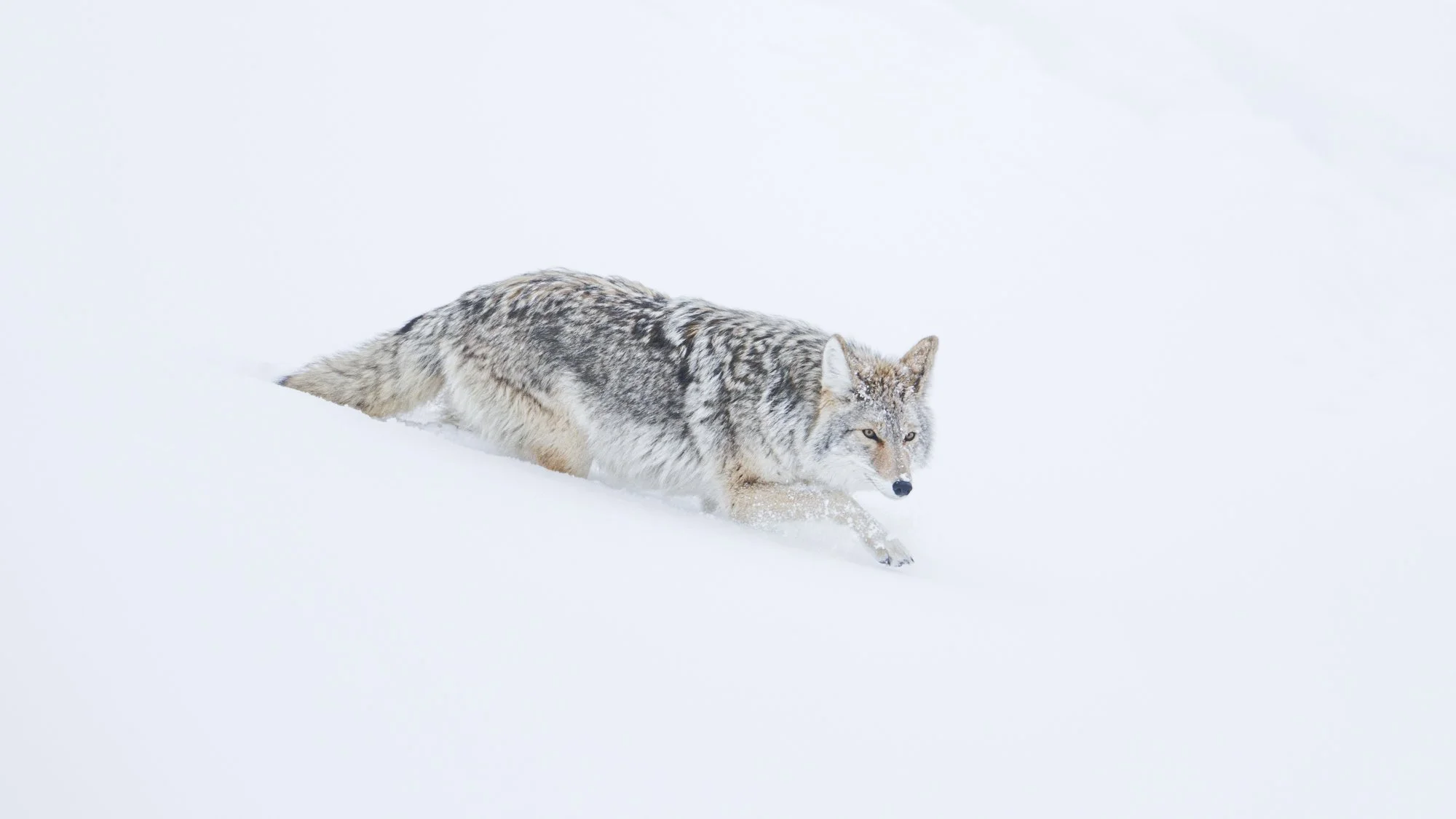
Yellowstone coyote moving through snow
2) American Bison: Icons of Yellowstone
Few animals embody winter resilience and endurance like the American bison.
They’ve roamed Yellowstone since prehistoric times, surviving brutal winters and near extinction. When I looked at some of the iconic wildlife images of Yellowstone in Winter as part of my research, it was those of frost-covered bison that excited me. So having an opportunity to capture their resilience (and my own) in the extreme winter conditions that define them was high on my wish list of images.
We had just one truly cold morning at –20°C. An old bull, perhaps 16 or 17 years old, lay on the ice, his beard and face crusted in frost. His long and shaggy hair was magnificent. The combination made him a sight to behold. To be lying on the ice a few metres away waiting for him to rise, helped make this a true Yellowstone winter experience. He teased us by rolling over at one point, but in the end, after 30 minutes, we decided to leave this old bull and try our luck elsewhere, ever hopeful.
He turned out to be the only frost-covered bison we saw on the whole trip.
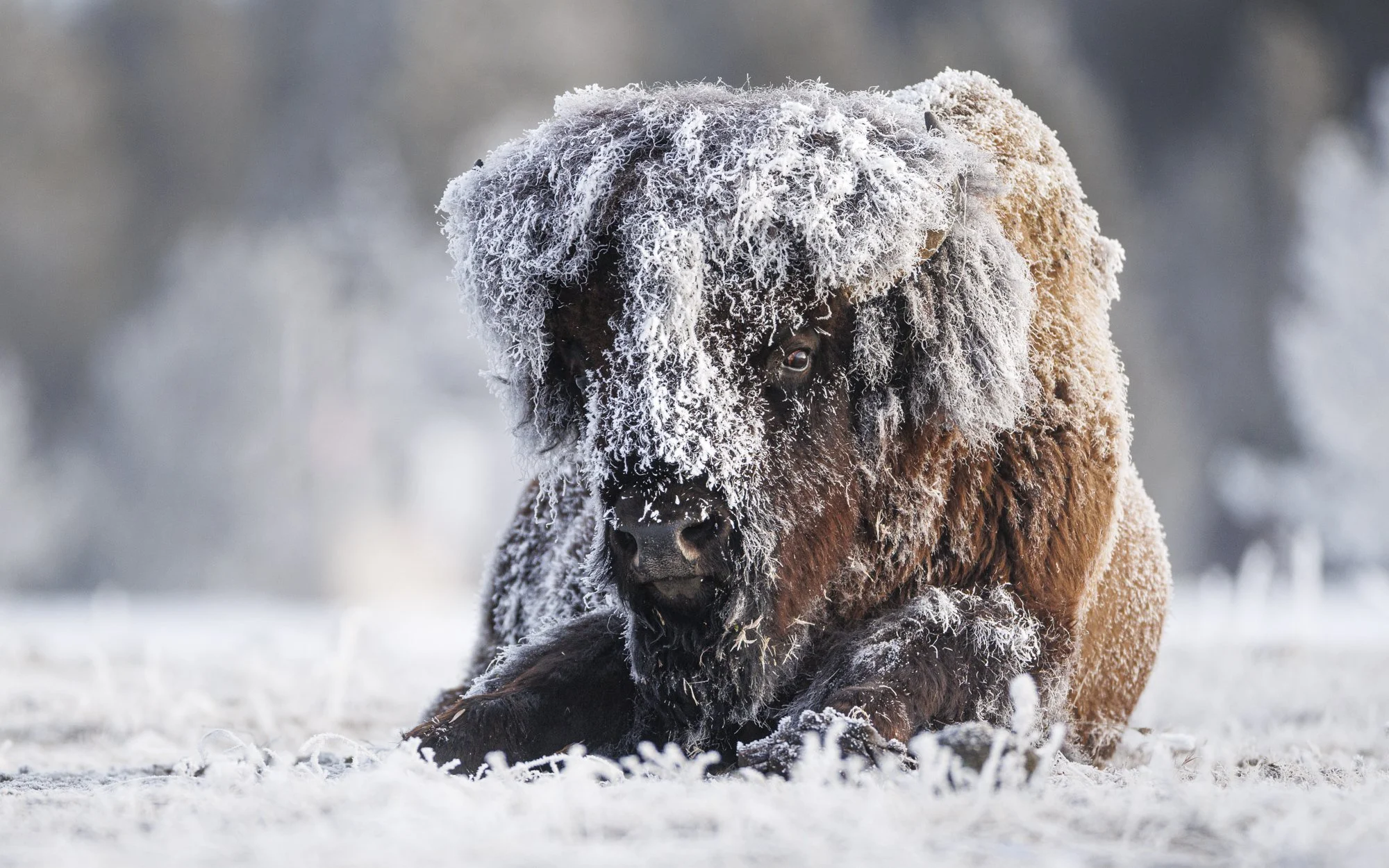
American Bison winter portrait Yellowstone
A couple of days later, three bison walking down the road offered a visceral photographic opportunity. Our snow coach guides positioned us ahead of them. We lay flat in the road, photographing as they approached, retreating at 25 yards. I was filled with adrenaline and excitement during our four attempts to photograph them. In better winter conditions, it could have been extraordinary but at least the learning from this opportunity would make me better prepared for a future Yellowstone wildlife tour in winter.
Whatever the conditions, American Bison are extraordinary animals and lasting living symbols of Yellowstone.
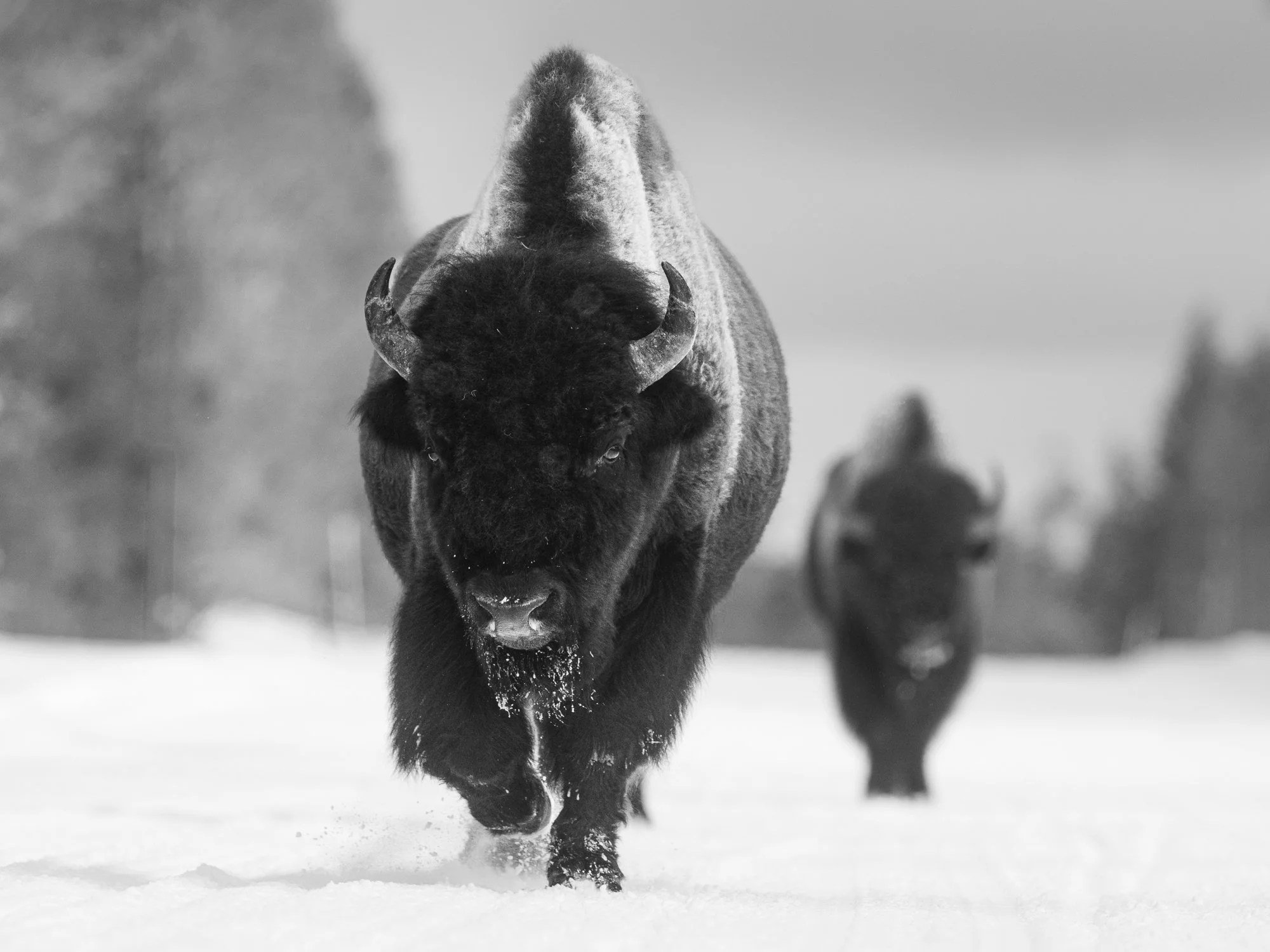
American Bison icon of Yellowstone
3) Red Fox in Yellowstone & Cooke City
In the UK, I regularly go to a hide site to photograph foxes. Just recently, I went to the hide in January when temperatures were plummeting, hoping to see Foxes in the snow. It still hasn’t happened.
With Yellowstone, I had expectations of seeing classic hunting behaviour with that iconic vertical leap into snow.
At least I had sightings of those acrobatic feats, but frustratingly, these were always at a considerable distance.
Instead, I spent time with a semi-habituated red fox in Cooke City. Not the pure wilderness narrative I was hoping for, but the fox still made a striking subject. In the soft winter light, its orange/red winter coat glowed against the snow, so I looked at ways I could use snow as foreground blur to create some beautiful portraits.
It may not have been perfect and what I was seeking, but again I tried to make the most of this Yellowstone wildlife encounter, and at least I finally had portraits of a Red Fox in snow to add to my Fox portfolio.
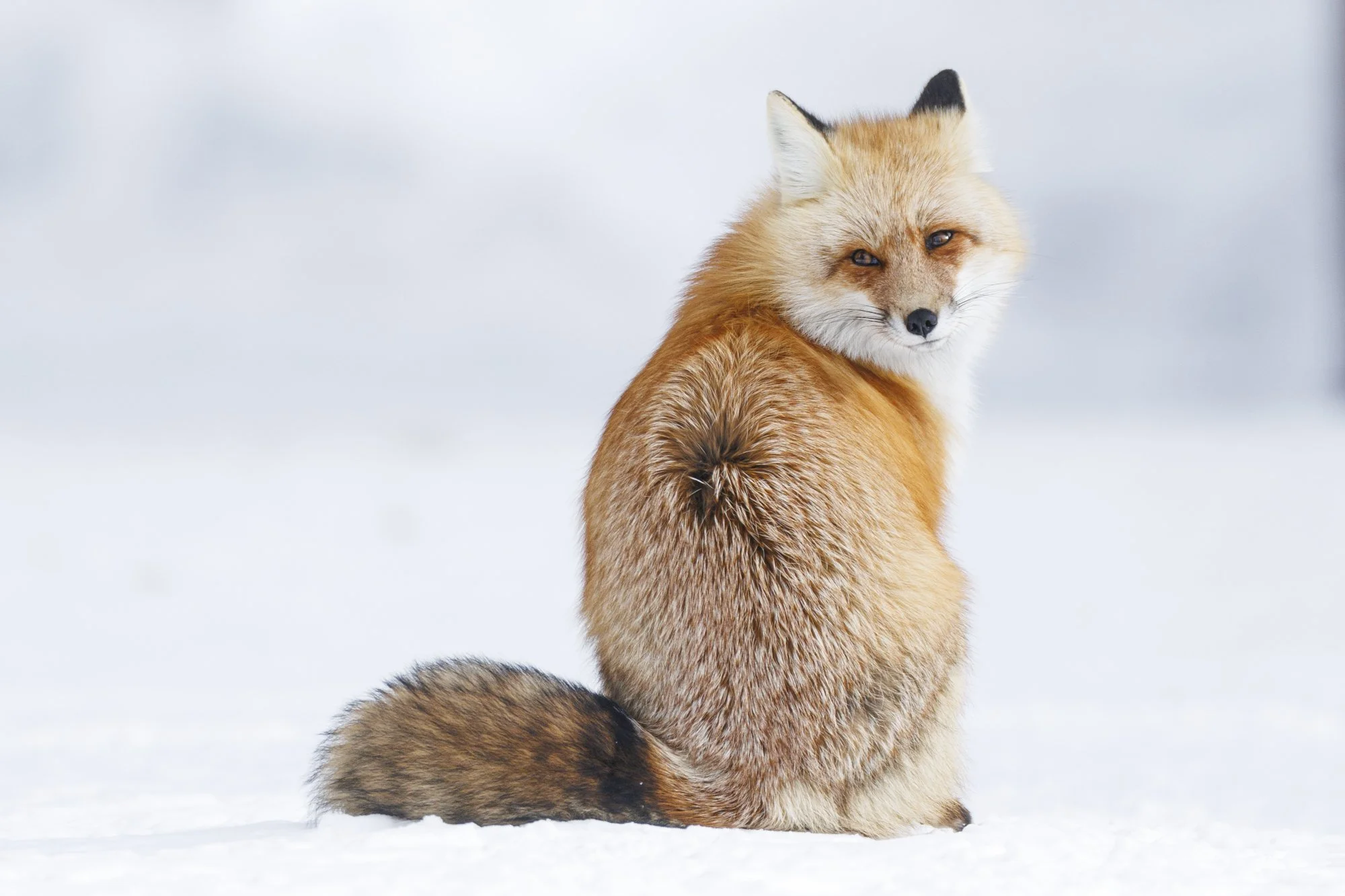
Red Fox in winter landscape Cooke City
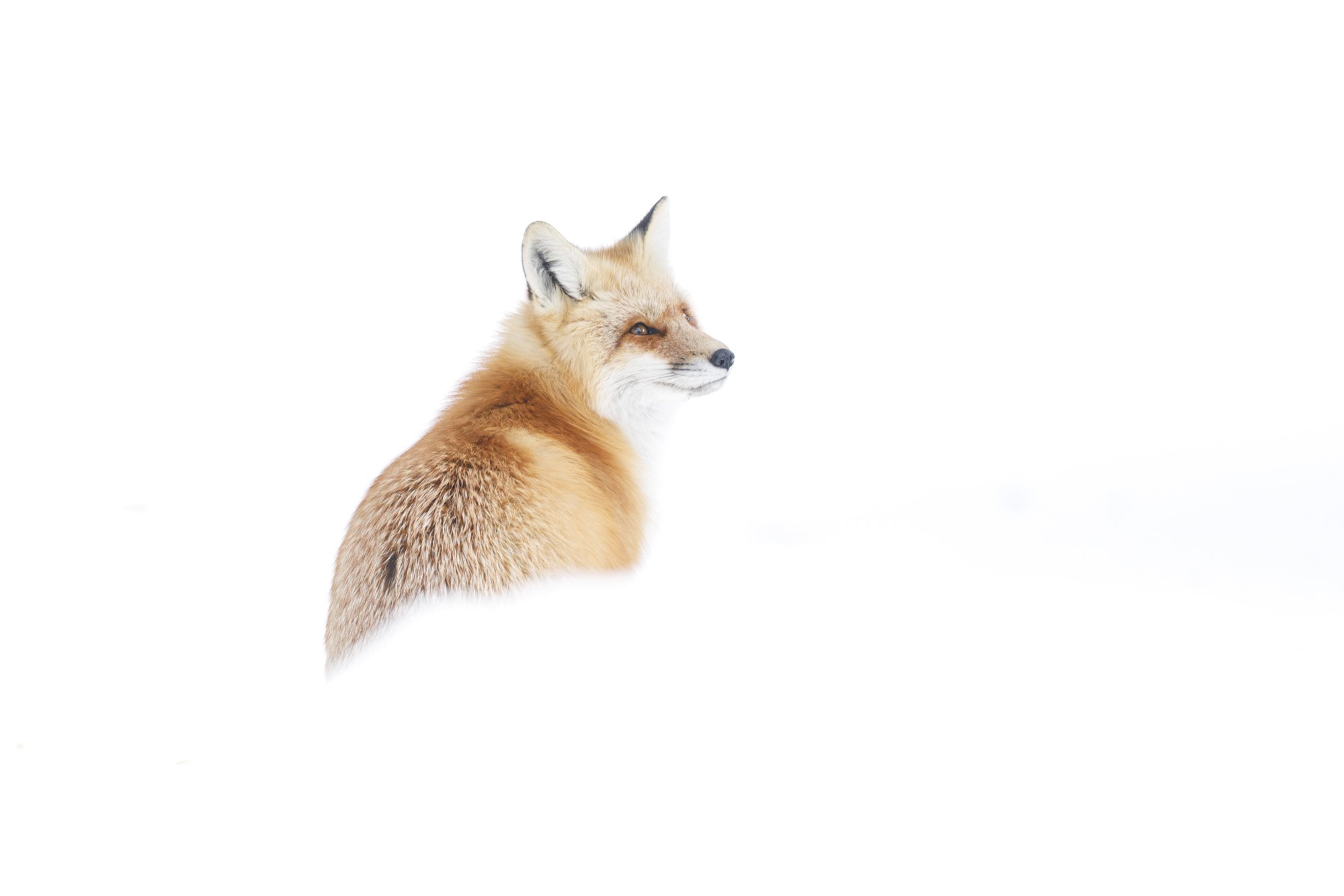
Yellowstone Red Fox winter portrait
4) River Otter: An Unexpected Highlight
One of the trip’s unexpected delights was a sighting of river otter along the Yellowstone River, in the same area we’d seen the coyote.
For 30 minutes, it groomed, rolled, ran and belly-slid across ice like a penguin. It vanished, reappeared, and seemed almost playful in its awareness of us.
I think we were all charmed by this sighting, and I loved capturing some dynamic, characterful and engaging portraits of this playful creature. It was also a reminder that wildlife photography often rewards patience with the unexpected.
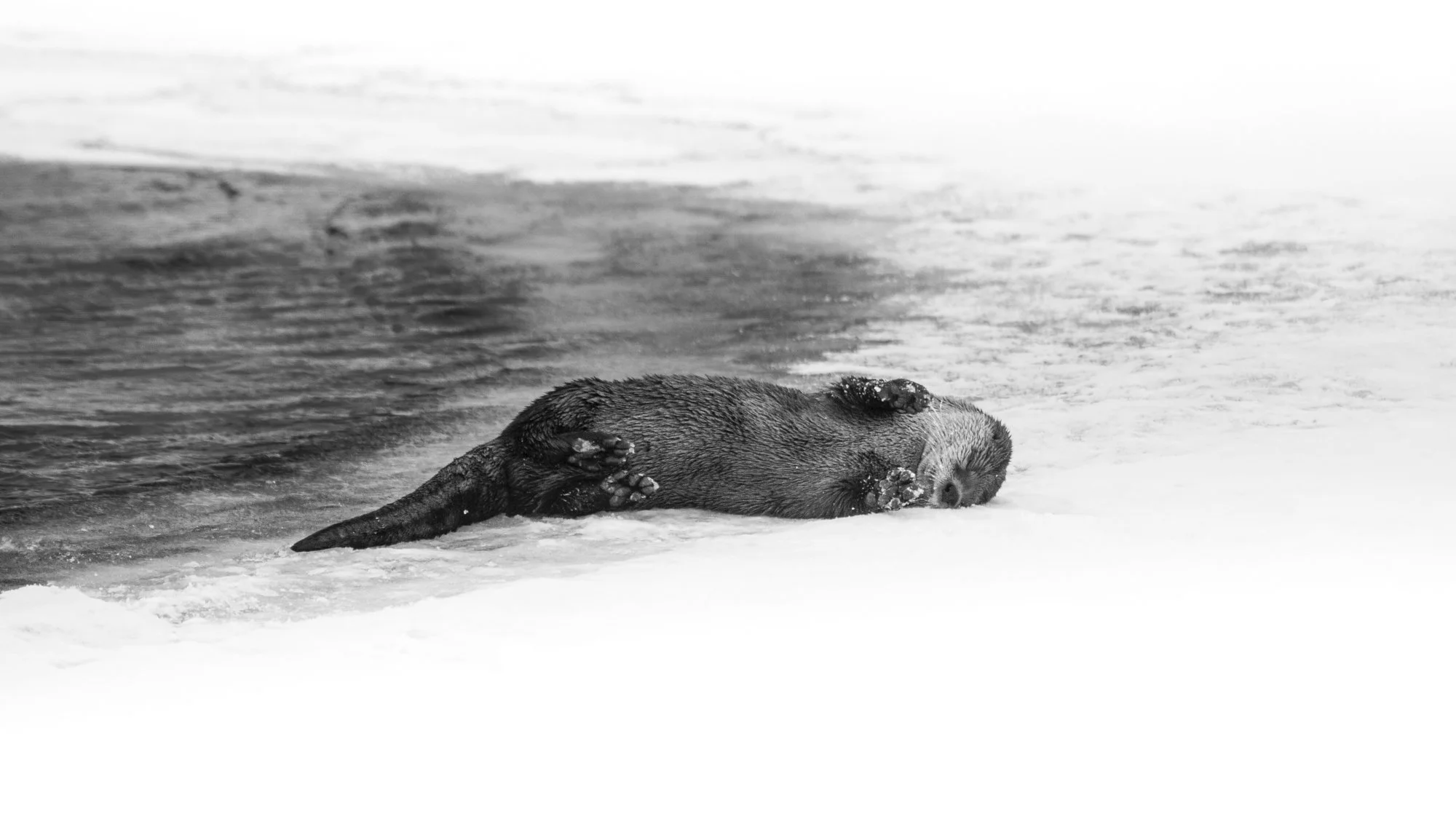
Yellowstone River Otter portrait
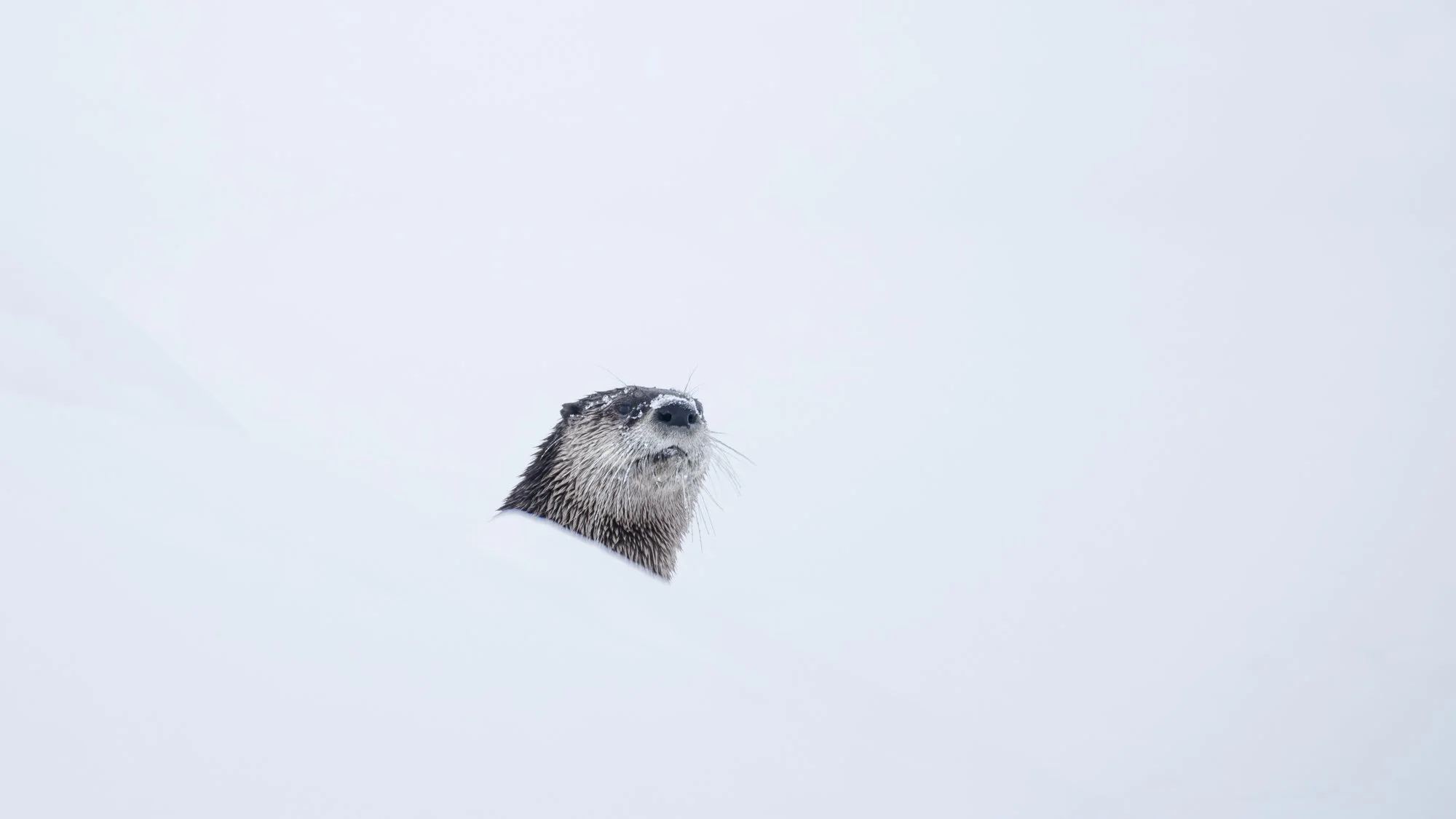
Curious Yellowstone Otter takes a peek
5) Grand Tetons Photography: Moose & Ravens
After Yellowstone, my friends and I spent three days in the Grand Tetons with Brad Schwarm, who leads wildlife photographic trips in this stunning landscape.
I’ve been guided by Brad twice before, and as a Jackson local for over 30 years, he knows all the key areas for potential wildlife sightings. While we searched for foxes, stoats and coyotes, it was moose and ravens that delivered.
The bull moose had already dropped their antlers, but time with a young mother and calf provided some wonderful intimate wildlife portrait opportunities.
The Tetons themselves are mesmerising, whether at sunrise, at sunset, framed by the Mormon Barn, or rising behind wildlife in the valley. Even when sightings were sparse, the quiet search for wildlife through the snow was memorable.
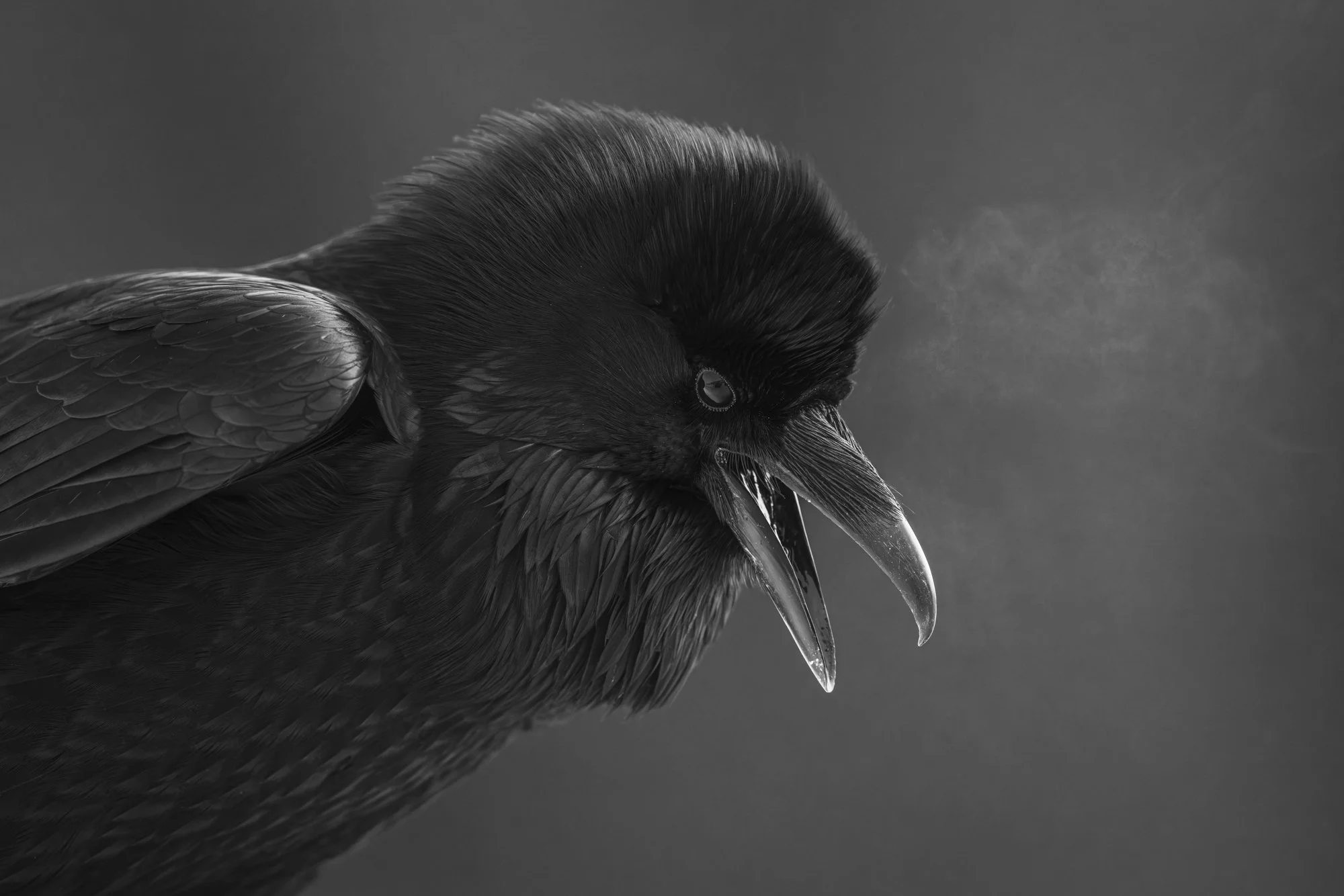
Raven portrait in Grand Tetons
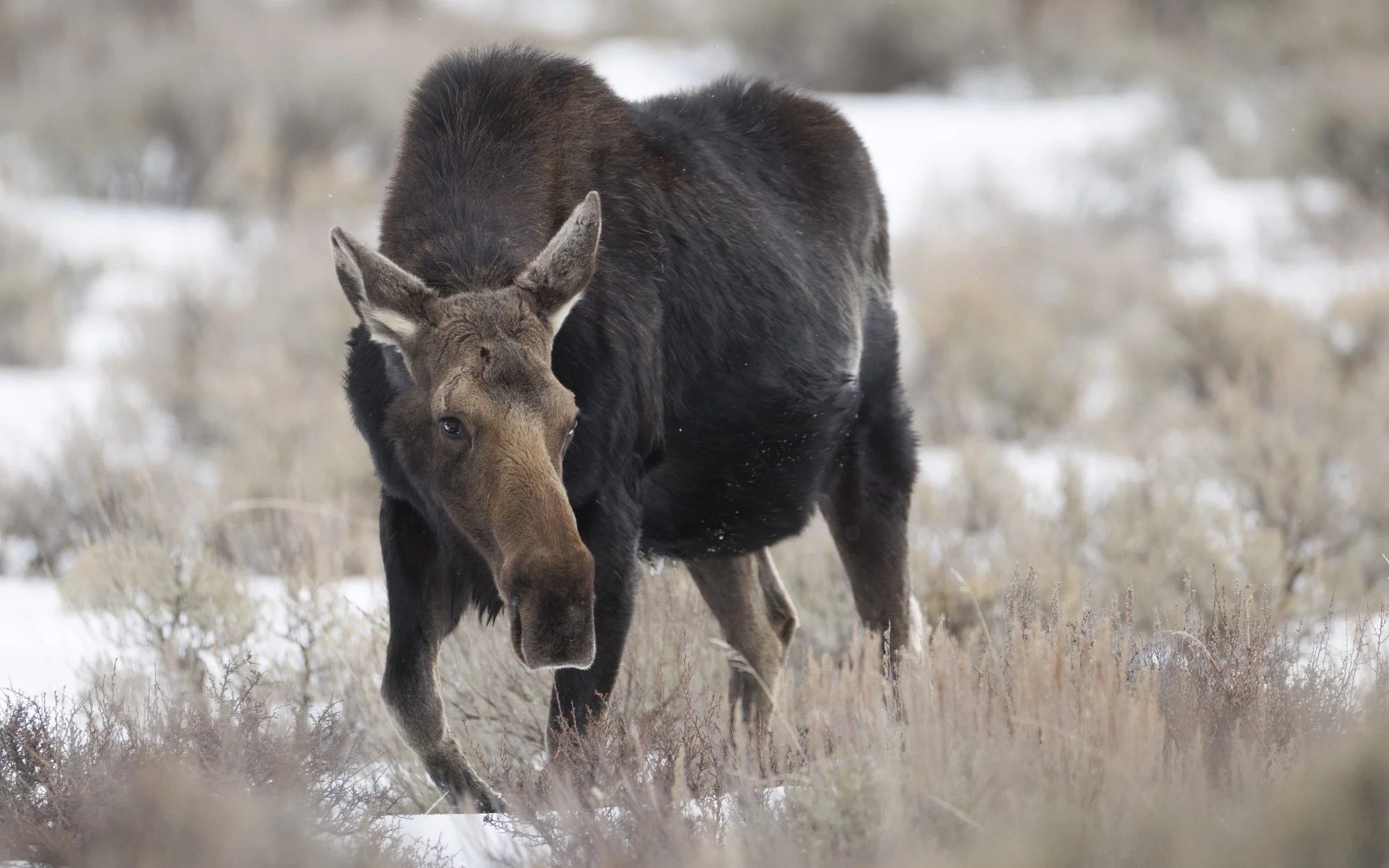
Moose on the move in Tetons winter landscape
Final Reflections on Photographing the Wildlife of Yellowstone in Winter
Yellowstone did not deliver the winter or the wildlife sightings I had imagined or wished for.
There were no wolves crossing snow-filled valleys. No bison disappearing into whiteout blizzards. The landscape was softer, more exposed, and less extreme than expected.
And yet, it was no less powerful.
Wildlife photography in Yellowstone, like the polar regions and Africa, is never predictable or follows the same script.
I learnt that snow depth alters prey movement. Prey movement alters predator behaviour. Everything here is interconnected, like so many other ecosystems.
In these circumstances where nature has other ideas, I was able to make the most of another precious commodity: time.
· Time observing coyote behaviour
· Time studying the light in Hayden Valley
· Time understanding how I would approach Yellowstone differently next time, as I will definitely return.
Some wildlife narture tours deliver the images you planned and hoped for, while others deepen your understanding of a place.
I’ll return to Yellowstone for the wildlife, but I’m equally drawn back by the beauty and the stillness. It is the vast, mesmerising wilderness that makes Yellowstone one of the most compelling wildlife photography destinations in North America.
If you want to see more of my images of the Wildlife of Yellowstone check out my Instagram here.
Yellowstone Wildlife Photography: FAQ
Is winter the best time to photograph wolves in Yellowstone?
All the guides will say, December to February is best, as deep snow increases wolf visibility. It is also quieter in the park from a vehicle perspective, especially in West Yellowstone, so more chances of sightings to yourself.
However, if you want to maximise bear sighting opportunities, then Spring onwards, when Bears are emerging from their dens, is recommended. However, the park will be busier.
Where are the best locations for wildlife photography in Yellowstone?
Lamar Valley and Hayden Valley are top of the list. The Wolves of Hayden Valley are the subject of a wonderful book AMERICAN WOLF by Nate Blakeslee which is fantastic reading for any Yellowstone trip.
What lens is best for Yellowstone wildlife photography?
Anything from 400mm is essential. In future, I would consider hiring a 600mm F4 lens. I would also recommend a tripod and/or monopod, especially for sightings that are at a distance or in low light. Another key lens is 70-200mm to capture animals in a landscape.
What are costs for visitors to Yellowstone?
From 1st January 2026, the US National Park Service introduced a $100 per person per park surcharge for International Visitors, including UK Tourists. Consequently, we bought the annual “America the Beautiful” pass for non-residents, which now costs $250 (from $80). This covers three people in a vehicle, so was the most cost-effective option, rather than paying $100 each time. These fees are in addition to existing entrance costs.
NB A concerning reality: low snowpack may lead to spring water shortages and increased wildfire risk. In 1988, 2.2 million acres burned across Yellowstone. Snow matters here for wildlife, water systems, and the ecosystem as a whole.
Yellowstone Wildlife Facts
3,472 Square Miles/2,221,766 Acres
63 Miles North to South
96% of the park is in Wyoming/3% Montana/1% Idaho
6 Species of Ungulate- Bison, Elk, Pronghorn, Mule Deer & white tailed deer, Moose, Big Horned Sheep
2 Species of Bear- Brown Bear, Black Bear
Yellowstone Wolves and Coyotes
Wolf Population: The wolf population has remained relatively stable at 90-110 individuals, occasionally peaking around 120-140.
Wolf Packs: There are roughly 8-10 packs within the park.
The Wapiti Lake pack is currently considered one of the largest wolf packs in Yellowstone National Park, with reports indicating it has reached sizes of 20 to over 25 members as of 2024–2026.
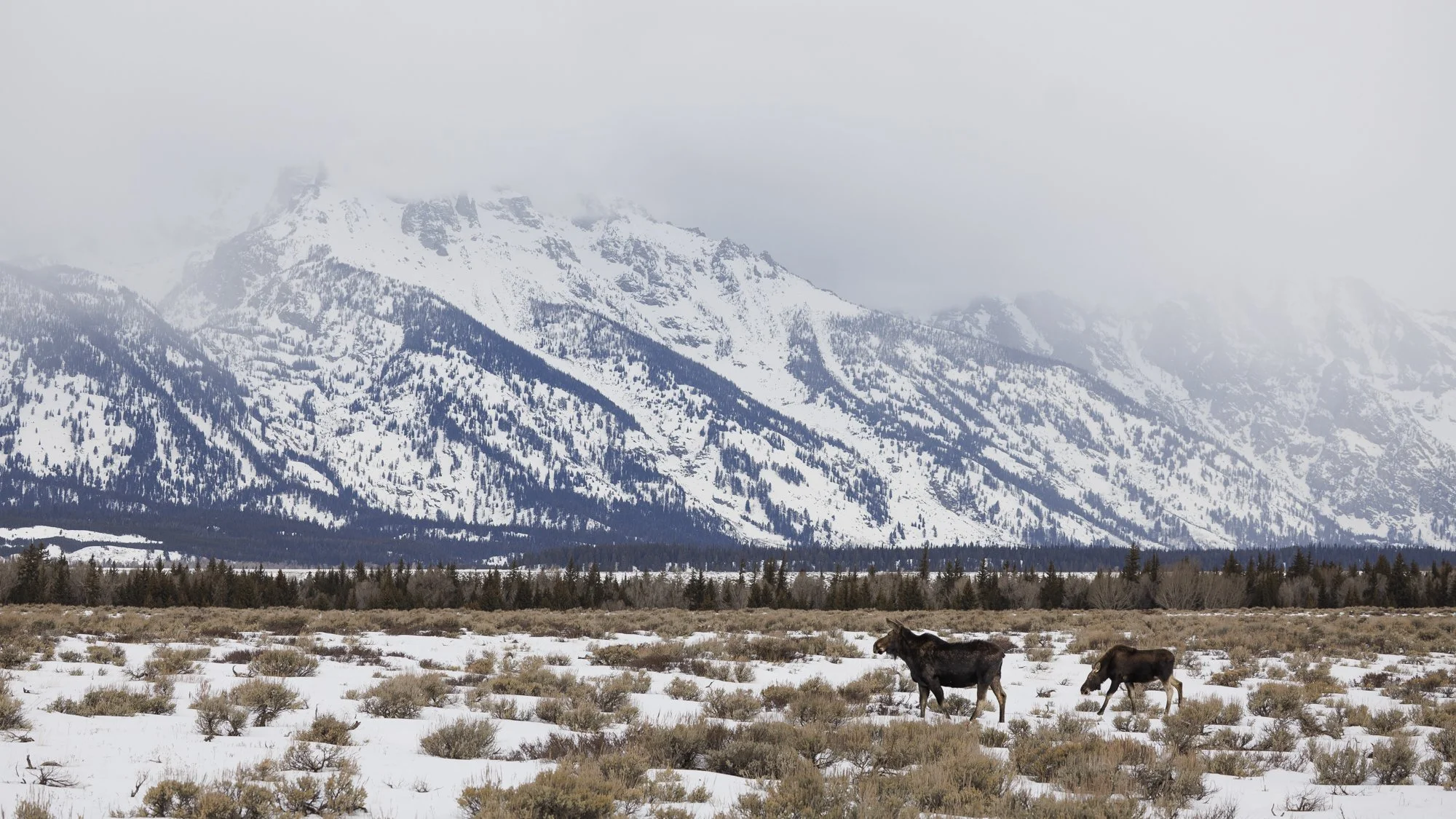
Moose mother and calf in Grand Tetons
Who I travelled with to Yellowstone & where I stayed:
YELLOWSTONE
My Yellowstone Wildlife Expedition Guides were Danny Green & Stan Tekielathrough Danny’s company Natures Images. I have travelled with Natures Images on several occasions and they run some fantastic safaris and workshops across the globe (including their highly demaded Yellowstone tour), with renowned and experienced guides and photographers. I can highly recommend them.
See Yellowstone snow mobiles and local guides were used in West Yellowstone whilst staying at Three Bears Lodge . This combination worked great especially as the comfortable lodge, with in house resturant, is less than 5 minutes from the park gate.
GRAND TETONS
Brad Schwarm through his companyAlpenGlow Tours has been my trusted guide whenever I am in the Tetons for almost a decade now. He’s a trusted, knowledgeable guide with a friendly easy manner. Again I highly recommend him if you need a photography guide there.
We stayed in Jackson at Huff House (B&B) . Really great, good value location walking distance to centre of Jackson and the restaurants, bar and shops.
If you want to see more Winter animal landscapes please check out my EMPEROR PENGUIN series. There’s also POLAR BEARS too which I have already highlighted.
As always I really appreciate you taking the time to read this blog . If you have any questions or would be interested in a print contact me via this link or connect with me on Instagram.
Jules

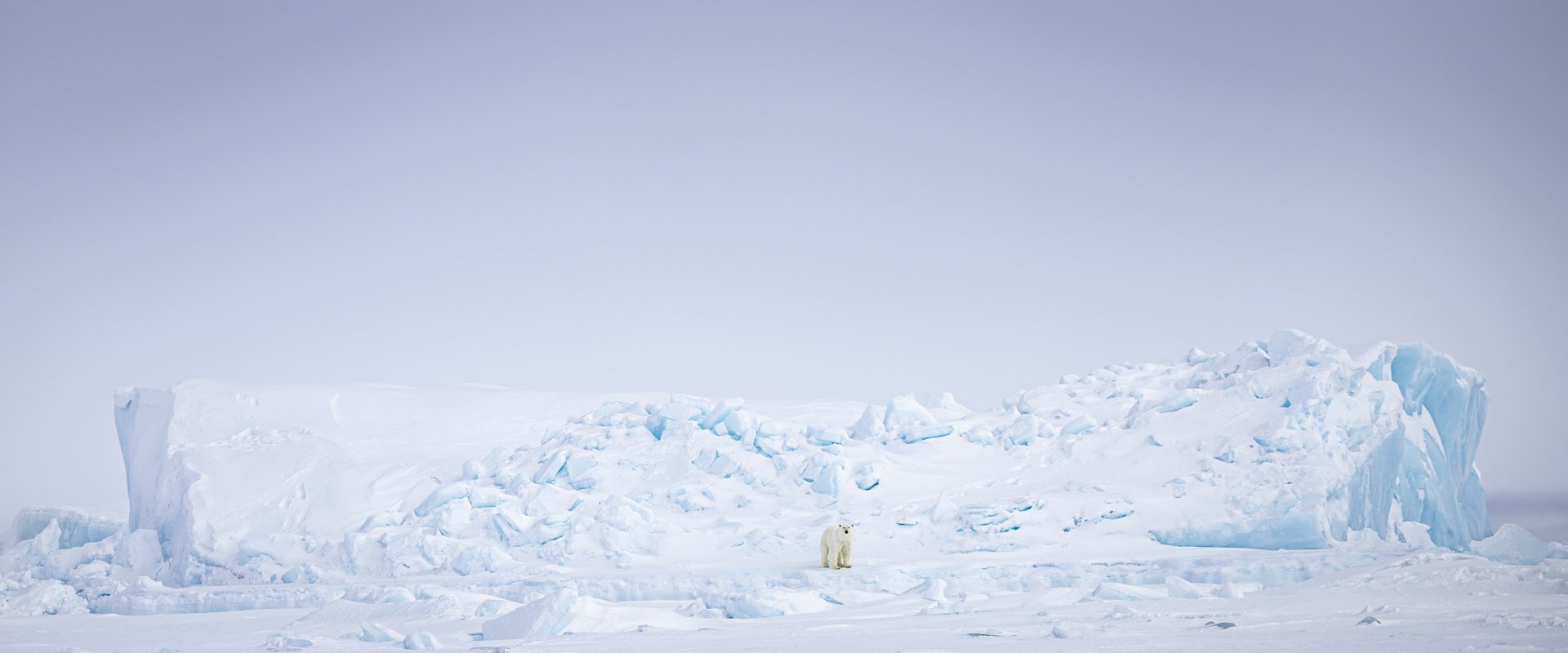
Svalbard, 2009
This was my first sighting of a polar bear taken nearly 20 years ago and I couldn't have asked for a more epic Arctic vista for my first encounter in Svalbard.
✓ Museum archival giclée paper
✓ Hand-signed & numbered by Jules
✓ Certificate of authenticity
✓ 15% to conservation
✓ Worldwide shipping
✓ Free UK delivery
The Full Story Behind The Photo
This was my first sighting of a polar bear taken in Svalbard nearly 20 years ago, yet I still remember it vividly. The excitement onboard our icebreaker the Vavivlov was palpable, especially as the scene itself was so breathtaking. The polar bear looked tiny as it walked along the shoreline framed by the towering glaciers. I couldn’t have asked for a more epic Arctic vista for my first Polar Bear encounter. I’ve had closer sightings of bears in Svalbard, but this image holds a special place for me as one of my favourite “animal in environment” images and reflects why it is so important to not only protect polar bears but also this pristine Arctic environment.
Print Specification
All prints are printed on Canson® Infinity Rag Photographique which is a 100% cotton museum grade white Fine Art and photo paper.
Canson® Infinity Rag Photographique offers a unique extra smooth surface with a sensual feel. It has been developed to address the need for continued longevity requirements in the Digital Fine Art market.
Shipping & Delivery
Delivery is from the United Kingdom and is included free with the purchase of all prints. Delivery is by FedEx, DHL, UPS, or DPD depending on location. Once your order is shipped you will receive an email with your tracking number. Please allow up to two weeks to fulfil your order plus one week for delivery.
Conservation Impact
As with all images in the collections, 15% of the proceeds from each image will be split between four charities- Kicheche Community Trust, Great Plains Foundation, Big Cat Initiative & Sheldrick Wildlife Trust. Learn more about giving back, here.