
PHOTOGRAPHING PENGUINS OF ANTARCTICA: Stories and Photos of Adelies, Chinstraps & Gentoo Penguins
“It seems to me that the natural world is the greatest source of excitement; the greatest source of visual beauty; the greatest source of intellectual interest. It is the greatest source of so much in life that makes life worth living”
Sir David Attenborough
The Penguins of Antarctica – More Than Just Emperors
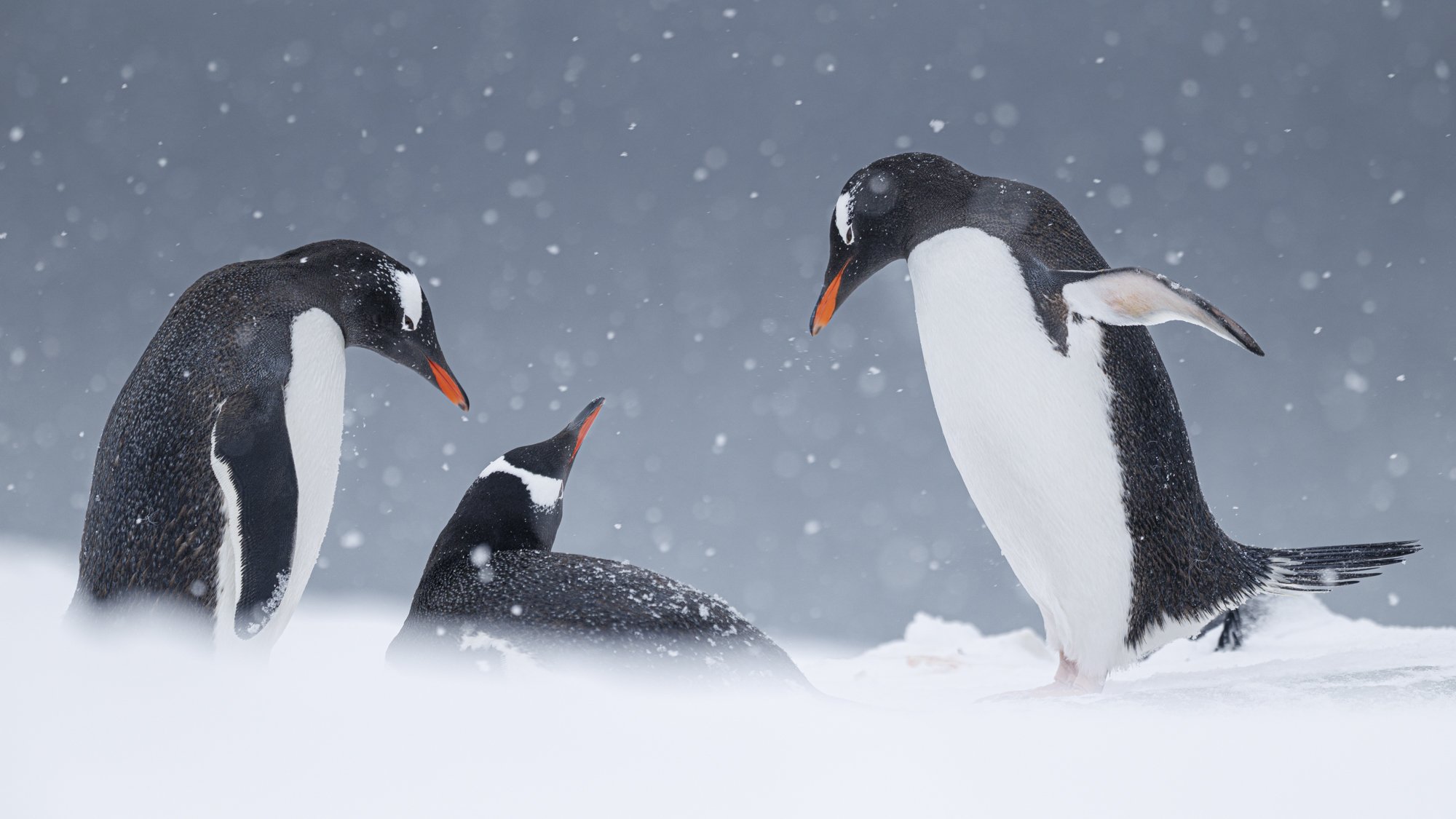
Gentoo Penguins in Snowstorm
The Emperor Penguins may have been the star of the show on my first expedition to Antarctica, and the primary reason for making the journey, but they were far from the whole story. The true surprise came from the supporting cast: Adélie, Chinstrap, and Gentoo Penguins, each one captivating, characterful, and endlessly entertaining.
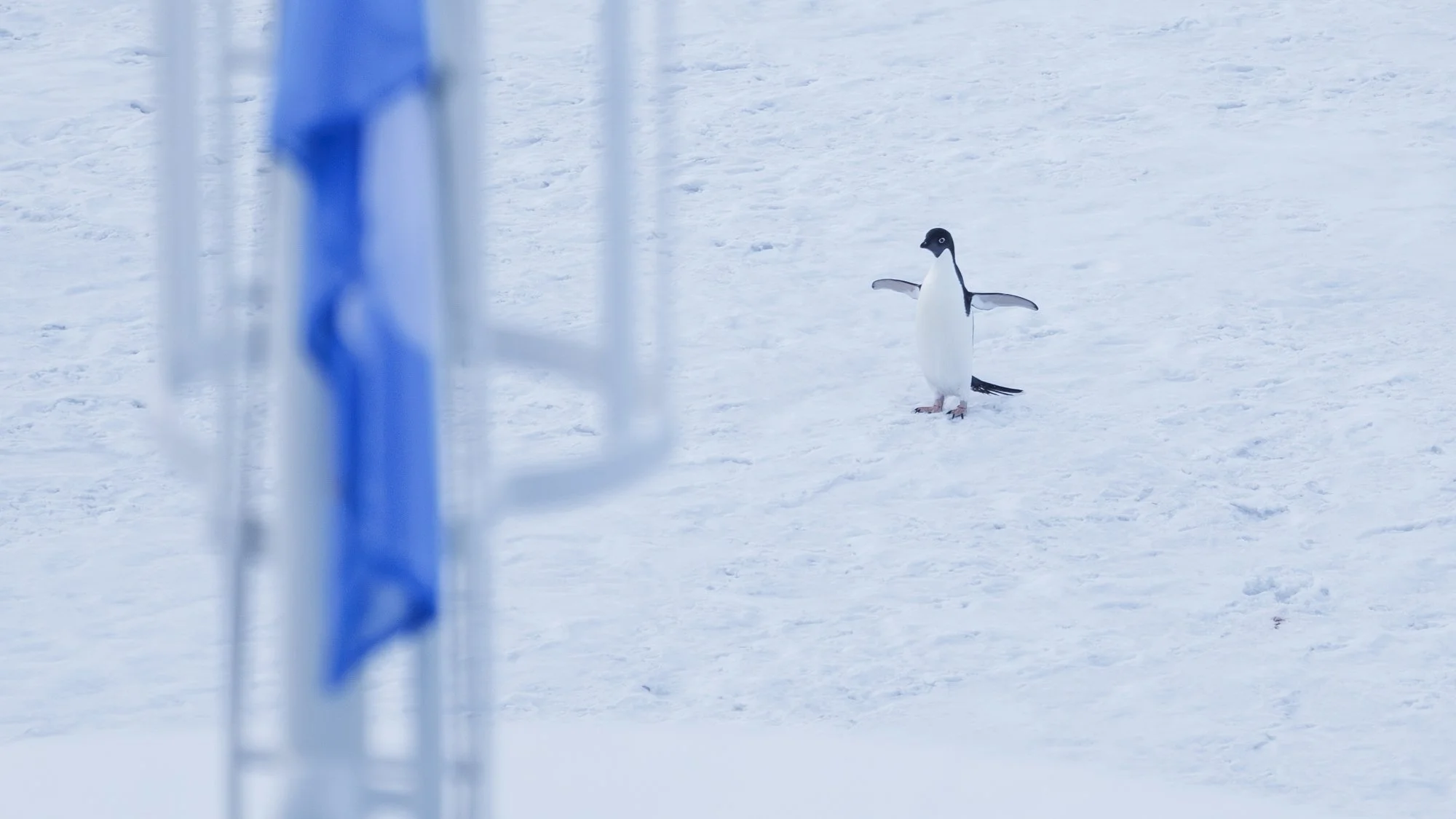
Adelie looks as if it wants to “stop” our ship as it passes by
Penguin Photography: Adélies and Chinstrap Penguins of Antarctica
For me, this was the first time encountering Adélies and Chinstraps in the wild, and what they lacked in size compared to Emperor Penguins, they more than made up for in personality. In many ways, these encounters defined my experience of the Penguins of Antarctica, especially from a penguin photography perspective.
One unexpected upside of leaving Snow Hill earlier than planned, which was a strategic decision by our expedition leaders to avoid becoming trapped in the ice, was the opportunity to visit multiple colonies of the so-called “brush-tailed penguins” (the collective term for Adélies, Chinstraps, and Gentoos). With several hours at each landing, we were able to observe behaviour, social dynamics, and the subtle differences between species, and, crucially, I was able to create more considered, distinctive images of each.
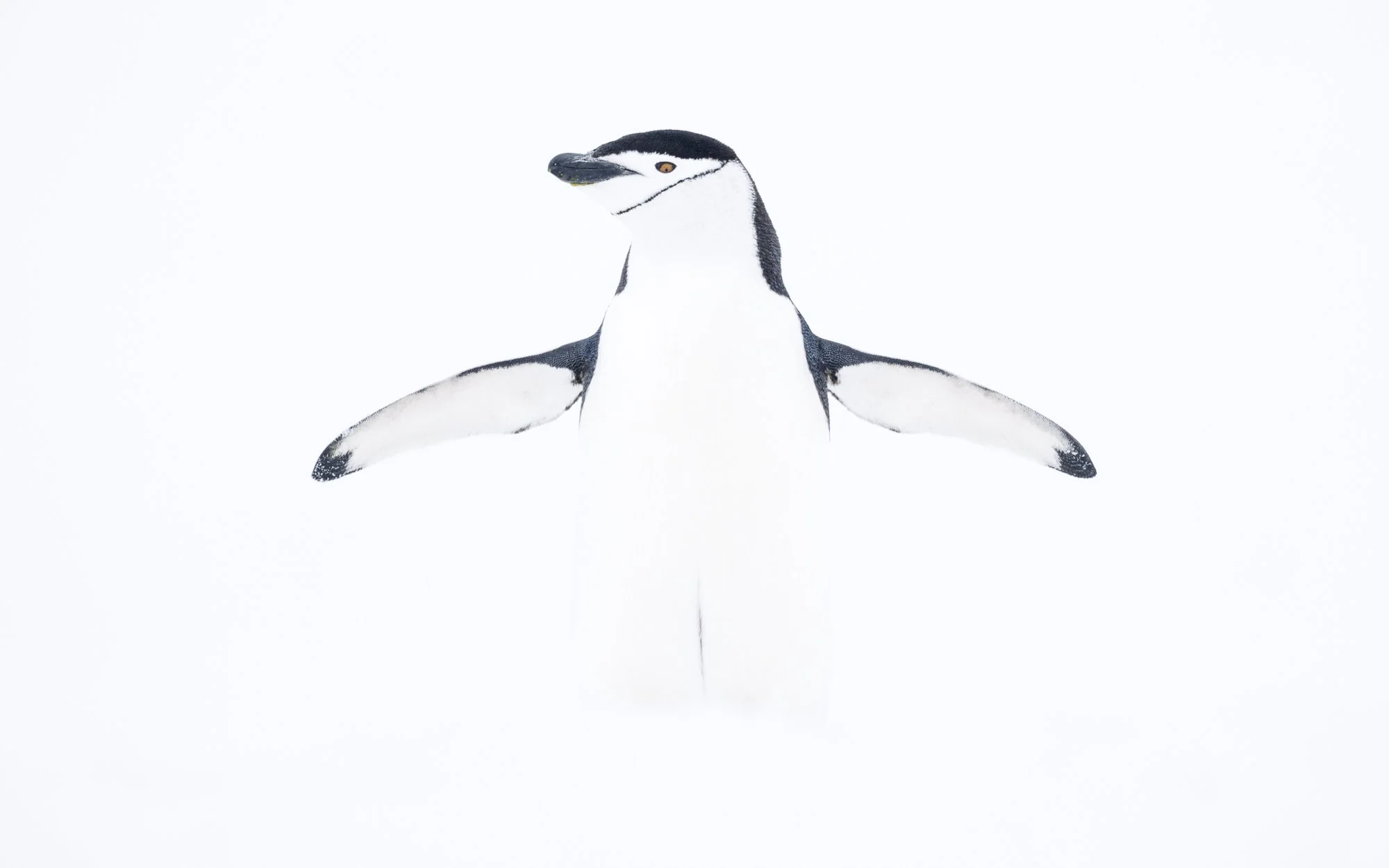
Portrait of Chinstrap with distinctive black band under its chin
Adélie Penguins – Small, Stylish and surprisingly feisty
If I was to award a prize to “Best Supporting Penguin” the Adélie would take it without hesitation. I found them to be expressive, energetic and a more than a little feisty!
Often referred to as being the “maître D’s” of the penguin world due to their black and white front, Adelies return every October to the pack ice to breed doing so in a highly synchronized manner.
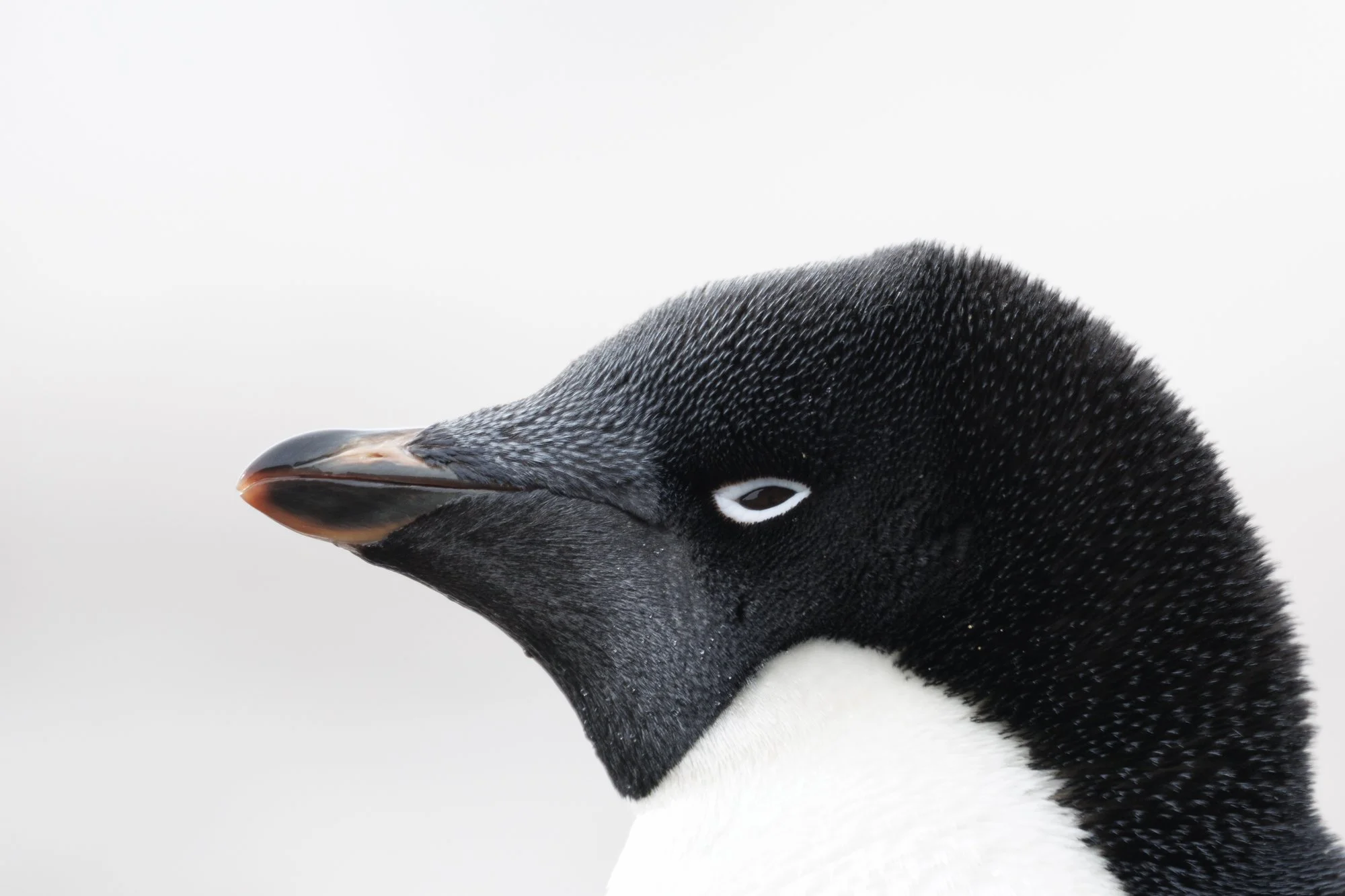
Portrait of an Adelie Penguin
When we landed at colonies on Vortex Island and Brown Bluff, we were witnessing the early stages of the breeding season. Vortex Island, due to its small size, hosted a tightly packed colony which was exactly the kind of environment where tensions could run high.
During one of our pre-excursion briefings, our onboard ornithologist Fabrice Genervois explained that Adélies vigorously defend their territory, especially in crowded colonies, and that disputes can erupt seemingly out of nowhere.
He wasn’t wrong.
A few of us were observing the colony when a minor altercation started between two Adelies, possibly over stolen pebbles. Within moments, 20 to 30 Adélies were involved in a full-scale confrontation with flipper blows, bites, kicks, and an astonishing amount of noise. It felt less like wildlife observation and more like stumbling into an Antarctic bar brawl, one that lasted a good 15 minutes before calm was suddenly restored.
From a penguin photography standpoint, it wasn’t easy as there was chaos all around, overlapping bodies, and constantly shifting action, but as penguin behaviour, it was utterly compelling to watch.
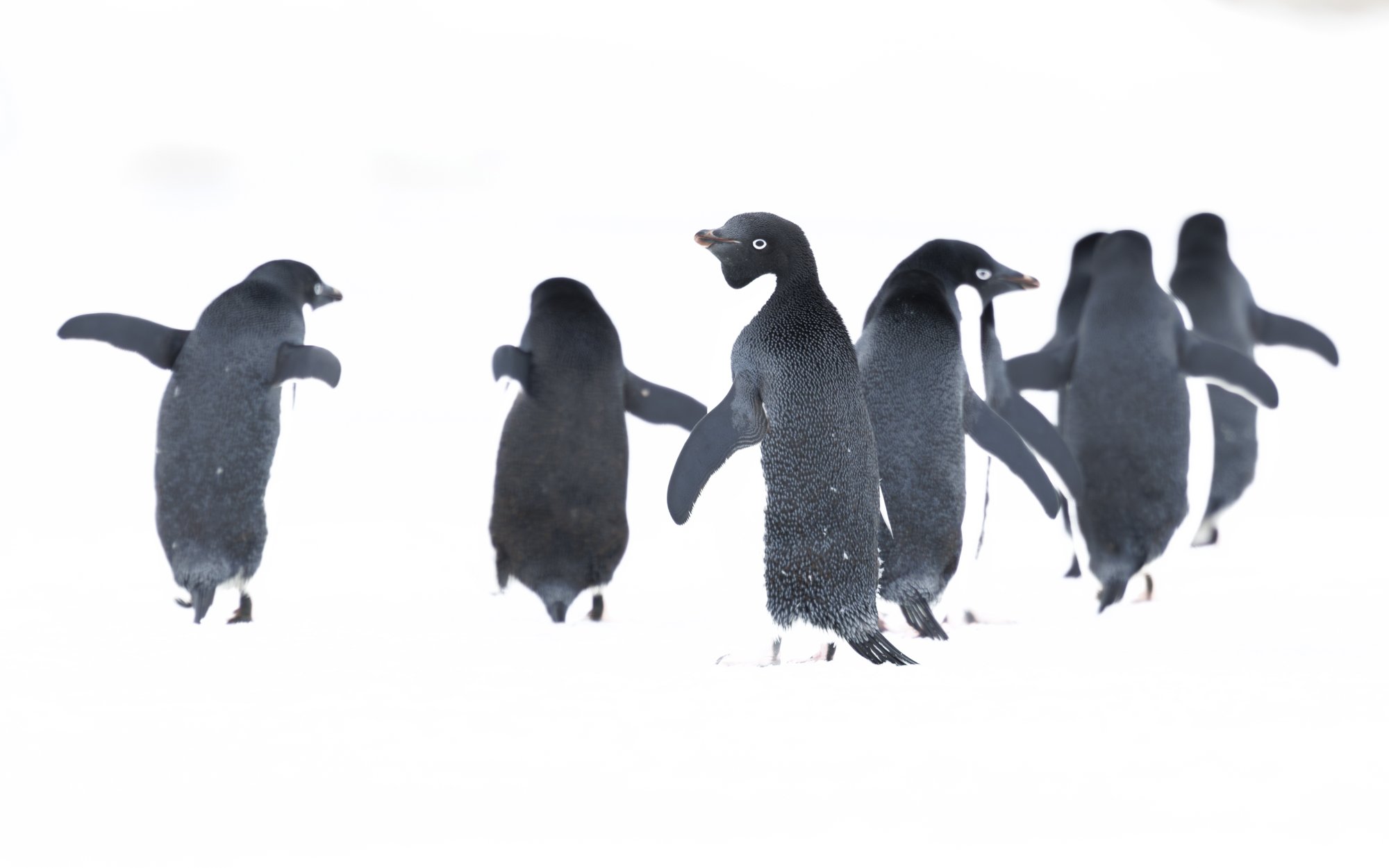
Image of Adelies before the chaos
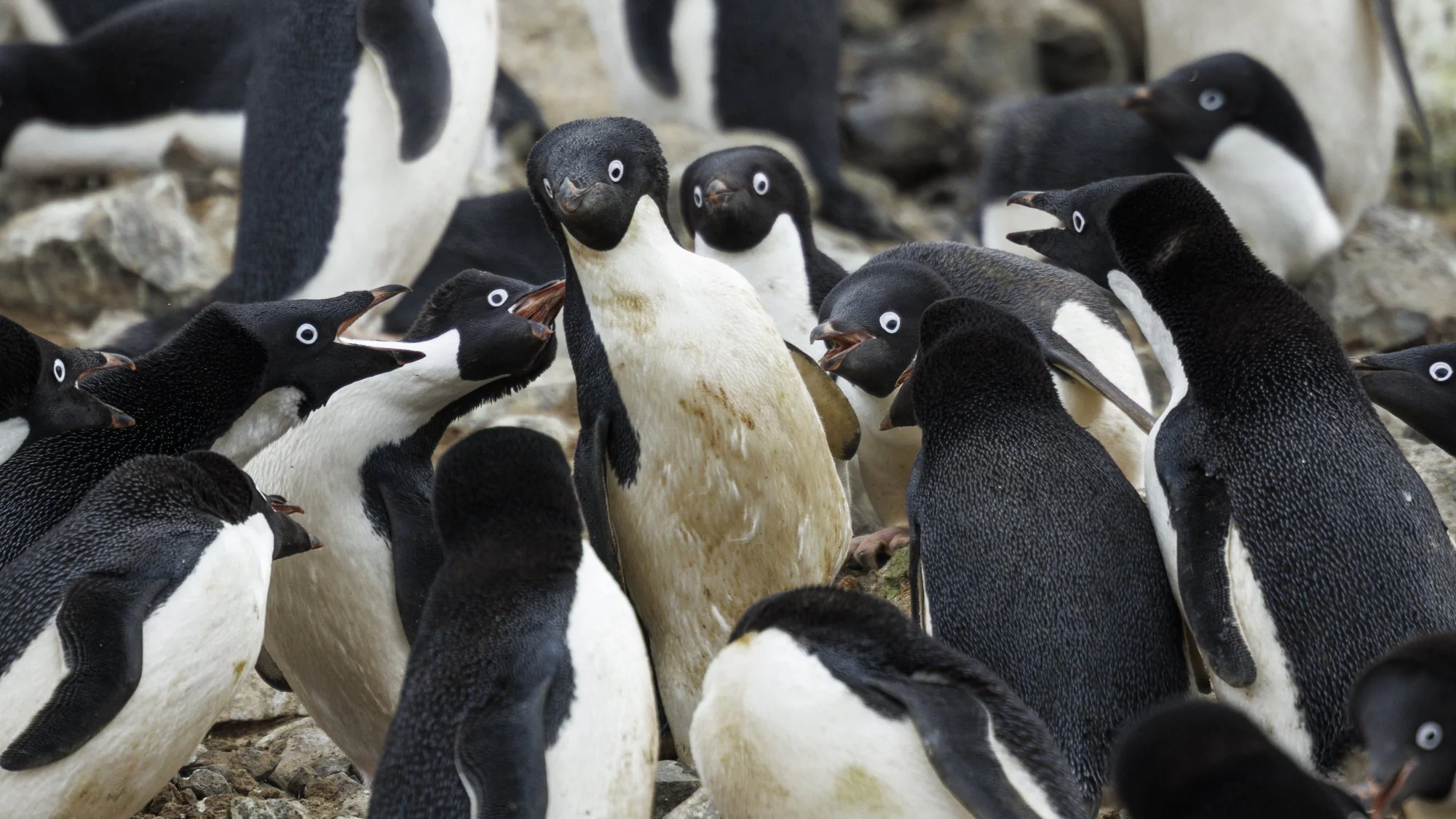
Chaos erupts in the Adelie colony
Chinstrap Penguins – Graphic Icons of the Antarctic
If Adelies are one of the feistiest penguins I observed, my award for most charming and charismatic penguin would go to the Chinstraps.
Easily identified by the delicate black band running from ear to ear beneath the chin, Chinstraps are among the most visually distinctive of all Antarctic penguins. That single line transforms them into a photographer’s dream, lending itself perfectly to graphic compositions, high-key imagery, and black-and-white work and I tried to do all those things across our time with them.
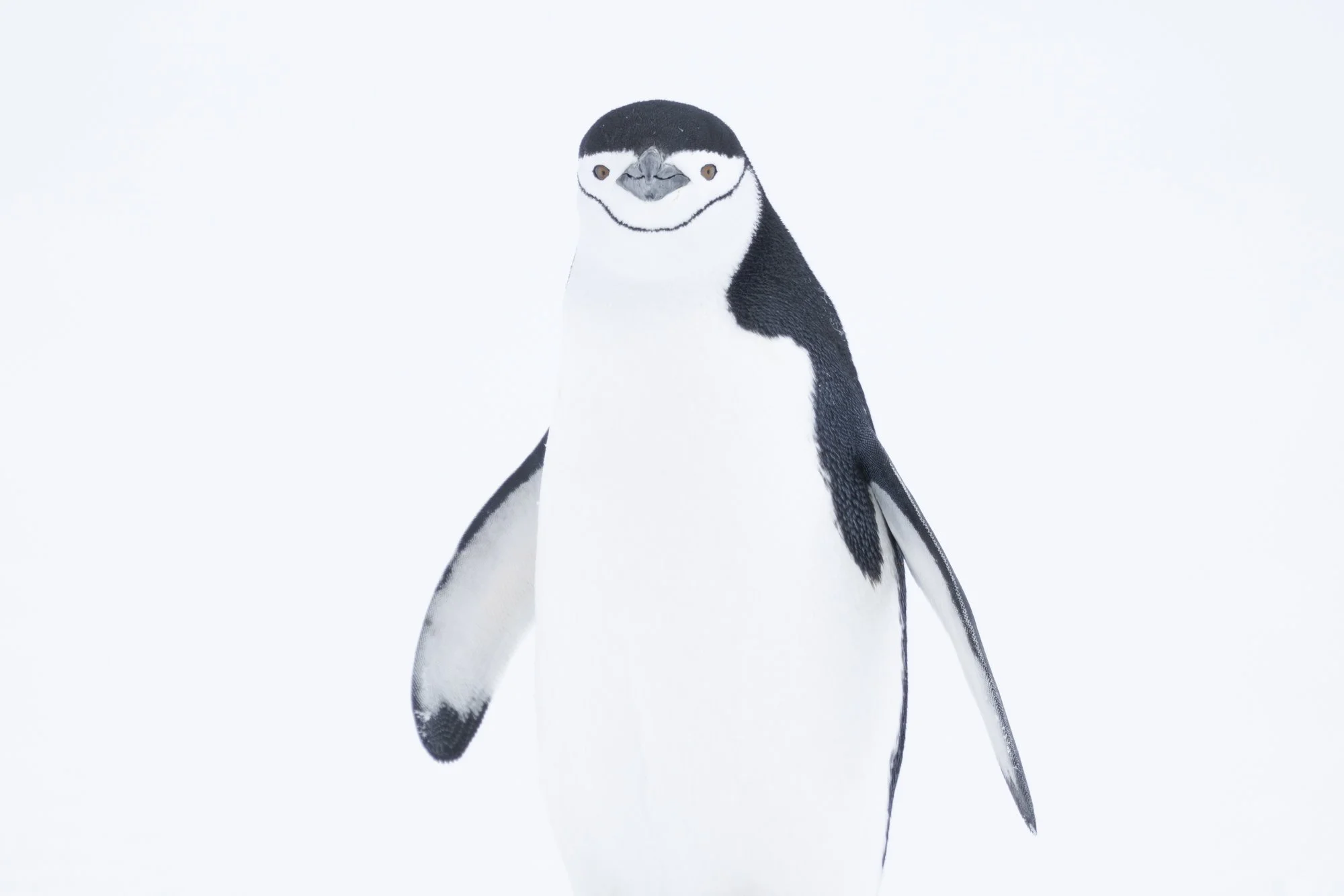
High key portrait of Chinstrap
Photographing Chinstrap Penguin Colonies
We visited Chinstrap colonies at Half Moon Island and Palaver Point, but it was Palaver Point that stood out. Here, the rookery sits atop rocky slopes, reached after a short but steep climb in deep snow from the shoreline. The elevated vantage point allowed us to observe multiple breeding pairs at close range.
Watching their preening rituals and mating behaviour was quietly fascinating, providing intimate moments that contrasted beautifully with the Chinstrap’s bold, graphic appearance by it.
For anyone interested in penguin photography, Chinstraps reward patience and attention to detail. Small head turns, mutual grooming, or subtle changes in posture can completely transform an image.
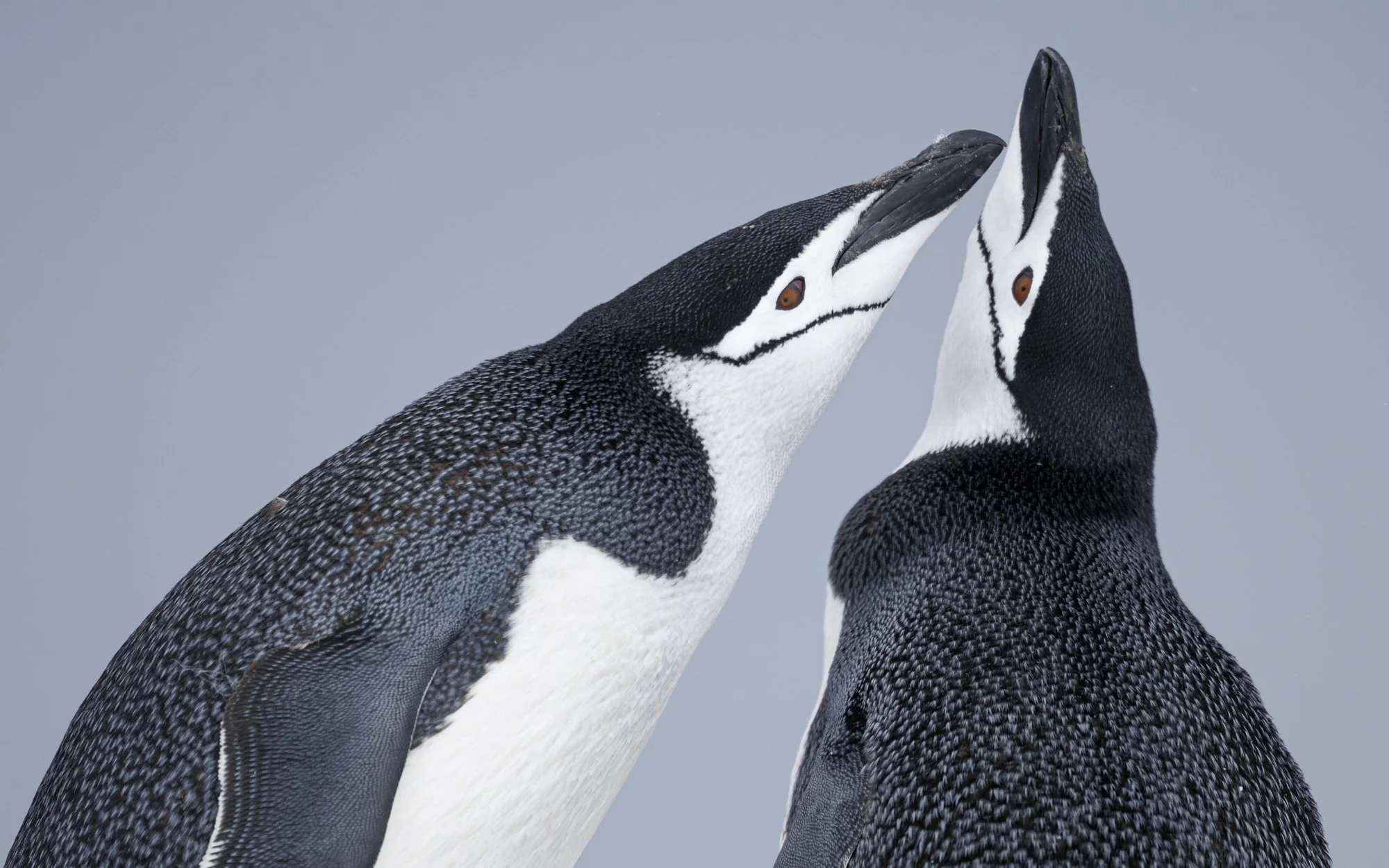
Mating pair of Chinstraps
Gentoo Penguins – Bold, Colouful & impossible to ignore
Adelies and Chinstraps might seem woefully monochrome and dull, compared to the flamboyant Gentoo Penguins. Their bright red-orange beaks and feet, combined with their white head stripe, make them instantly eye catching.
Gentoos are the largest of the brush-tailed penguins and boast the widest distribution of any penguin species across the Southern Ocean. Unlike Adélies, they tend to remain close to their breeding grounds year-round and they make their presence known. Opportunistic and assertive, Gentoos are even known to take over Adélie colonies when conditions allow.
Besides our experience at Snow Hill, my other favourite landing was with the Gentoo colony at Cuverville Island in the middle of a full blown snowstorm. This small rocky island is home to the largest Gentoo colony in the region, with around 4,800 breeding pairs. Our landing on November 11th delivered classic, raw Antarctic conditions which were visually stunning, but technically challenging.
Heavy snowfall made autofocus difficult, while the colony huddled tightly together against the weather, creating cluttered scenes. Photographing here required a lot of patience and constant scanning my surroundings waiting for moments of separation, clean backgrounds, or expressive behaviour.
Thankfully those moments came and here are a couple of my top images from that magical morning.
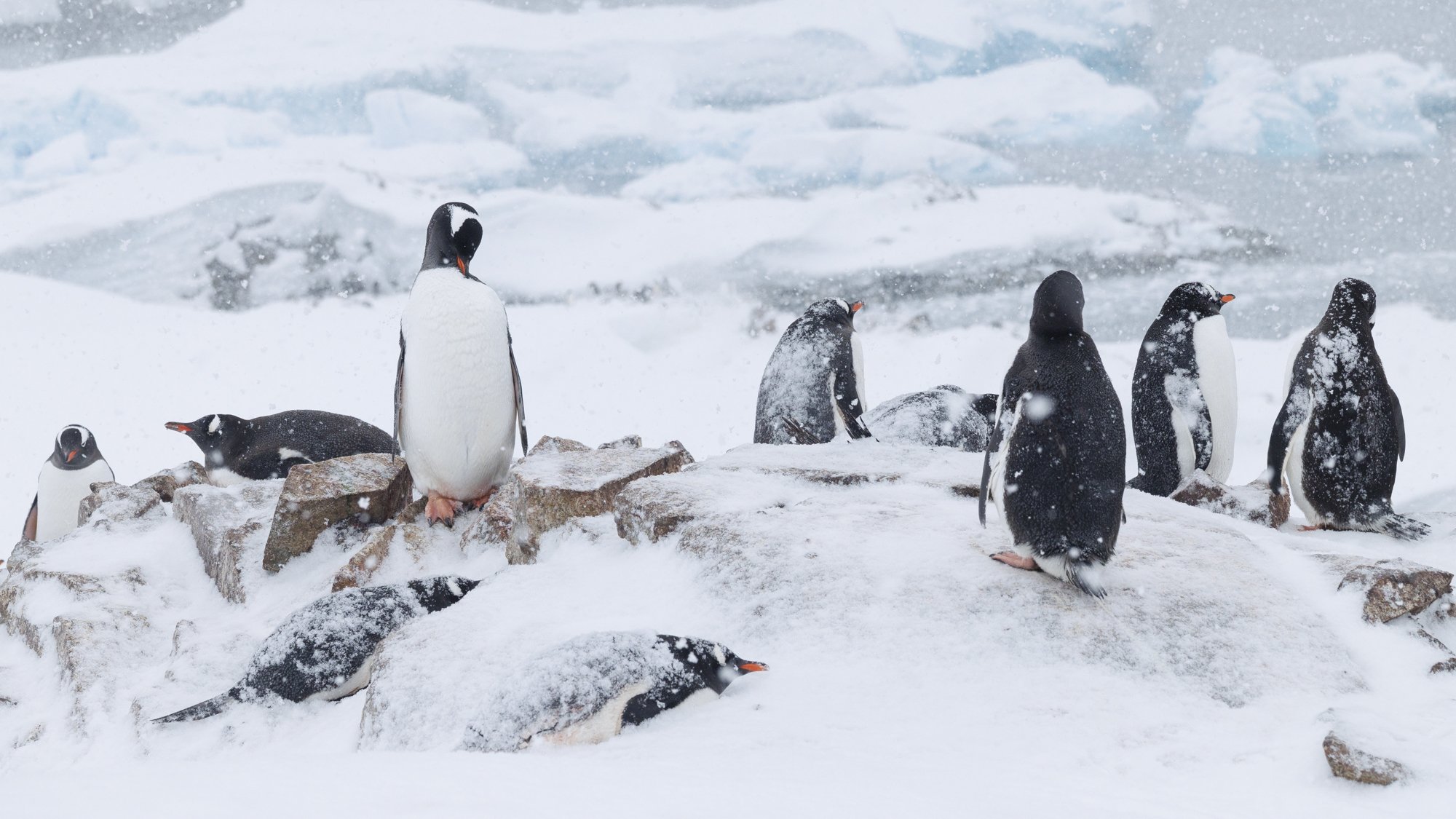
Gentoo Penguin hunker down in snowstorm
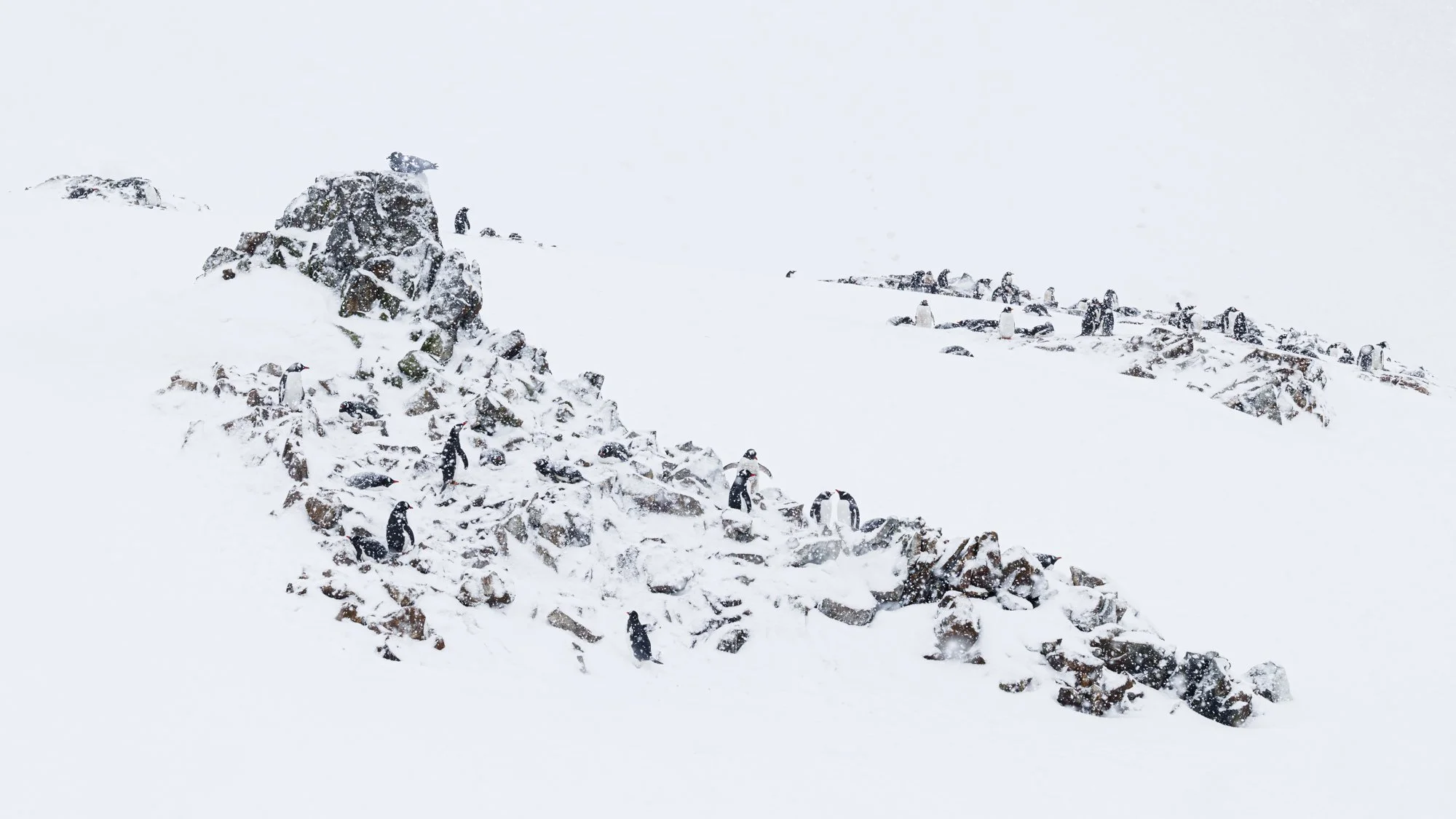
Gentoos in Winter Landscape
Our final landing at Damoy Point felt like the perfect closing chapter. The rocky headland, the sweeping views, and the Gentoo colony perched above it all formed a scene I’ll never forget.
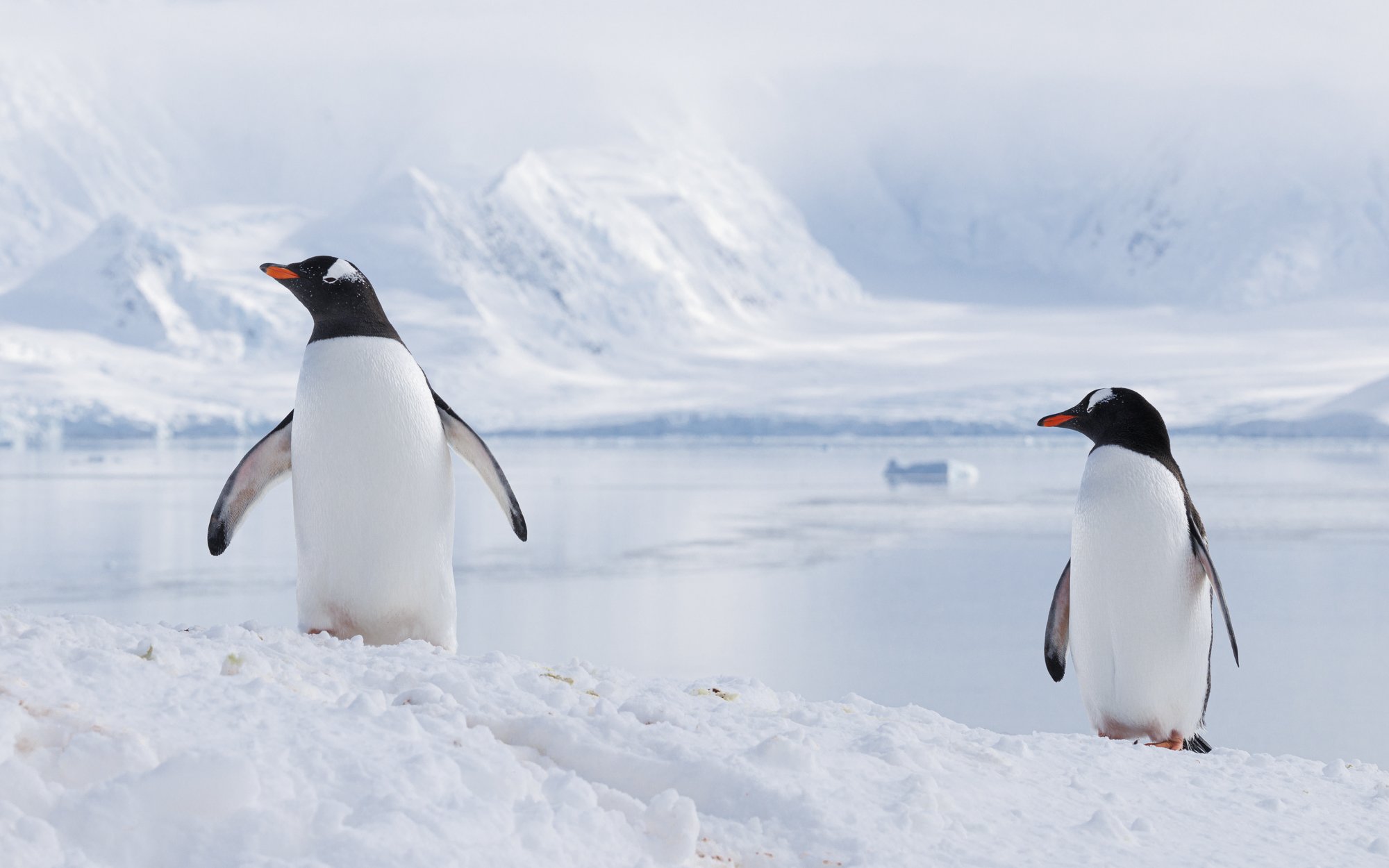
Gentoos on top of Damoy Point
Why Photographing Penguins of Antarctica Is Unforgettable
Each of these penguin species — Adélie, Chinstrap, and Gentoo — is extraordinary in its own way. As our Antarctic expedition came to an end, I was genuinely elated by what these resilient and charismatic birds had given me through access to their brutal and beautiful world, and moments, and memories that went far beyond photography.
It certainly wasn’t easy to do it justice at times, and that’s why my pre trip research was so useful to provide inspiration about what images I was looking to capture.
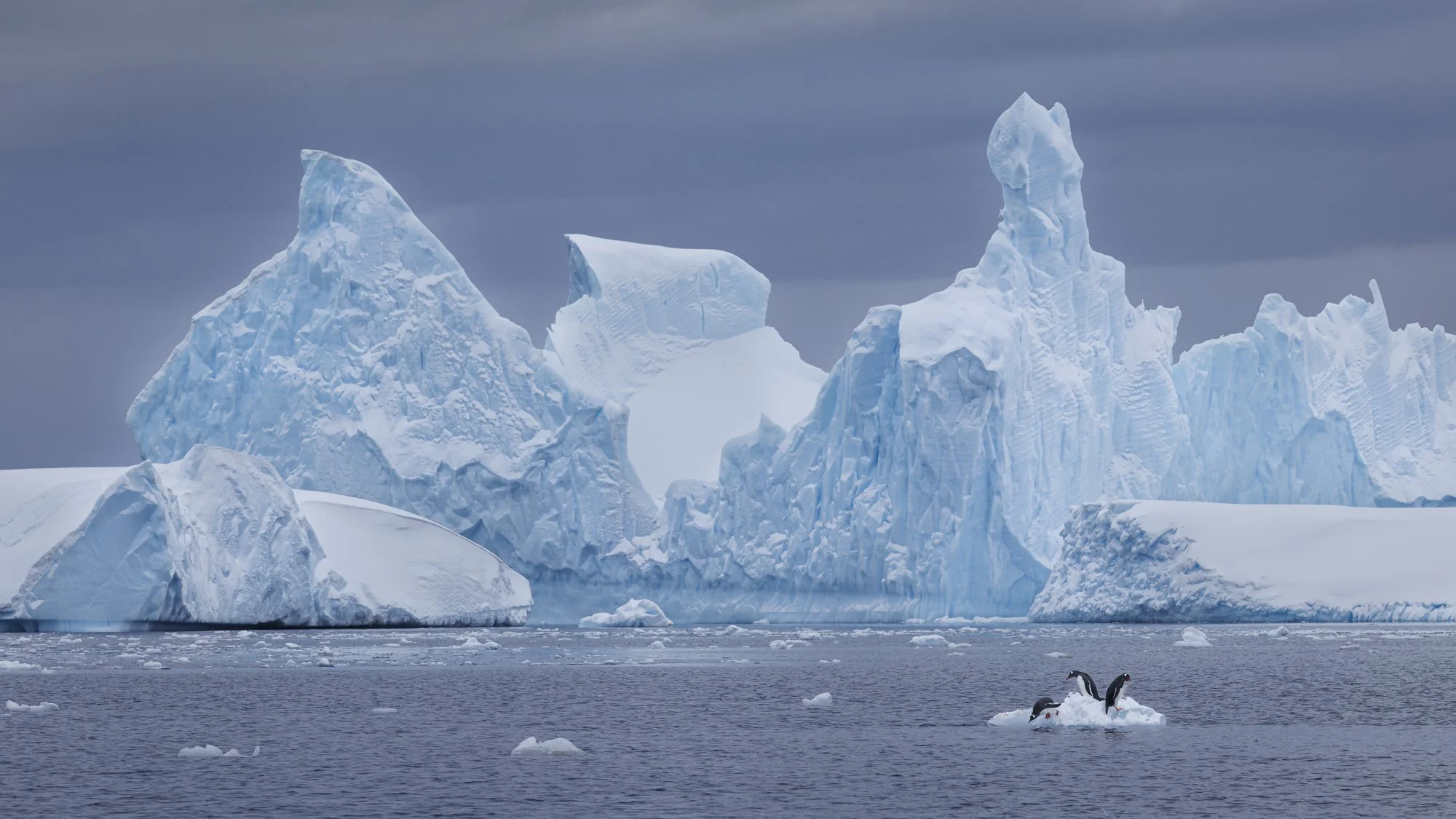
Gentoos with stunimg iceberg backdrop
More Penguin Photography Adventures
I arrived thinking this would be a once-in-a-lifetime journey, especially as traveling to Antarctica isn’t cheap. However from a photography perspective, and after traveling extensively across the Arctic, there is nowhere else quite like it. I left knowing once is not enough and I had to return.
So, I’ll be back in 2027 with Quark Expeditions to do it all again.
Camera Gear Used for Antarctic Penguin Photography
My normal lens of choice is my EF 400MM F2.8, but I felt that might not be the most practical for my first time photographing Antarctic Penguins. After getting advice from others who had been to Antarctica, I decided to hire the RF100-300 F2.8 lens. Whilst there were a few occasions I would have loved to have had my prime lens, the 100-300 gave me fantastic flexibility, moving around easily and allowing me to get low when I needed to.
Whilst I did use a tripod at Snow Hill, photographing the Emperor Penguins, I decided that the extra weight and lack of flexibility was too cumbersome on subsequent landings. So, I made best use of my Peak Design camera strap to carry my camera & lens which helped me to move quickly when penguins were on the move.
· All images taken on Canon R5II, R5 and R3
· Lenses-
· Canon RF 100-300 f2.8 (hired from Lens for Hire)
· RF 70-200 F2.8 & 24-70 F2.8
· Extenders RF 1.4X EXT; RF 2X EXT
Key Facts About Adélies, Chinstraps and Gentoos
Of the six penguin species found in Antarctica, only Emperor and Adélie Penguins are true Antarctic specialists. Chinstraps, Gentoos, Macaronis, and Kings are more commonly found around the northern Antarctic Peninsula and sub-Antarctic islands such as South Georgia.
The term “brush-tailed penguins” refers to the stiff tail feathers that act like a prop, swaying side to side as the birds walk and helping them balance on land and steer when at sea.
Although Adélies, Chinstraps, and Gentoos are closely related, differences in breeding cycles and foraging behaviour usually prevent them from cohabiting, though Gentoos frequently attempt to expand into neighbouring colonies.
Penguins’ black-and-white colouring provides counter-shading camouflage in the water, helping them hunt prey while avoiding predators such as the leopard seal.
Chinstraps are fast foragers. They are near-shore, efficient hunters that primarily eat krill, diving to depths typically less than 45 meters (150 feet).
Gentoos are the fastest underwater birds, capable of reaching speeds up to 36 km/h (22 mph). Unlike Adélies and Chinstraps, Gentoos are opportunistic feeders (eating fish and krill) and are better adapted to warmer, less icy conditions, allowing their populations to thrive in the warming Antarctic Peninsula.
The Adélie penguin got it's name from the French Antarctic explorer, Jules Dumont d'Urville. On discovering these sea birds in 1840 he decided to name them after his beloved wife – Adéle. It is the only penguin named after a female.
· To learn more about Antarctic Penguins or to support Penguin species globally, I would recommend Global Penguin Society. They are an internationally recognized organization dedicated to the conservation of the worlds Penguin species and the oceans they inhabit, so a great organization to support.
If you want to see more of my Penguin images from Antarctica please take a look at this series EMPEROR PENGUINS.
Thank you for taking the time to read this blog . If you are interested in knowing more let me know your questions via this link or connect with me on Instagram — it would be great to hear from you!
Jules

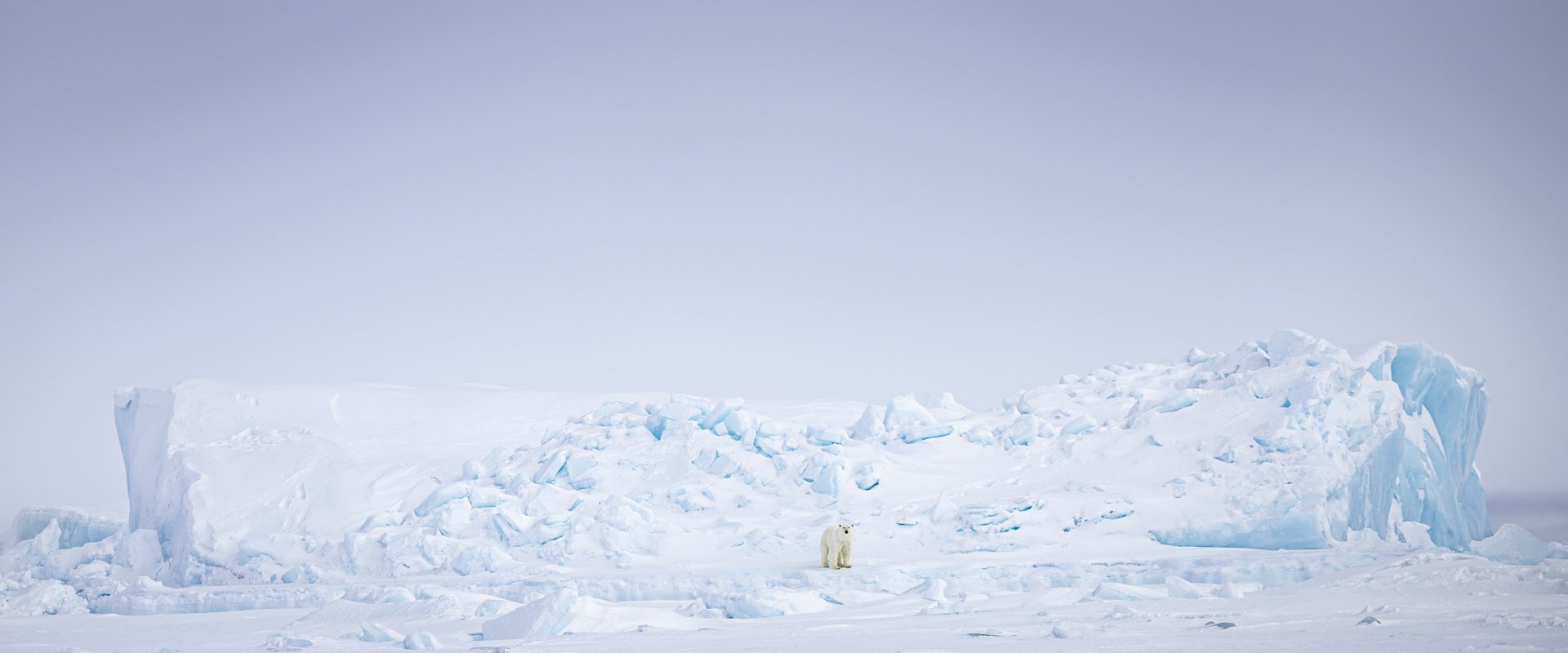
Svalbard, 2009
This was my first sighting of a polar bear taken nearly 20 years ago and I couldn't have asked for a more epic Arctic vista for my first encounter in Svalbard.
✓ Museum archival giclée paper
✓ Hand-signed & numbered by Jules
✓ Certificate of authenticity
✓ 15% to conservation
✓ Worldwide shipping
✓ Free UK delivery
The Full Story Behind The Photo
This was my first sighting of a polar bear taken in Svalbard nearly 20 years ago, yet I still remember it vividly. The excitement onboard our icebreaker the Vavivlov was palpable, especially as the scene itself was so breathtaking. The polar bear looked tiny as it walked along the shoreline framed by the towering glaciers. I couldn’t have asked for a more epic Arctic vista for my first Polar Bear encounter. I’ve had closer sightings of bears in Svalbard, but this image holds a special place for me as one of my favourite “animal in environment” images and reflects why it is so important to not only protect polar bears but also this pristine Arctic environment.
Print Specification
All prints are printed on Canson® Infinity Rag Photographique which is a 100% cotton museum grade white Fine Art and photo paper.
Canson® Infinity Rag Photographique offers a unique extra smooth surface with a sensual feel. It has been developed to address the need for continued longevity requirements in the Digital Fine Art market.
Shipping & Delivery
Delivery is from the United Kingdom and is included free with the purchase of all prints. Delivery is by FedEx, DHL, UPS, or DPD depending on location. Once your order is shipped you will receive an email with your tracking number. Please allow up to two weeks to fulfil your order plus one week for delivery.
Conservation Impact
As with all images in the collections, 15% of the proceeds from each image will be split between four charities- Kicheche Community Trust, Great Plains Foundation, Big Cat Initiative & Sheldrick Wildlife Trust. Learn more about giving back, here.