
HOW TO PHOTOGRAPH GALAPAGOS ISLANDS WILDLIFE
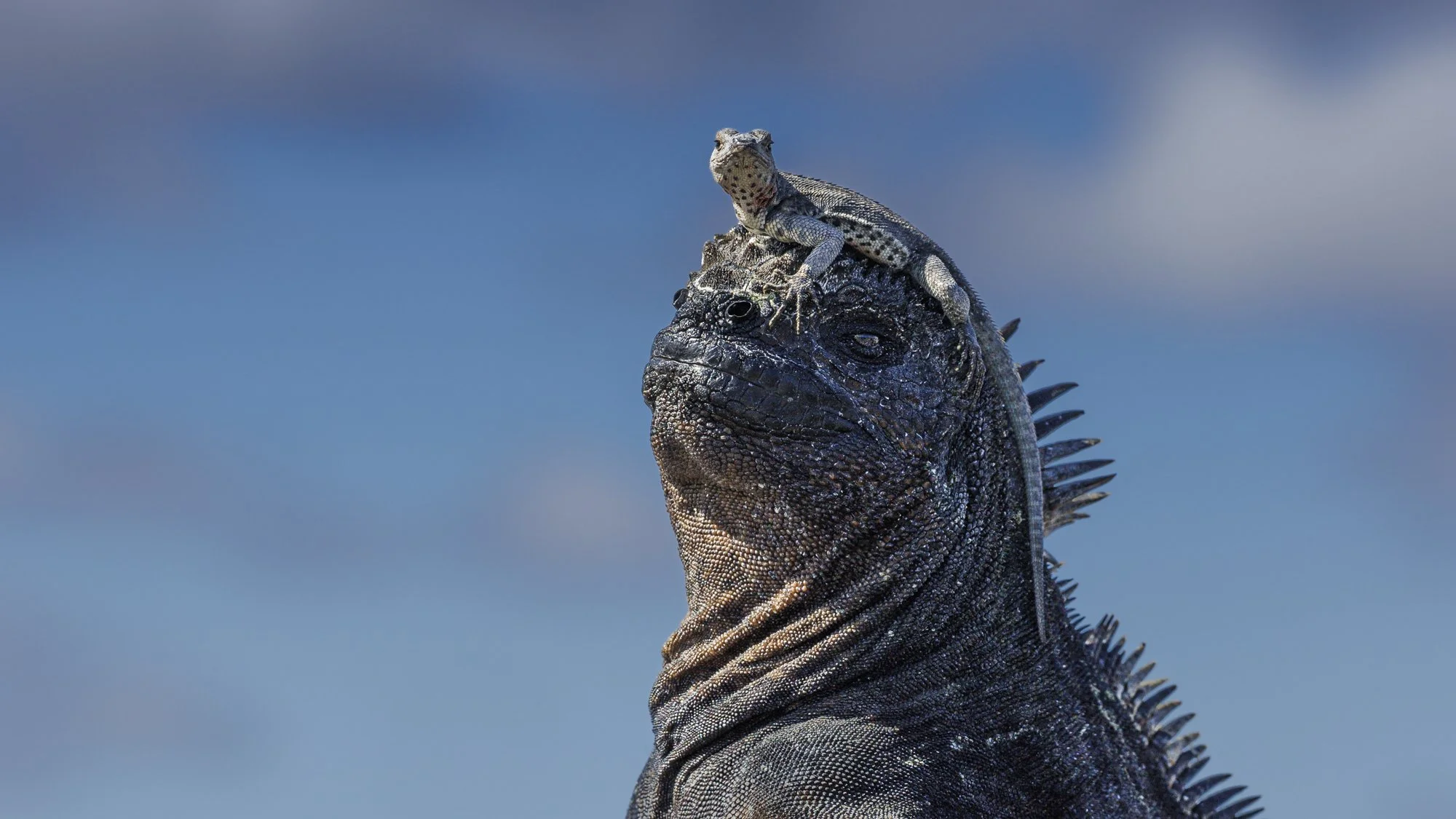
Marine Iguana and Lava Lizard on its head, Fernandina Island
How to get Photography Inspiration
I’m not an expert on Galapapos Islands Wildlife. What I want to share instead is how I find creative photography inspiration before visiting a destination I've never shot before, with wildlife I've never photographed before. My aim from my recent photography workshop in the Galapagos was to come back with a handful of striking images of Galapagos wildlife. These are the steps I took in advance to ensure that when I was on the islands, I had a clear vision of the type of images I was looking for.
1) Learn from the best- I used Instagram to find photographers who had shot in the Galapagos, saving the images that resonated with me. Since birdlife was going to dominate the trip, I look at the bird photography of award-winning photographers Georgina Steytler, Steffen Foerster and Daisy Gilardini who are all known for their creativity and technical range. I also admire the studio bird portraits of Tim Flach and Leila Jeffreys. Whilst they use an artificial setting for their work, they nevertheless capture characterful portraits which are not only rich in painterly detail but capture the essence of each bird they photograph. I wondered how I could use their approach, where the bird is clearly the protagonist, and apply it in a wild, unstaged setting.
2) Create a Pinterest Board of favourite images
For every photo safari, whether to a familiar destination or somewhere new like the Galápagos, I build a Pinterest mood board that acts as a constant reminder of what I’m trying to achieve. This isn’t about copying other photographers’ work, but rather it’s about absorbing what’s worked for others and using it to not only inform my own fine art style and see how I might be able to improve on it. Birds aren’t usually my subject, so this step was especially valuable to learn techniques from photographers with more expertise in that area.
3) Reference books on Galapagos Wildlife
Understanding the Galapagos wildlife that I would encounter daily made a real difference once I set foot on the islands. I used the books by Galapagos Wildlife Expert Tui de Roy. I made notes on the birds that I found most interesting from a visual and a behaviour perspective, such as the Great Frigate, the Blue Footed Booby and the Galapagos Penguin. Since sightings of these species were almost guaranteed, I arrived already knowing exactly what image I wanted, rather than reacting on the spot.
4) Travel with Wildlife experts
My 13-day Galápagos photography workshop was run by Wildlife Worldwide , a well-regarded UK travel company. Our guides were naturalists and photographers Mark Carwardine and Chris Breen. I had already travelled with Mark before to the Great Bear Rainforest so knew I was in good hands on this trip. This combination alongside local expert naturalist Juan Tapia, who every day brought to life what we would be seeing, through his boundless enthusiasm and love of the Islands. It was totally infectious.
Combined with our small group size of 12, this meant we were consistently well briefed on what to look for on each of the 13 islands, whether on foot, by panga or snorkeling.
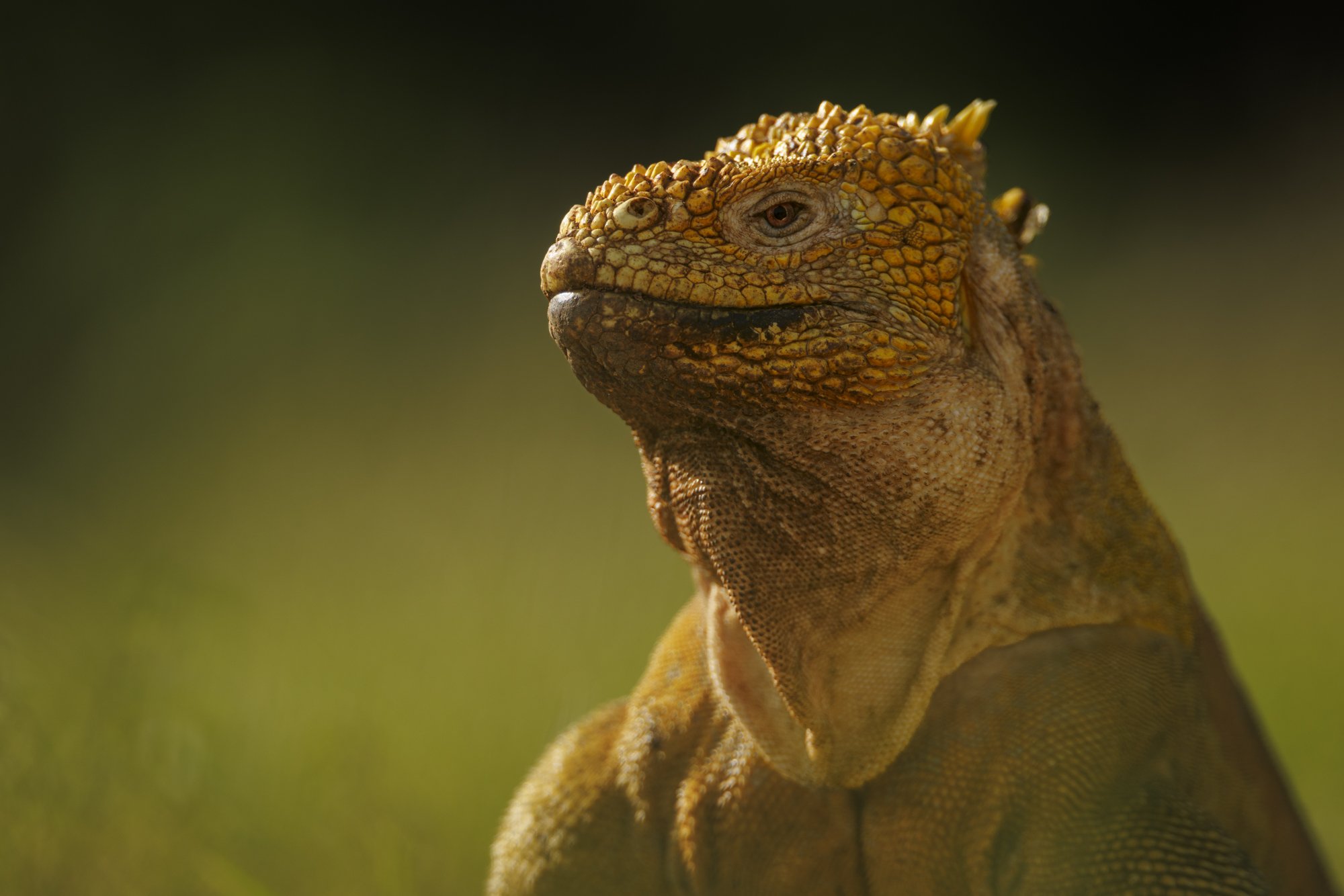
Land Iguana portrait taken at Dragon Hill, Santa Cruz
Capturing the colours of Galapagos Islands Wildlife
Whilst my photography style has evolved toward to fine art black and white photography in recent years, the sheer vibrancy of Galapagos wildlife and landscape made colour essential for most of my images.
Captivated by the Sally Lightfoot Crab, I made capturing its kaleidoscope of colour one of my personal missions. Since the islands have no land predators, the wildlife shows little fear of humans, This allowed me to get within a few feet, and also to get low, often lying flat on the sand, as in this crab portrait as it moved along the beach at Punta Cormorant. Careful exposure and a clean background did the rest, letting the colour really pop.
That same low-angle technique let me line up a Blue-Footed Booby against a moody sky on our final landing, at North Seymour, timed perfectly with the male's courtship dance in the trip's final 30 minutes. It was a perfect ending to my time in the Galapagos.
The Great Frigatebird on Genovesa Island was harder to nail. I wanted the males mid-courtship, fully inflated red pouch on display, but a clean background and foreground took real patience. Using the 1.6x crop mode on my Canon R5 II helped tighten the frame; the result captures behaviour that is both impressive and slightly absurd.
Background again proved decisive with the American Flamingo image, shot on a lagoon at Rabida in late afternoon light. A dark background plus deliberate underexposure brought out the iridescent pinks and rich feather texture as the bird preened.
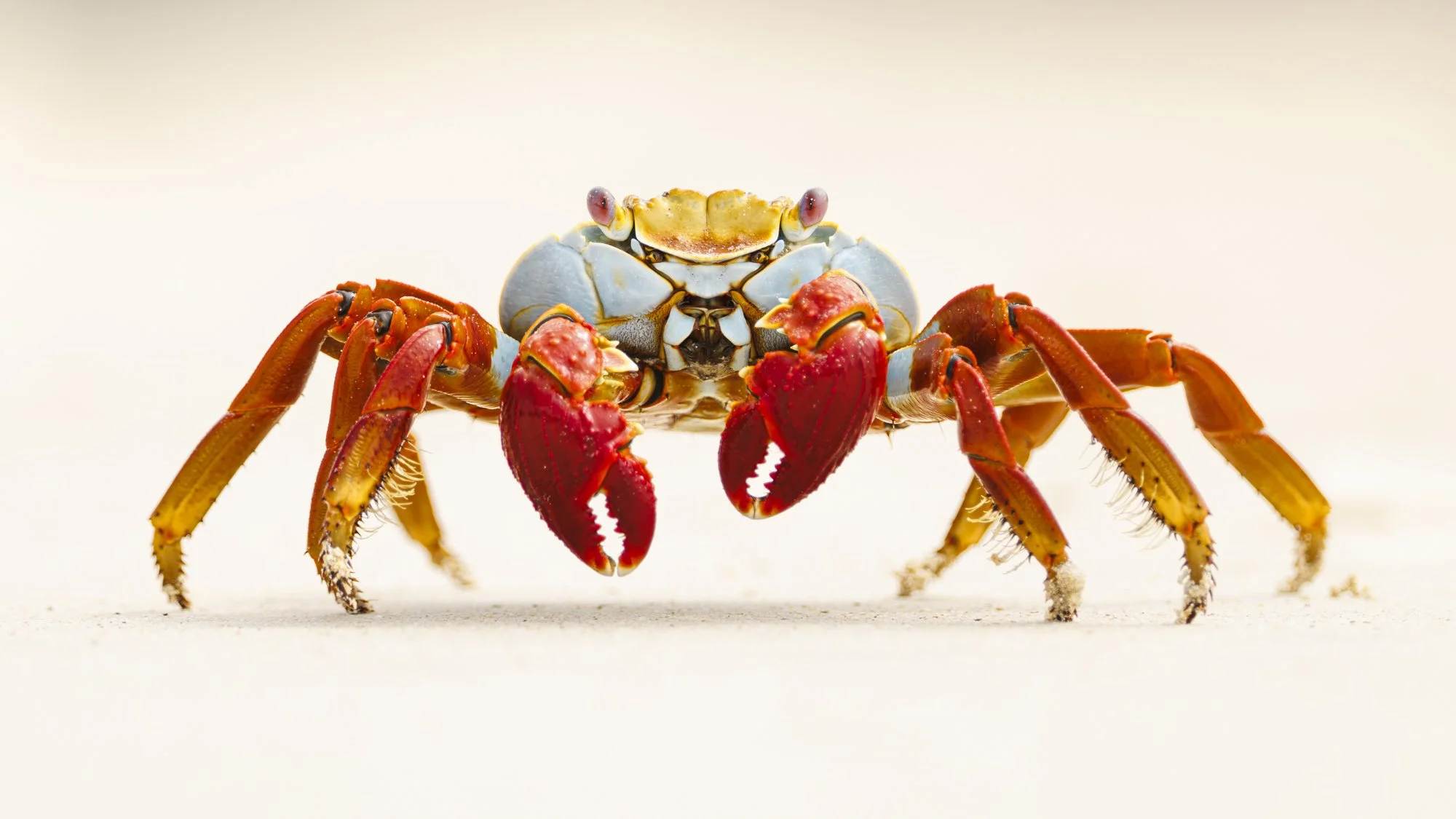
Sally Lightfoot crab dancing on the beach at Punta Cormorant
Did You Know…..They are rumoured to have been named after a Caribbean dancer, due to their agility in jumping from rock to rock, their ability to run in four directions and their capacity to climb up vertical slopes.
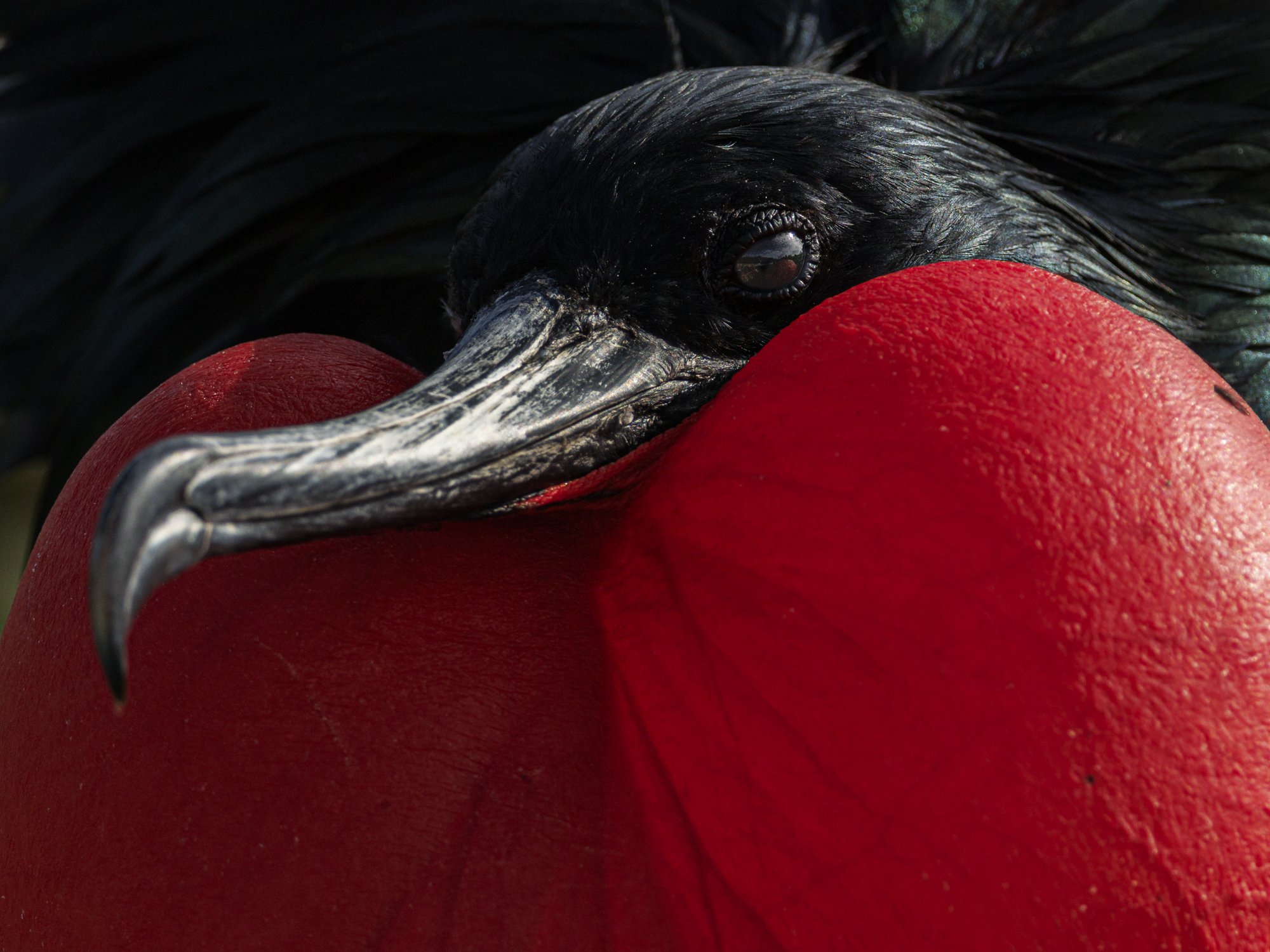
Great Frigate Bird at Genovesa
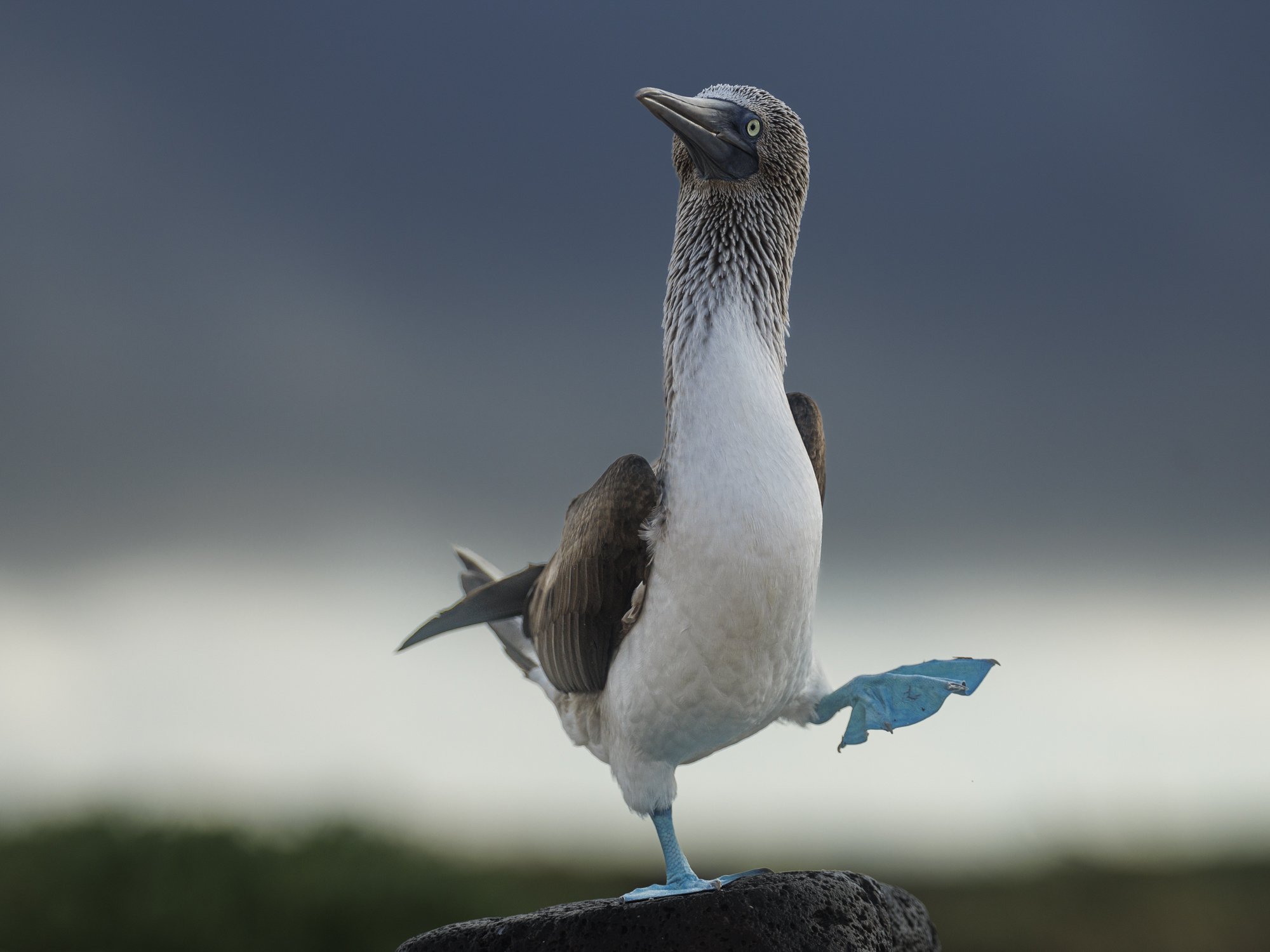
Blue Footed Booby male in courtship dance on North Seymour Island
Did You Know?….That the feet of a Blue-Footed Booby is an indicator of how healthy they are. the brighter the feet, the healthier and better nourished they are.
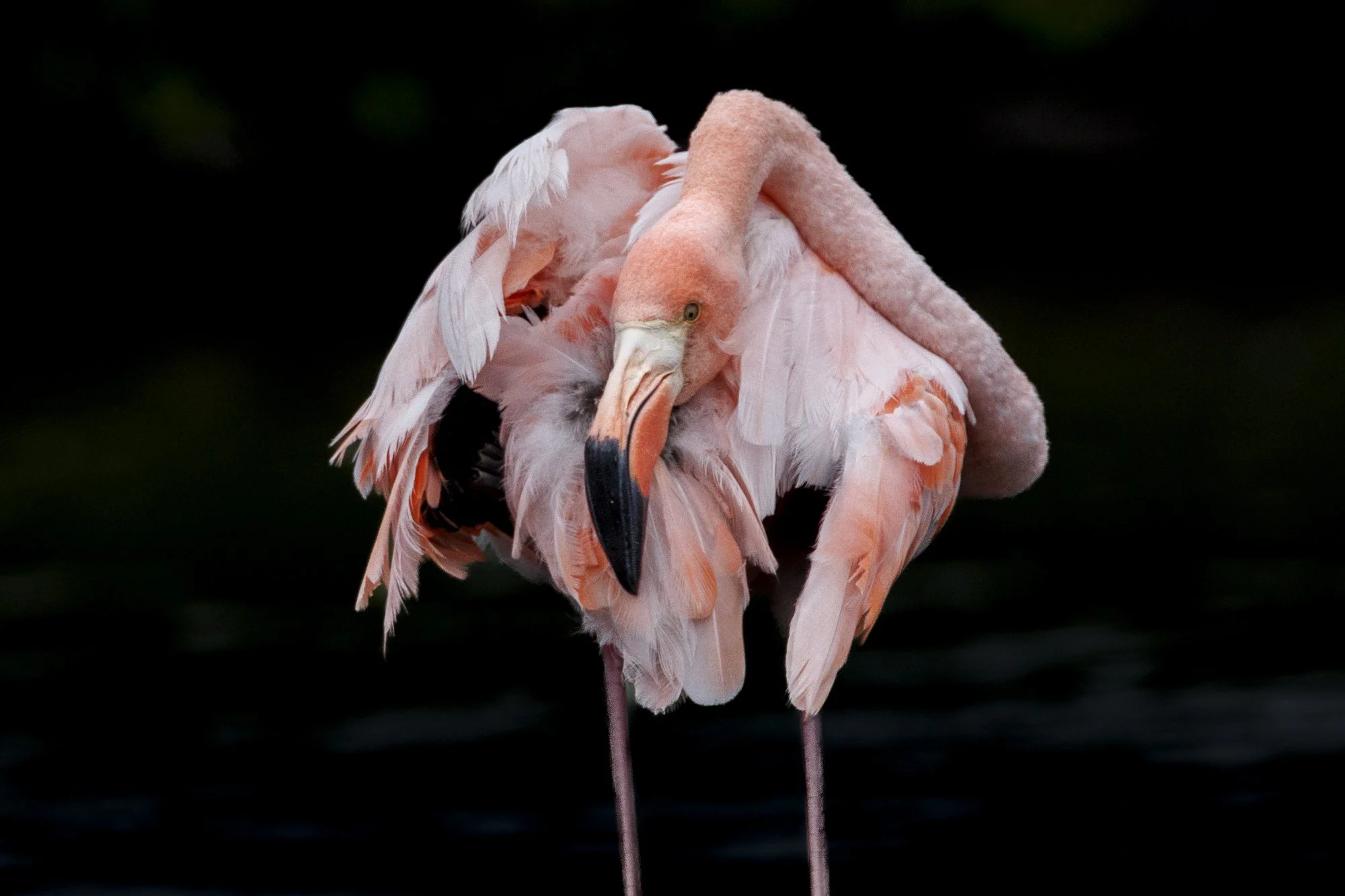
American Flamingo on a lagoon at Rabida
Did You Know?….In 2022, experts found nests of the Galapagos flamingo, also referred to as the Caribbean flamingo, on the shore of a saltwater lagoon off Rabida Island. This was the first time in 20 years that they had been documented in this habitat.
Creating minimalist Black and White photographs
Sebastião Salgado, the master of black and white documentary photography who passed away in 2025, remains a huge influence. His 2004 Galápagos images in "Genesis," including his striking marine iguana photograph (https://www.nga.gov/artworks/232324-marine-iguana-amblyrhynchus-cristatus-galapagos-ecuador) are extraordinary for their texture and detail. My own image of an iguana's tail paysquiet homage to Mr Salgado. I noticed how the early morning light illuminated its scales which glistened like diamonds, so I framed tightly on the tail and underexposed to intensify the effect.
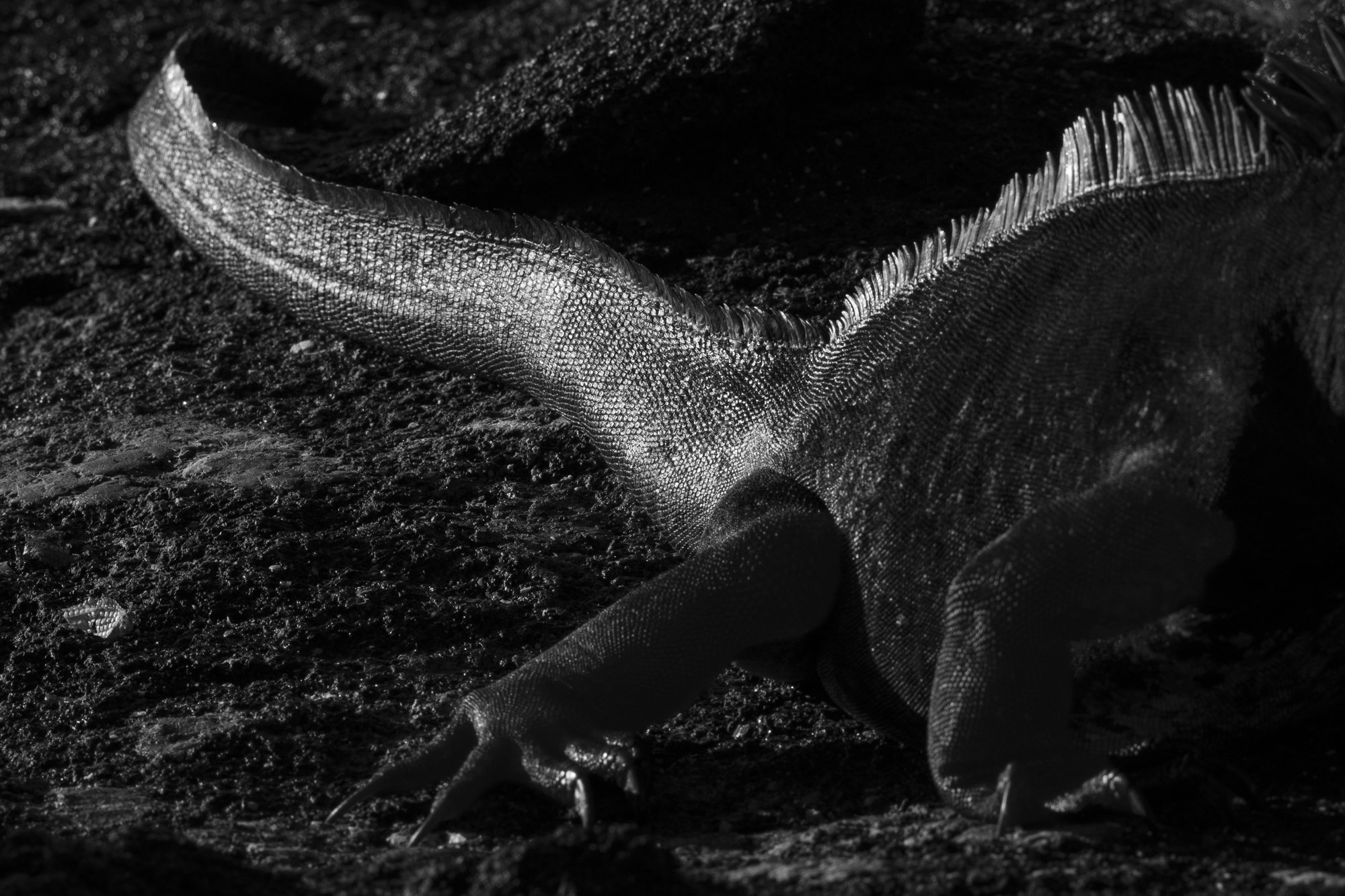
Homage to Salgado -Tail of a Marine iguana illuminated by the Sun at Fernandina
Light direction was just as critical for a low-key black and white portrait of a Yellow-Crowned Night Heron, shot against a shadowed background with overhead light. I went in tight and underexposed by three stops, leaving only the bird's long white nape feather and crest to catch the light.
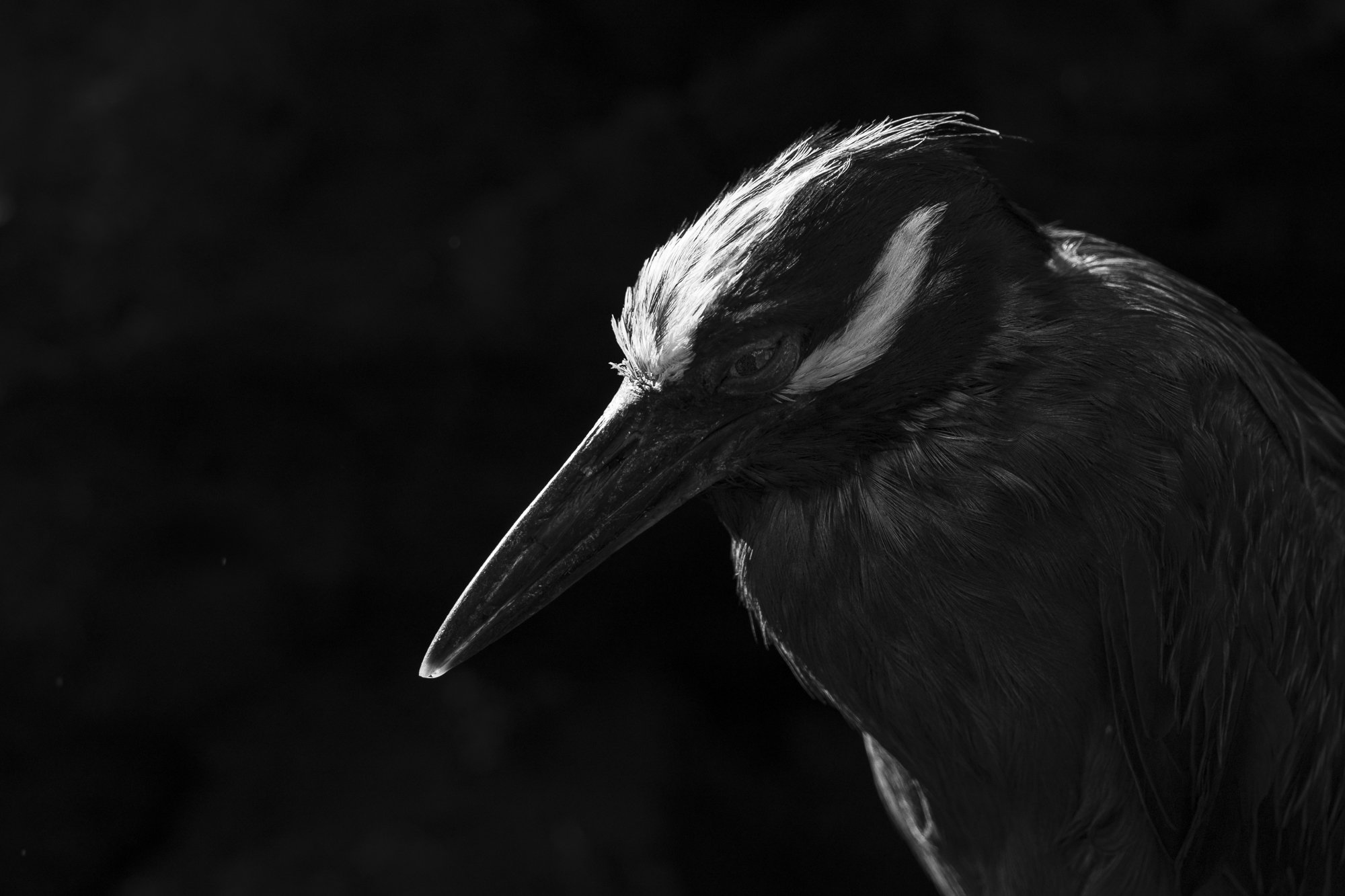
Low Key portrait of Yellow Crowned Night Heron
I couldn’t resist making the Marine Iguana the main subject of my black and white photography on the Galapagos. There were endless opportunities to isolate their texture, scales and spikes in minimalist frames especially against cloudy skies.
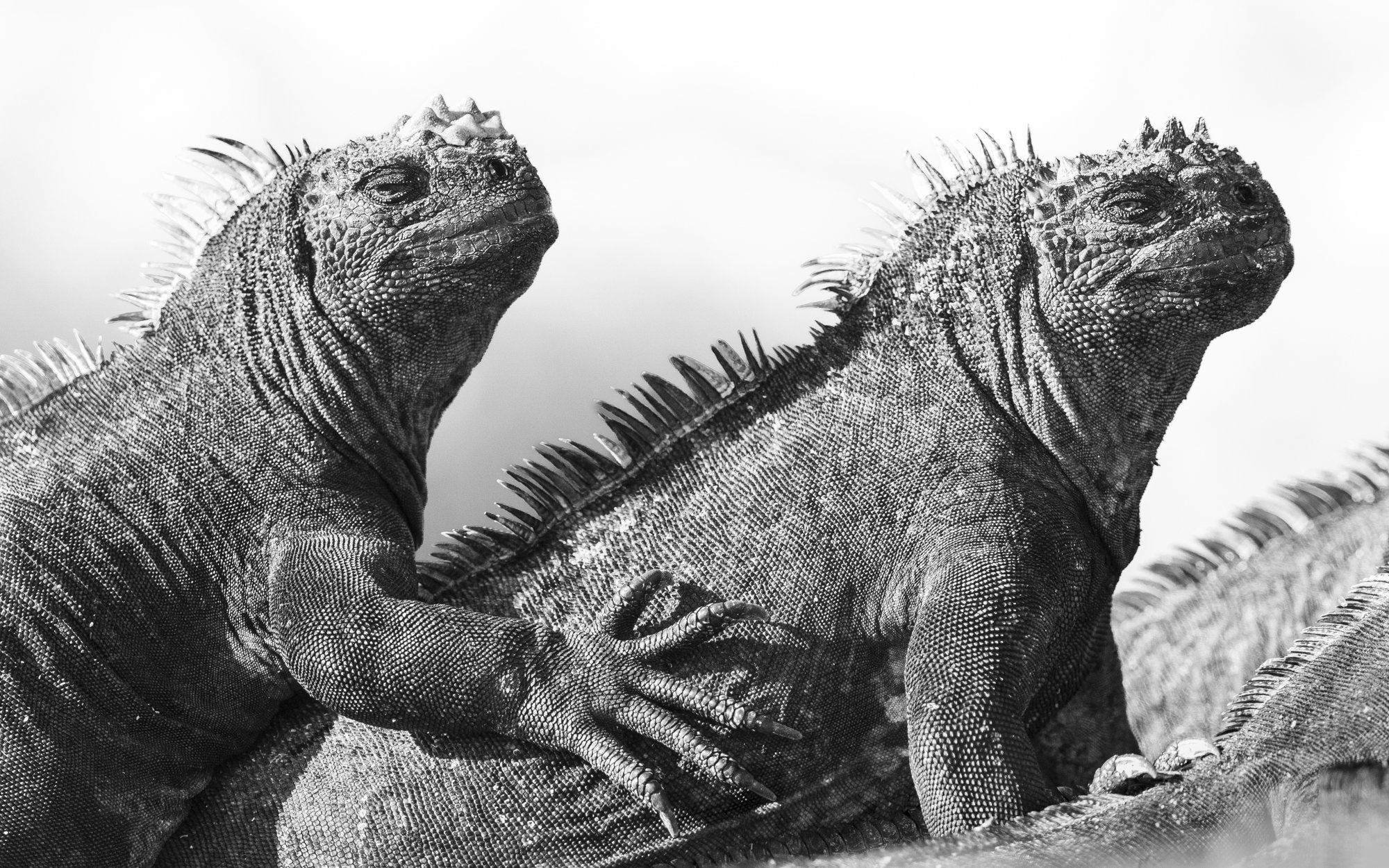
Marine Iguanas on Fernandina
Creative use of Shutter speed to create sunning wildlife images
Static subjects like marine iguanas and Sally Lightfoot Crabs are ideal for experimenting with shutter speed as a creative tool rather than just a technical setting to create some striking wildlife images.
The first image of an iguana about to be submerged by a wave was taken on our first landing at Gardner Bay. Before we landed, we had been told that where the marine iguanas normally hang out on the rocks. As we only had 2.5 hours I made my way immediately to the lava rocks, walking past photographic opportunities with sea lions on the beach, betting the iguana images would be more distinctive.
The scene at the rocks didn’t disappoint with huge waves breaking over the iguana clinging on to the rock After testing a few speeds, 1/640s at f/11 gave the most striking result, rendering the breaking wave almost icy, full of texture, with the iguana almost subsumed by it.
At the other end of the speed spectrum I took an image at 1/25 and f22 of a group of iguanas sitting on a rock at Fernandina as waves broke over them, then converted it to black and white to heighten the atmosphere.
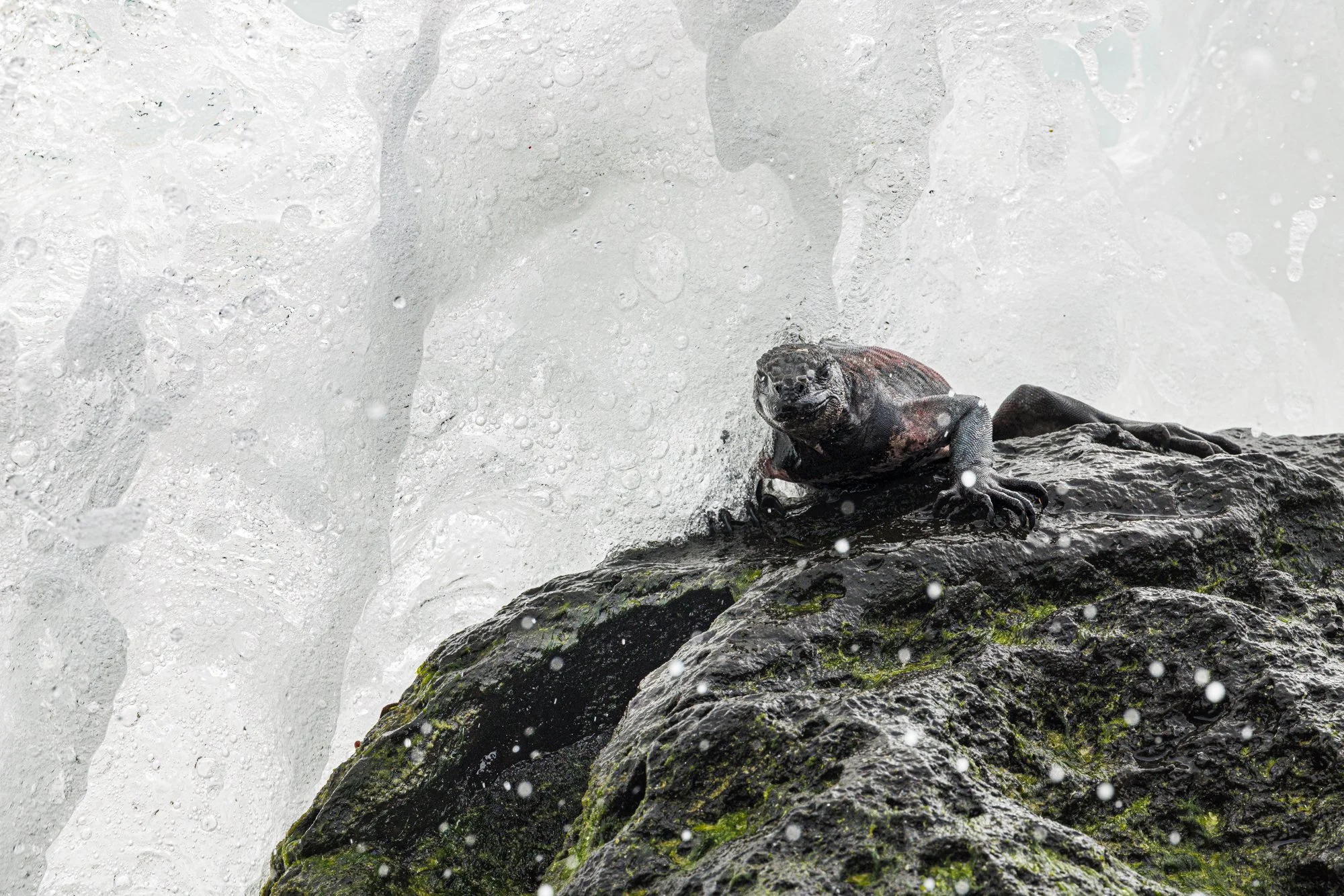
Marine Iguana about to be submerged beneath a giant wave Gardner Bay, taken at 1/640, F11
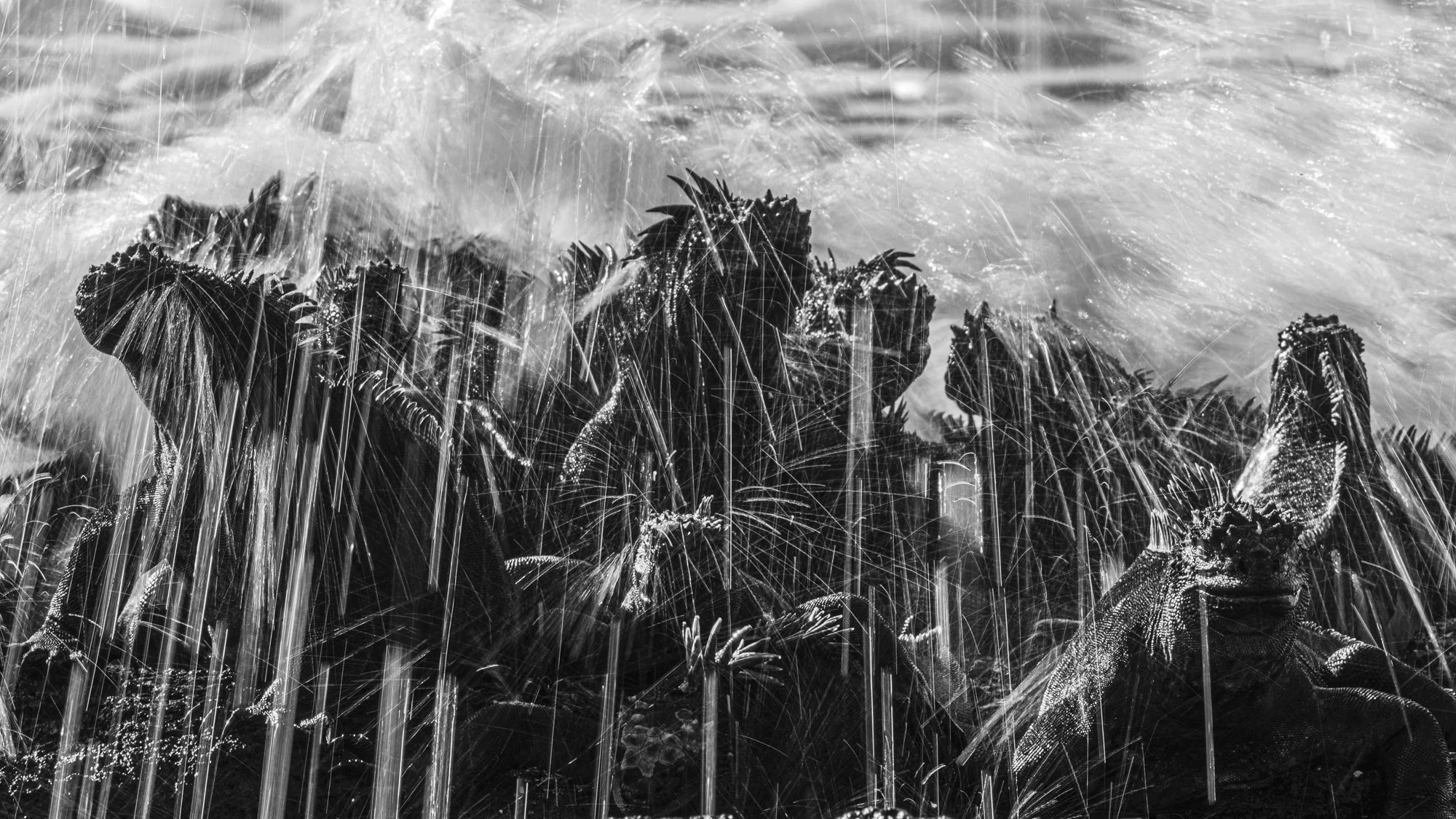
Group of Marine Iguanas basking on lava rocks Fernandina, taken at 1/25 at F22
However, it’s this image below that is one of my favourites from my time on the Galapagos. We had walked to one of the furthest points on Punta Suarez. I was on the cliff edge looking at the incredible scene below where sea spray from a blowhole was hitting a rock covered with Sally Lightfoot Crabs like a fine white mist. The contrast between black lava rock and the crabs' vibrant red-orange colour, wrapped in spray, was extraordinary. Shot at 1/1600s, f/8, it captures just how punishing this environment is for the crabs clinging on.
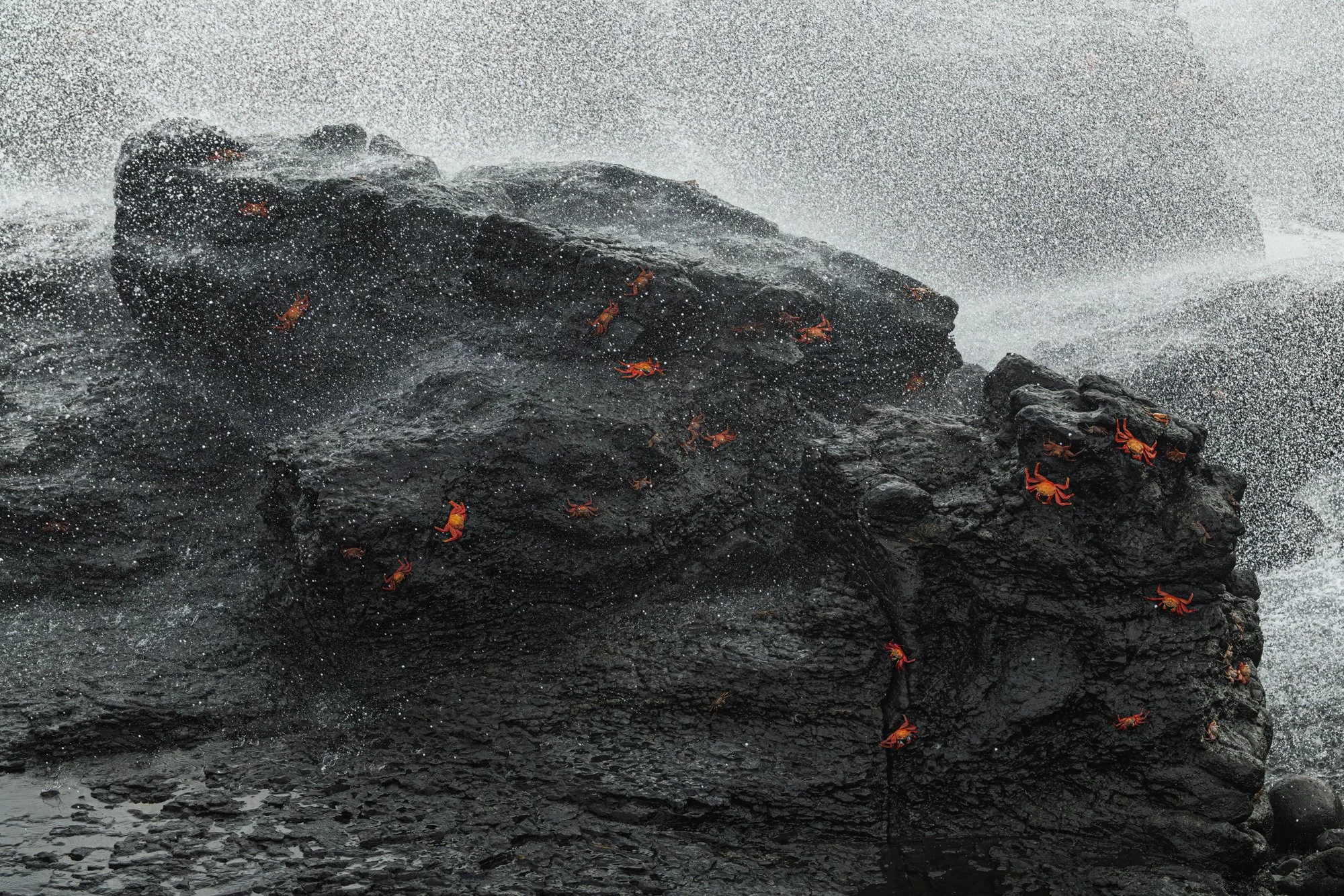
Sally Light foot crabs cling to lava rock on Punta Suarez, Espanola, taken at 1/1600 at F8
Photo Tips for high key wildlife images
One of my favourite techniques for creating striking wildlife images is high key photography. I’ve used in extensively in the Arctic and more recently in Yellowstone so was keen to see how I might use it in the Galapagos. Luckily, I had several opportunities and subjects where I could put it to good effect.
High Key Photography works best when overexposing the scene is balanced with diffused lighting, either with a cloudy sky or in the example of the sea lions, evenly toned sand.
Get it right and high key produces minimalist, almost ethereal images where your eye is drawn to the shapes, texture and detail of the subject, like the sand covering the sea lions fur (which they use to keep off irritating insects), or the simplicity of the land iguana and its reflection in a lagoon near Dragon Hill.
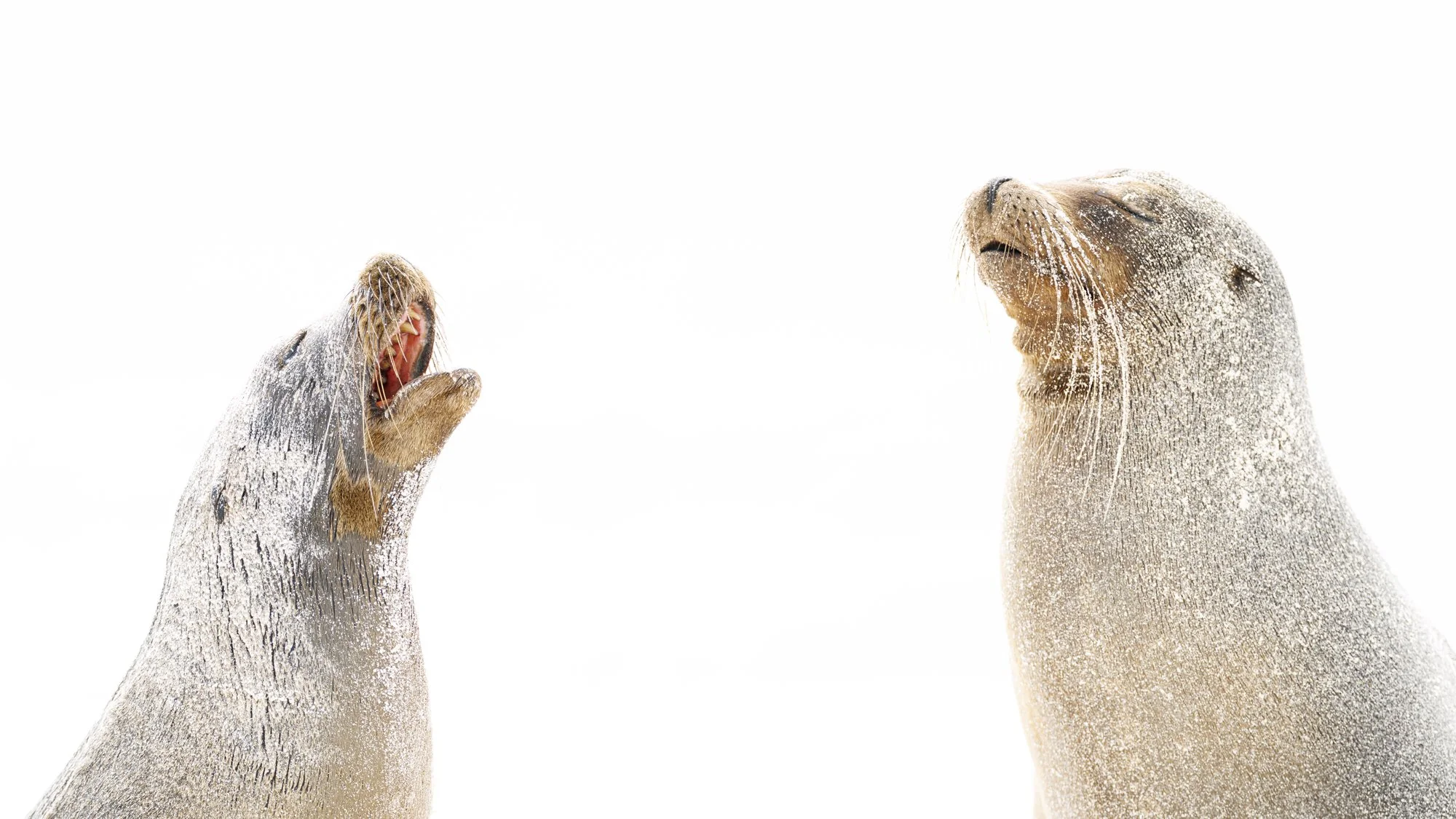
Sea Lion pair on Gardner Bay
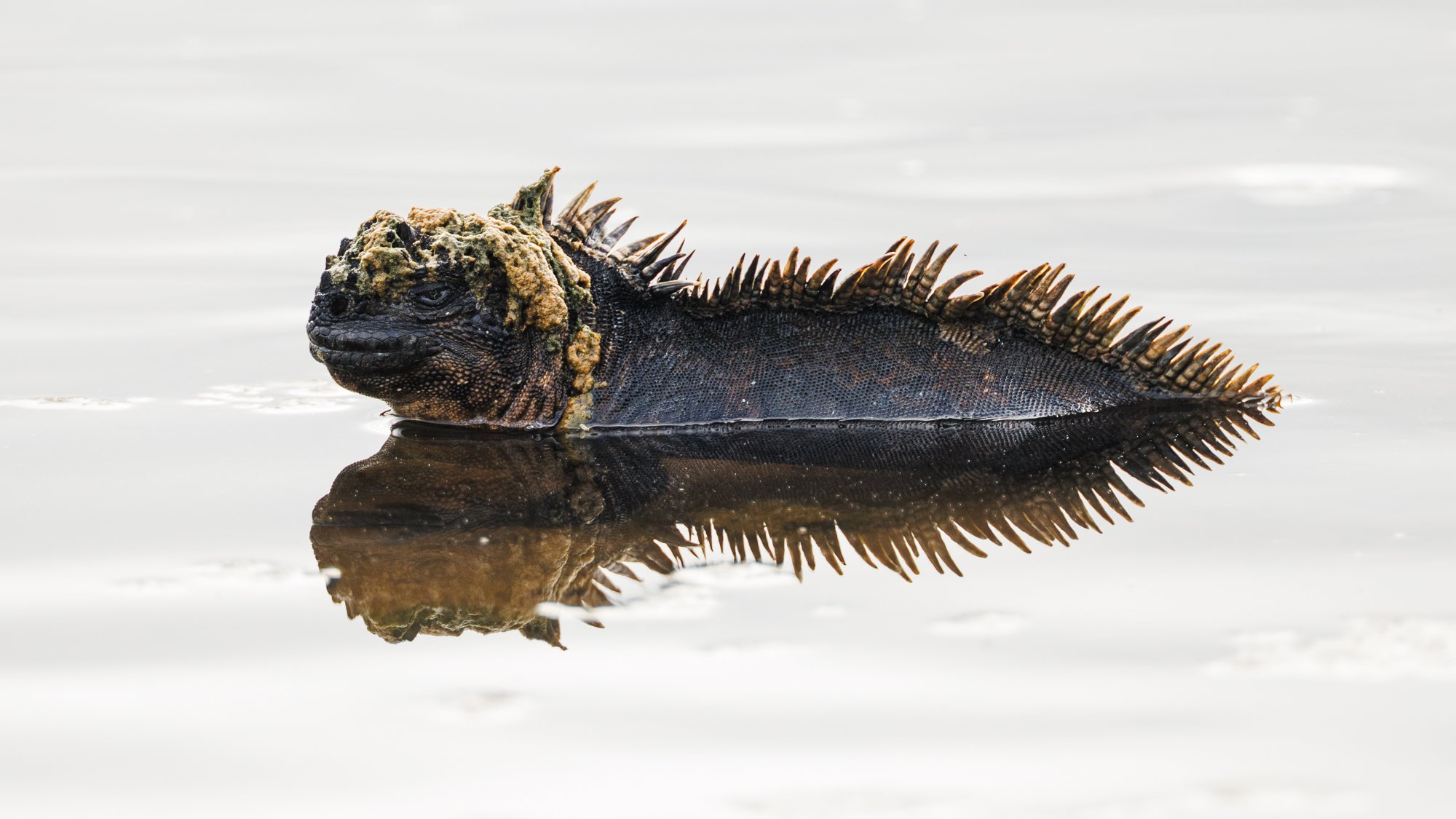
Land Iguana taken at Dragon Hill Santa Cruz
Photo tips for low key wildlife images
By contrast Low key photography relies on deep shadows, tones and high contrast to create moody, dramatic and often cinematic images. Here underexposure, having the right background and light direction matters to getting stand out images.
Two images that show this technique at its best are of the Galápagos Penguin and a Brown Pelican, both shot with side lighting, heavy underexposure and dark backgrounds so that I was able to isolate the subject completely to create these dramatic images.
I particularly like the image of the Brown Pelican. We had landed on Puerto Egas with perfect early morning golden light. One of the rocky outcrops had several birds basking in the light including Boobys, Frigates and this Brown Pelican. I took some wider shots of the scene and noticed the Pelican go into stalking mode its attention fixed on the crabs below. It was beautifully illuminated against the rocks, so I zoomed in, underexposed the image by -3 and all I had to do in post processing was a slight life in the shadows on the crabs and albatross.
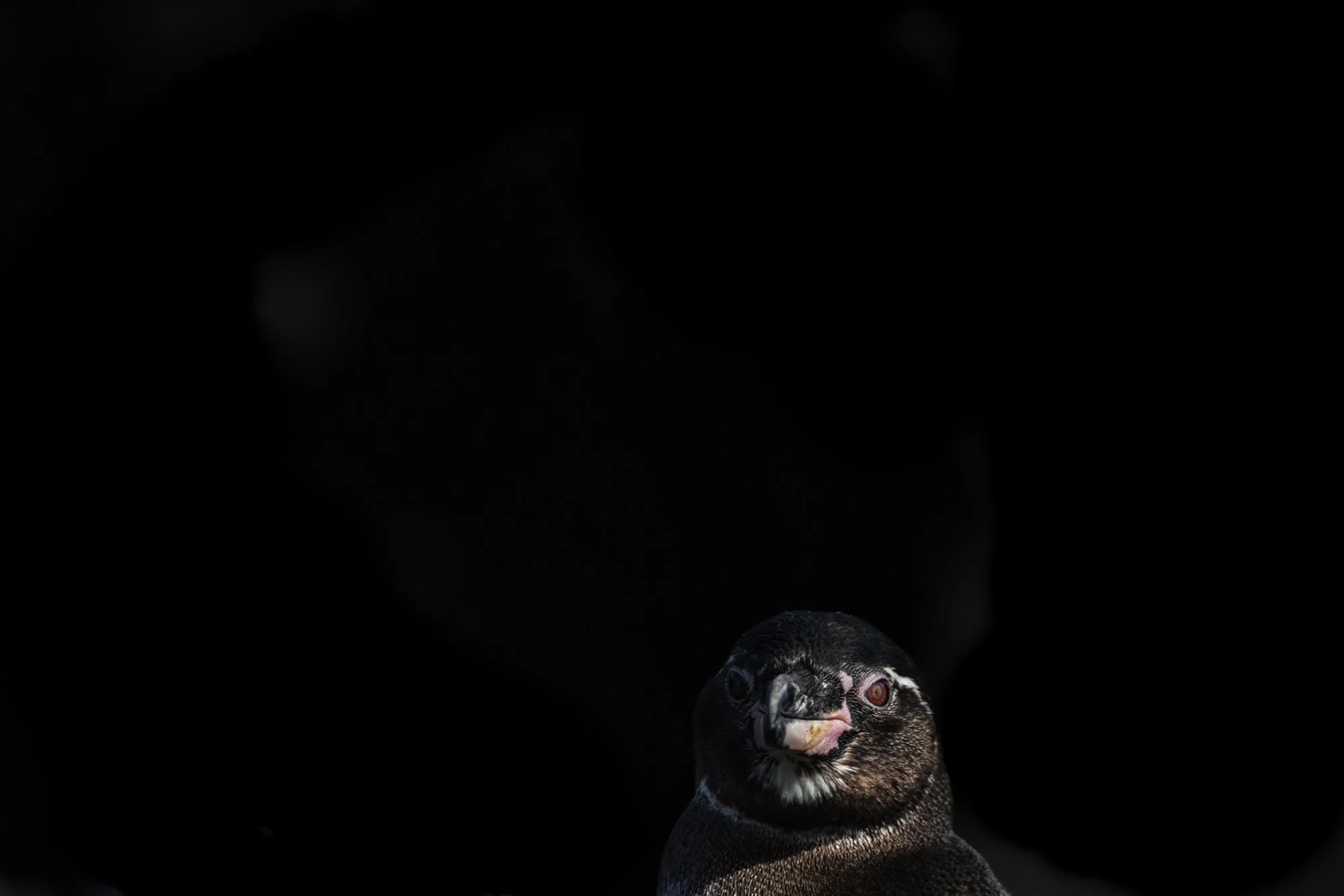
Galapagos Penguin taken at Punta Moreno during panga excursion
Did You Know?….Galapagos Penguins are the only penguin found North of the equator. Averaging just 49 cm tall and weighing 2.5 kg, they are the second-smallest penguin species. With a population of roughly 2,000 individuals, they are considered endangered, relying entirely on cold, nutrient-rich upwelling.
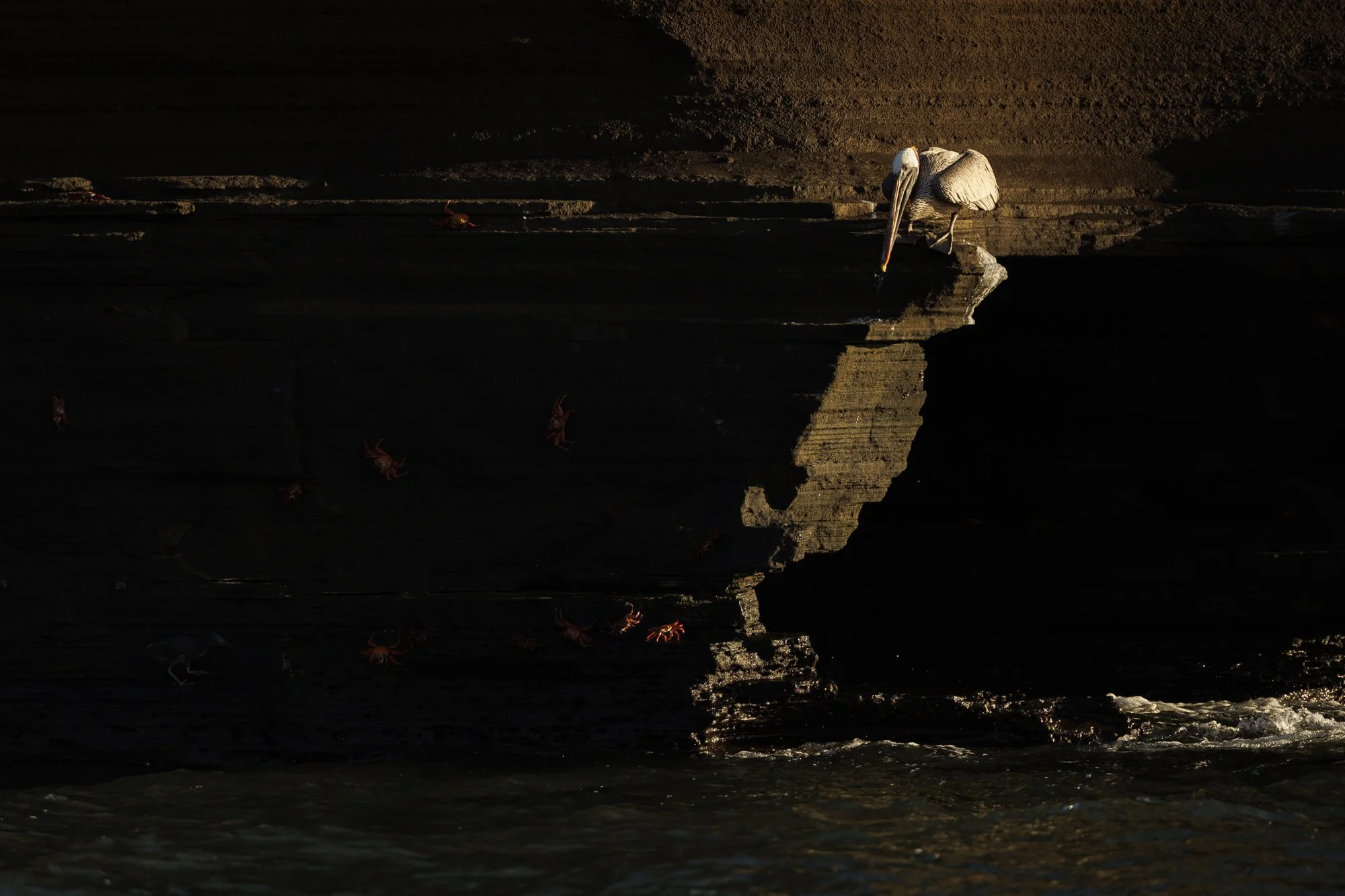
Brown Pelican eyeing up a pair of Sally Lightfoot Crabs Puerto Egas
Experimenting with Infra-Red Photography
Infrared is new territory for me. After converting a Canon 1DX Mark III to infrared, I brought it along to see whether it could bring something fresh to a subject photographed as often as the Giant Tortoise.
Whilst I know it might be “marmite” for some people, I really enjoyed playing with this technique, usually after exhausting more conventional compositions of the same subject first. Infrared demands high-contrast scenes, and the Galápagos offered plenty of them.
Pro Tip: if you want to try infrared photography, convert a body rather than relying on filters. A converted camera is hand-holdable and far more practical in the field.
Two images from the trip stood out, and it's a technique I'll keep developing on future photo safaris.
For anyone in the UK wanting to learn infrared, I'd recommend Ben Harvey Photography, whose guidance was invaluable in understanding how to use it well.
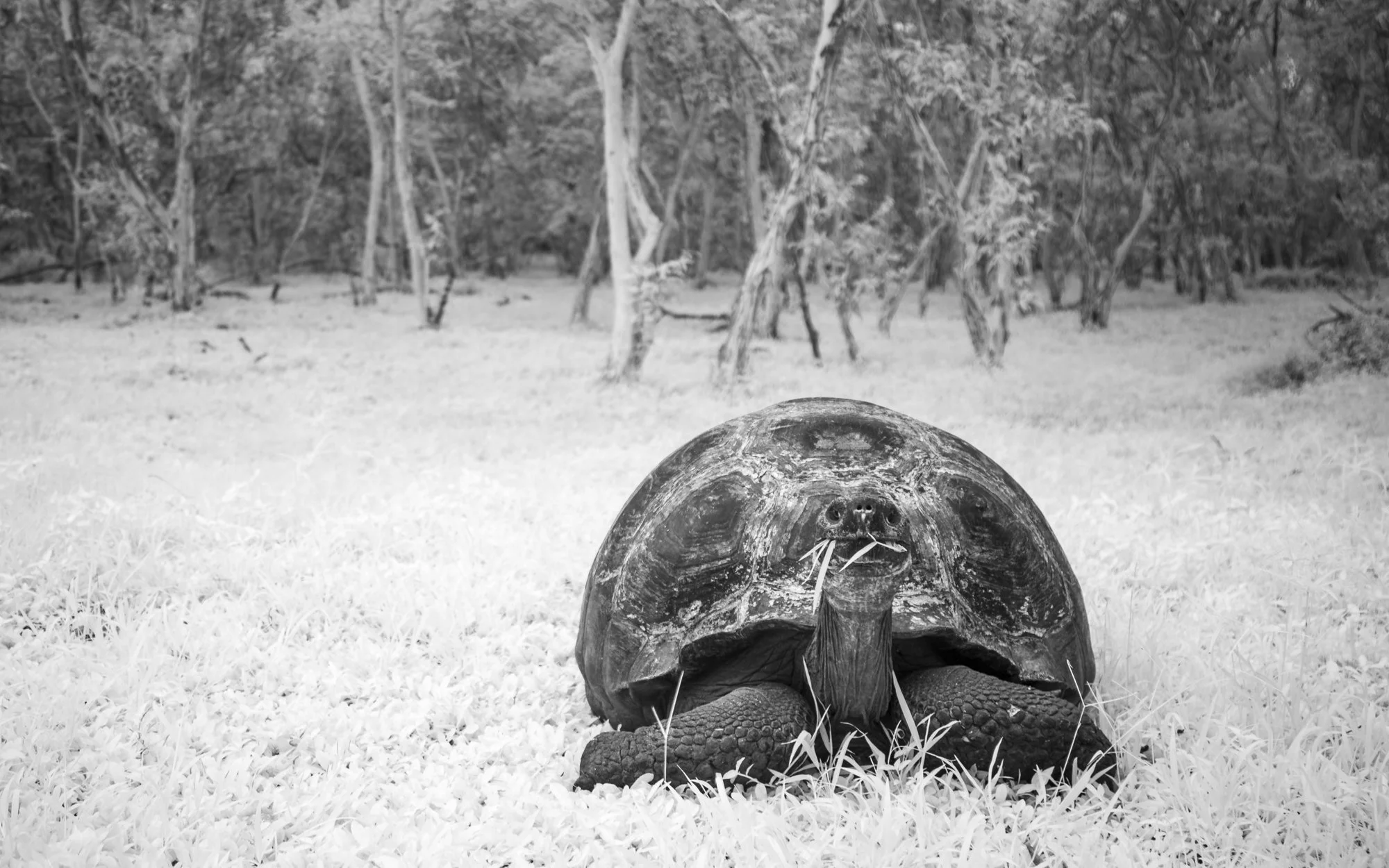
Giant Tortoise at Santa Cruz
Did You Know?…Once heavily exploited by whalers and pirates, the numbers of Giant Tortoise in the Galapagos have rebounded from a historic low of just a few thousand to 20,000 to 30,000 thanks to captive breeding and invasive species eradication. There are around 12 to 15 surviving species/subspecies across the islands.
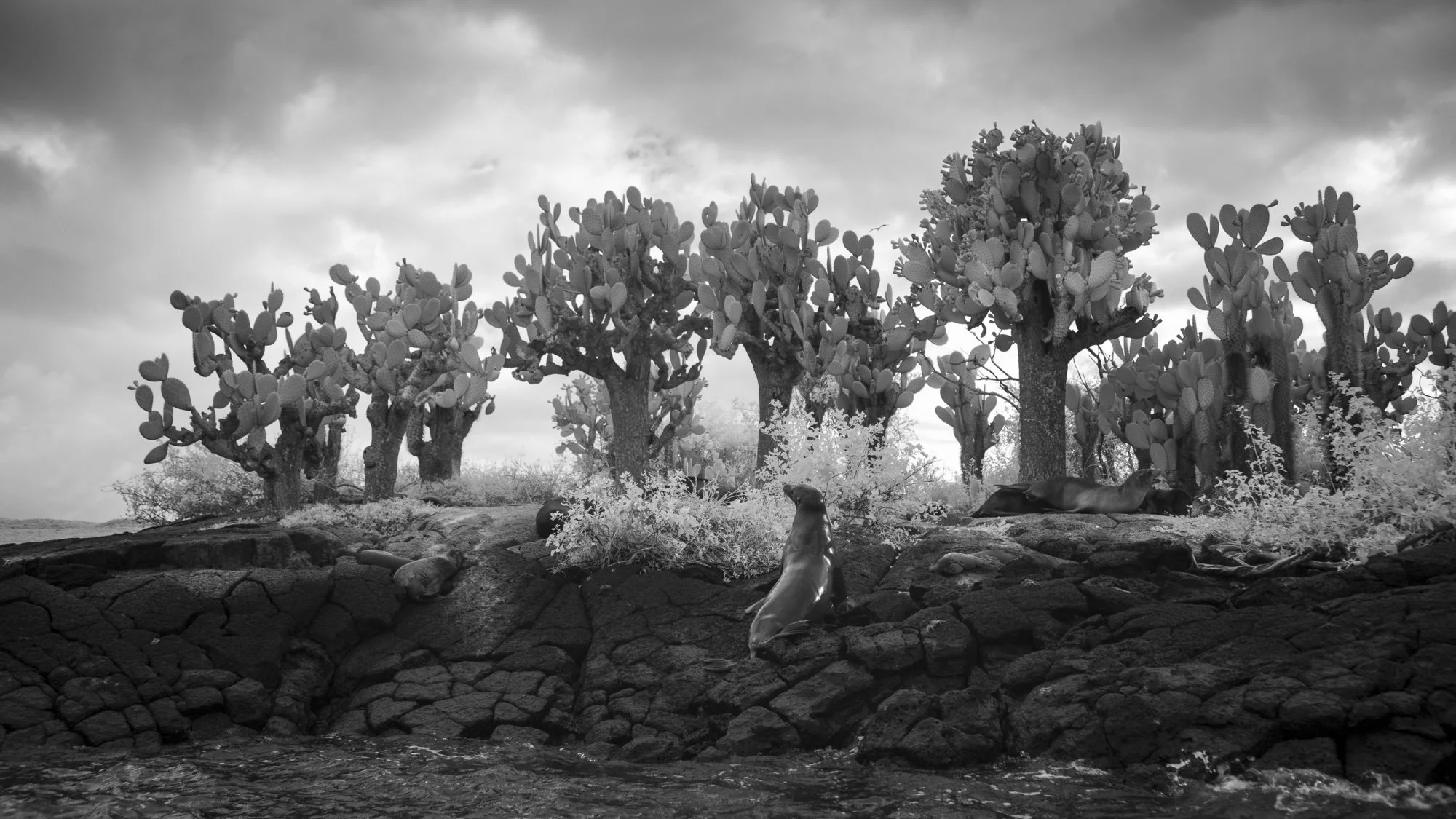
Sea Lion on beach at Baroness Bay
Capturing Art in Nature
Thirteen days across thirteen islands, photographing species you're virtually guaranteed to see, gives you something rare and precious which is time. Time to shoot, experiment, and, just as importantly, review what you've already captured so you can push toward something different.
That extra time is where the more abstract, intriguing images tend to come from, like these detail shots of Marine Iguanas at Fernandina.
Having already captured portraits and behaviour shots, I used an early landing's backlighting to focus purely on texture and form. The results I hope show the beauty of nature in a more artistic and abstract way.
The same logic applied to a Frigatebird image from Genovesa. After several hundred frames of inflated courtship pouches, I switched to something more abstract by using my 1.6 crop and tightly focusing on the beak, with the red pouch desaturated and thrown out of focus.
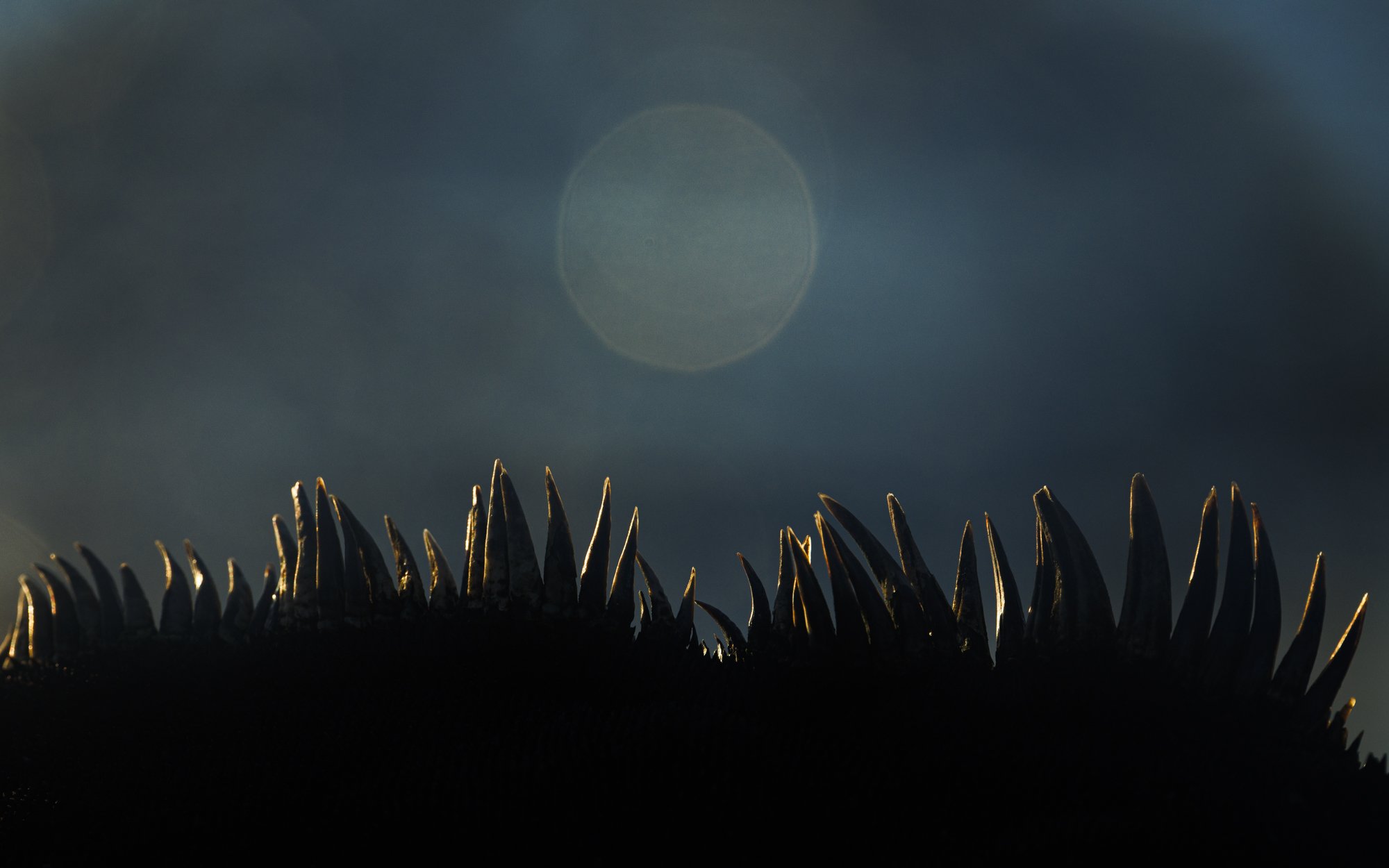
Abtract image of Marine Iguana
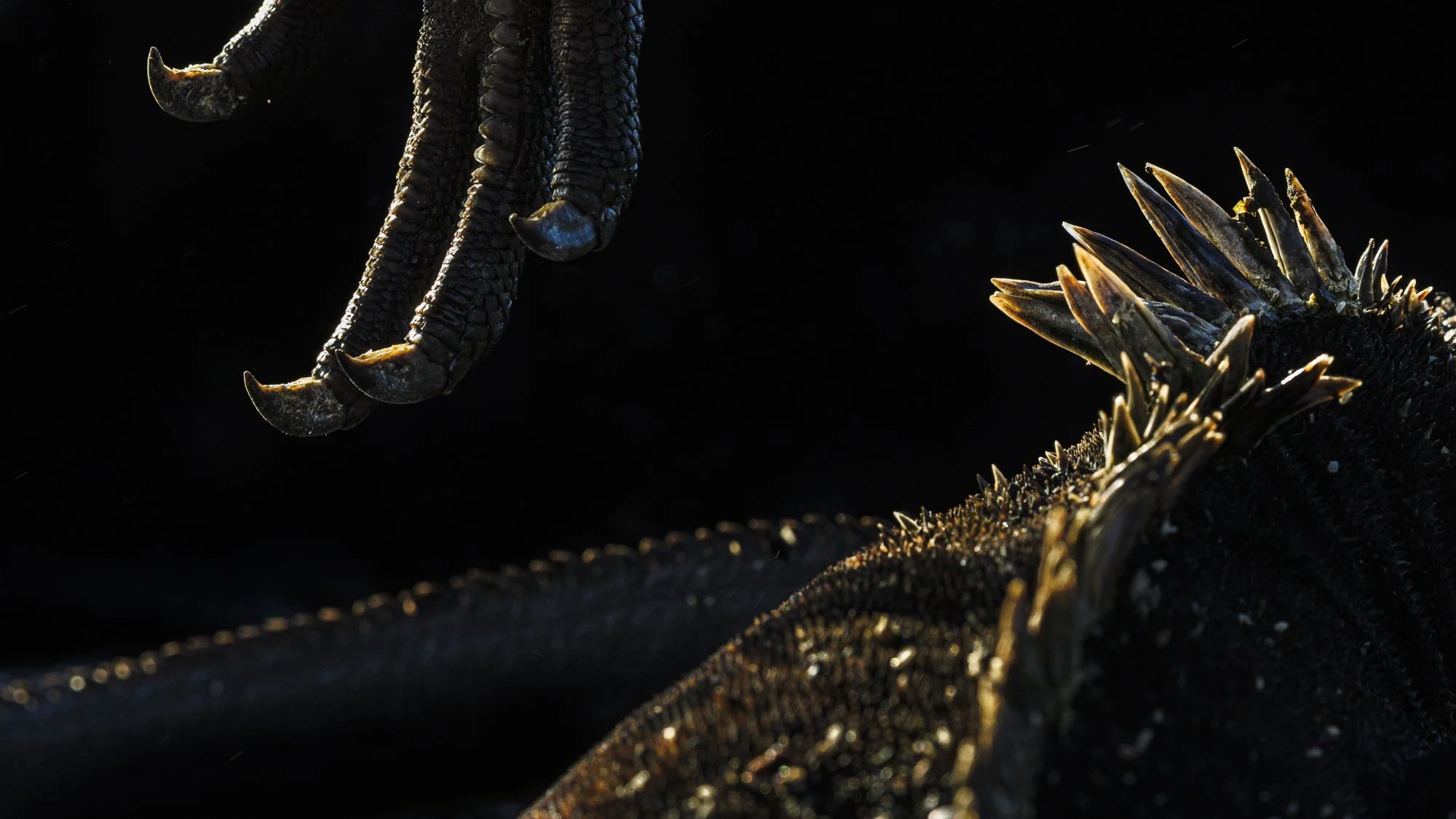
Claw and spikes of Marine Iguana taken on Fernandina
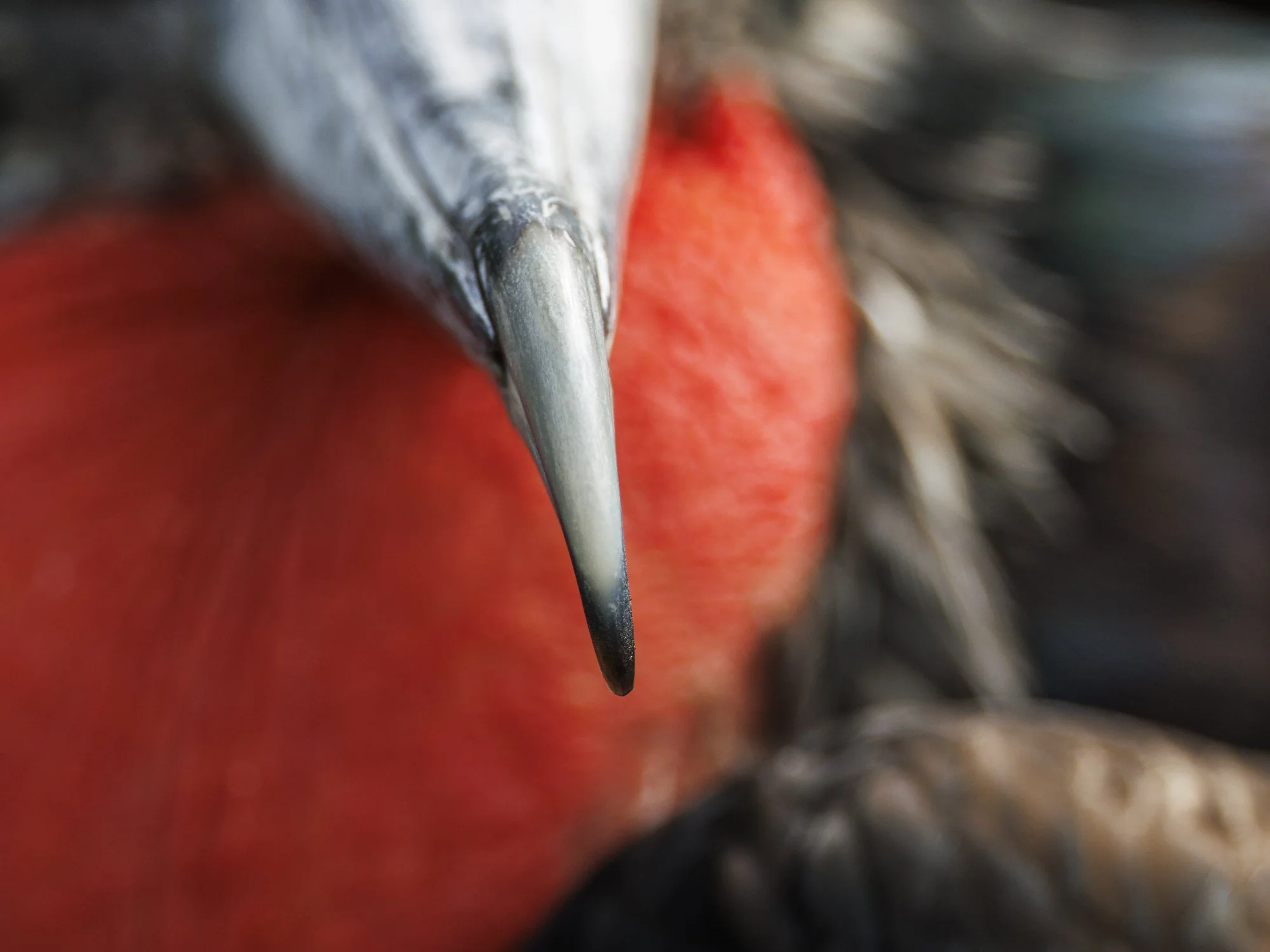
Abstract image of Great Frigate Bird
COMING SOON…mORE FROM THE gALAPAGOS
Look out for my next blog on the Galapagos where I will cover photography tips for stand out environment and behaviour images, as well as looking at what makes the Galapagos Islands wildlife so ecologically unique.
As always thank you for taking the time to read this blog. And as always please drop me a line here if you have any questions here.
Jules

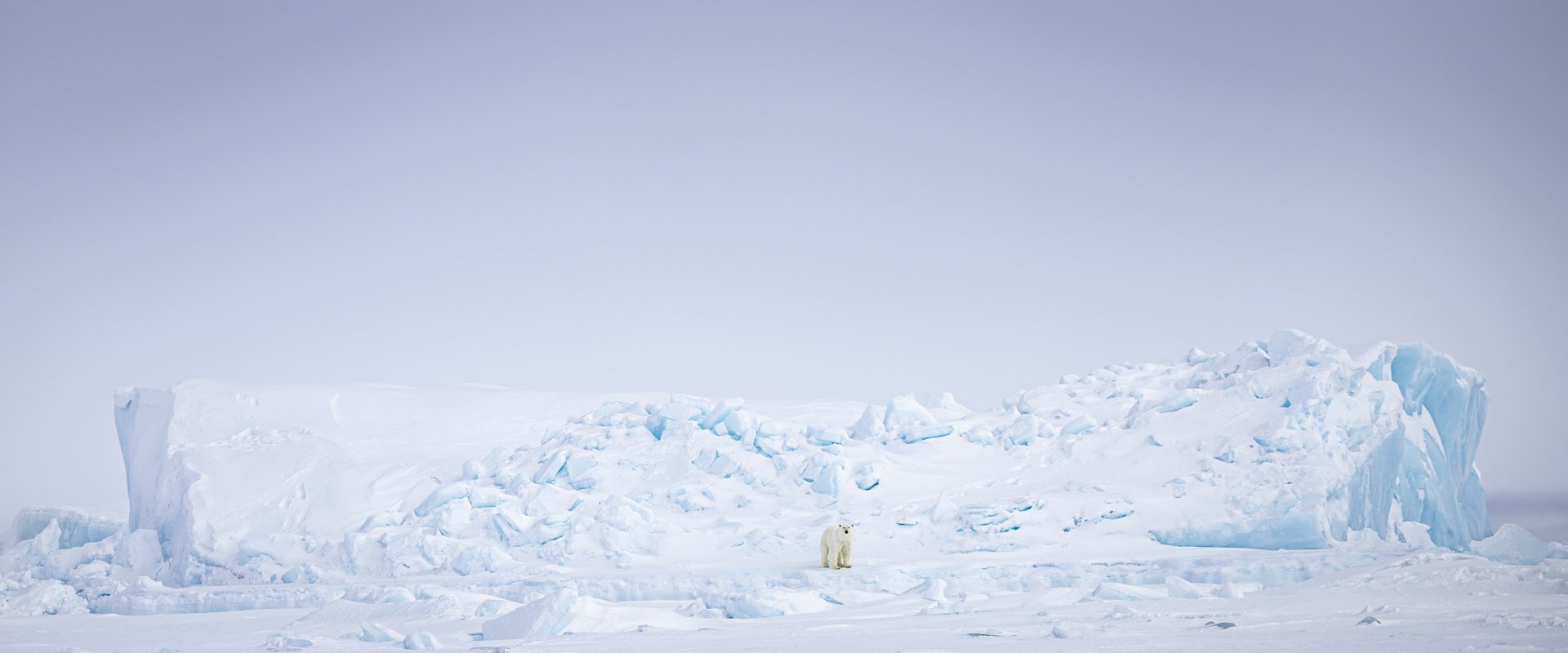
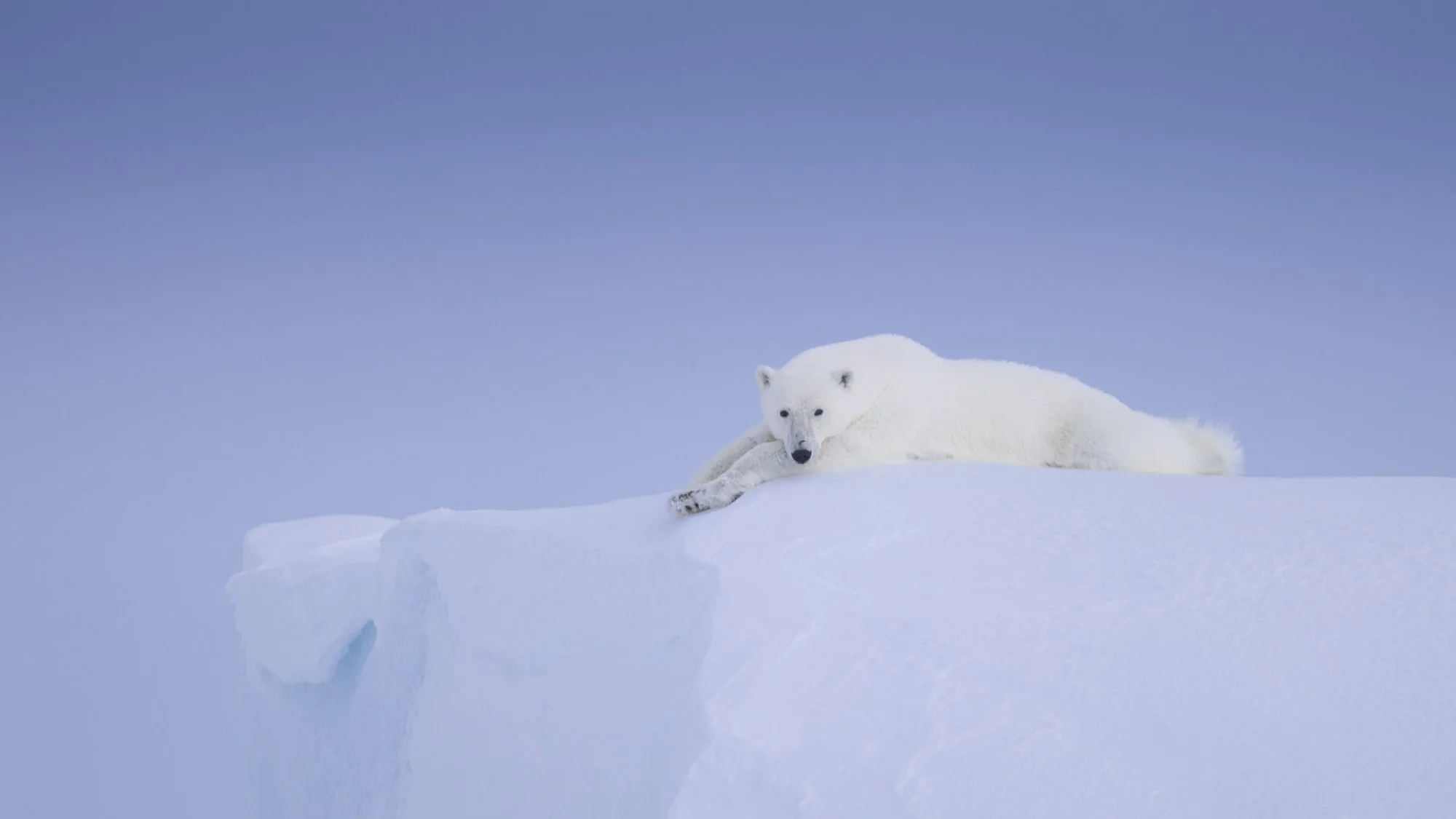
Svalbard, 2009
This was my first sighting of a polar bear taken nearly 20 years ago and I couldn't have asked for a more epic Arctic vista for my first encounter in Svalbard.
✓ Museum archival giclée paper
✓ Hand-signed & numbered by Jules
✓ Certificate of authenticity
✓ 15% to conservation
✓ Worldwide shipping
✓ Free UK delivery
The Full Story Behind The Photo
This was my first sighting of a polar bear taken in Svalbard nearly 20 years ago, yet I still remember it vividly. The excitement onboard our icebreaker the Vavivlov was palpable, especially as the scene itself was so breathtaking. The polar bear looked tiny as it walked along the shoreline framed by the towering glaciers. I couldn’t have asked for a more epic Arctic vista for my first Polar Bear encounter. I’ve had closer sightings of bears in Svalbard, but this image holds a special place for me as one of my favourite “animal in environment” images and reflects why it is so important to not only protect polar bears but also this pristine Arctic environment.
Print Specification
All prints are printed on Canson® Infinity Rag Photographique which is a 100% cotton museum grade white Fine Art and photo paper.
Canson® Infinity Rag Photographique offers a unique extra smooth surface with a sensual feel. It has been developed to address the need for continued longevity requirements in the Digital Fine Art market.
Shipping & Delivery
Delivery is from the United Kingdom and is included free with the purchase of all prints. Delivery is by FedEx, DHL, UPS, or DPD depending on location. Once your order is shipped you will receive an email with your tracking number. Please allow up to two weeks to fulfil your order plus one week for delivery.
Conservation Impact
As with all images in the collections, 15% of the proceeds from each image will be split between four charities- Kicheche Community Trust, Great Plains Foundation, Big Cat Initiative & Sheldrick Wildlife Trust. Learn more about giving back, here.