
GIRAFFE PHOTOGRAPHY: MY TIPS AND FASCINATING GIRAFFE FACTS
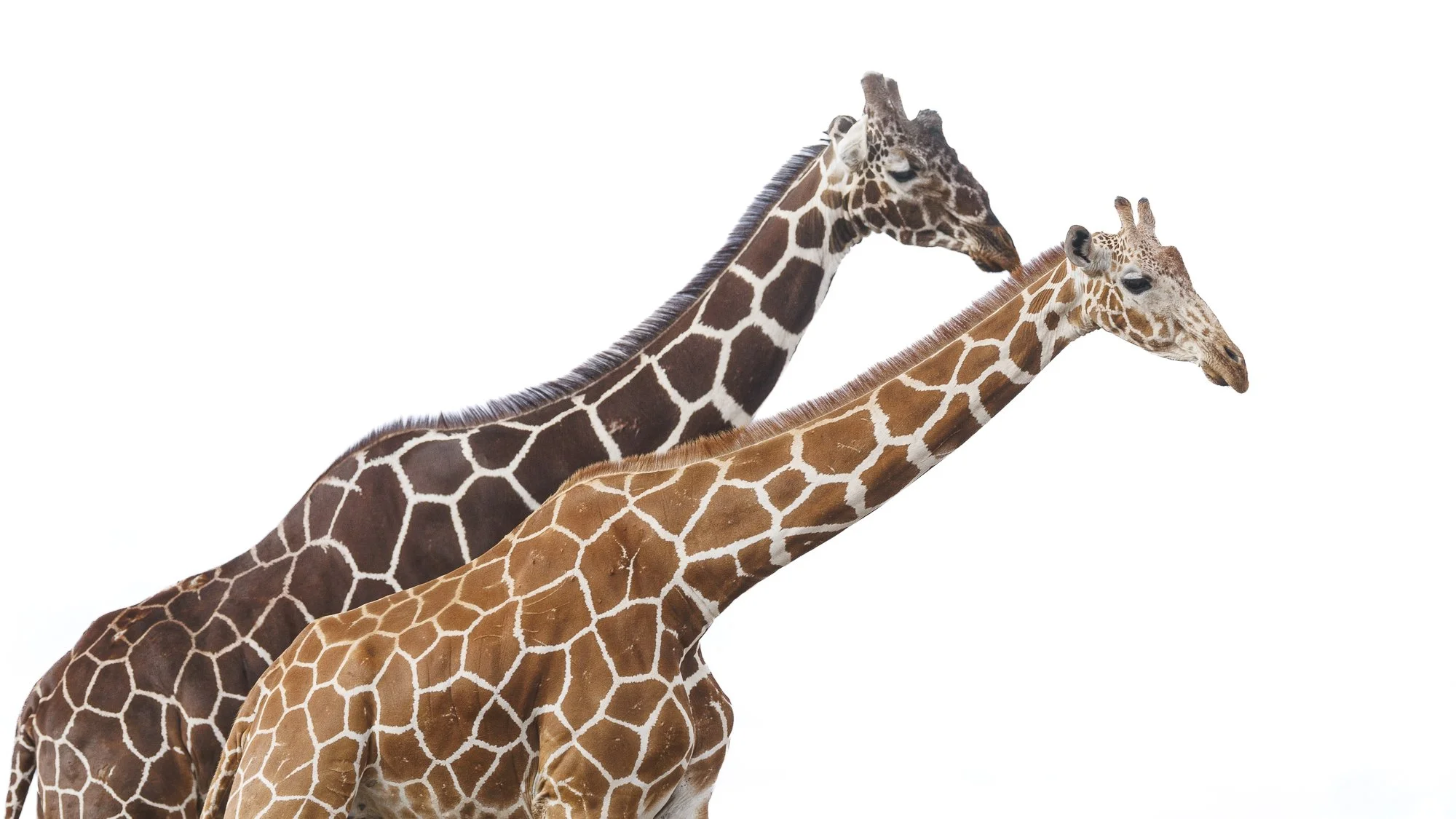
High key image of two Reticulated Giraffe
GIRAFFE PHOTOGRAPHY: MY JOURNEY
Giraffes never fail to make me smile. Gentle, curious and gloriously ungainly when they break into a run, they are one of Africa’s most recognisable animals. Their distinctive shape and silhouette make them an interesting photo subject, yet after years of safaris I have only a handful of giraffe photographs I’m truly happy with. In this blog I will share what I’ve learned about giraffe photography, the stories behind some of my favourite images, and some fascinating giraffe facts, including how many giraffes are left in the wild.
WHY ARE GIRAFFE SO HARD TO PHOTOGRAPH?
Giraffes are curious but skittish, and they spend much of their day feeding in thick acacia bush, where branches can clutter your frame. The best opportunities come when they move onto open plains against clean backdrops, or with interesting backdrops such as woodland or mountains. Free of distractions, you can focus on their extraordinary shape and patterns.
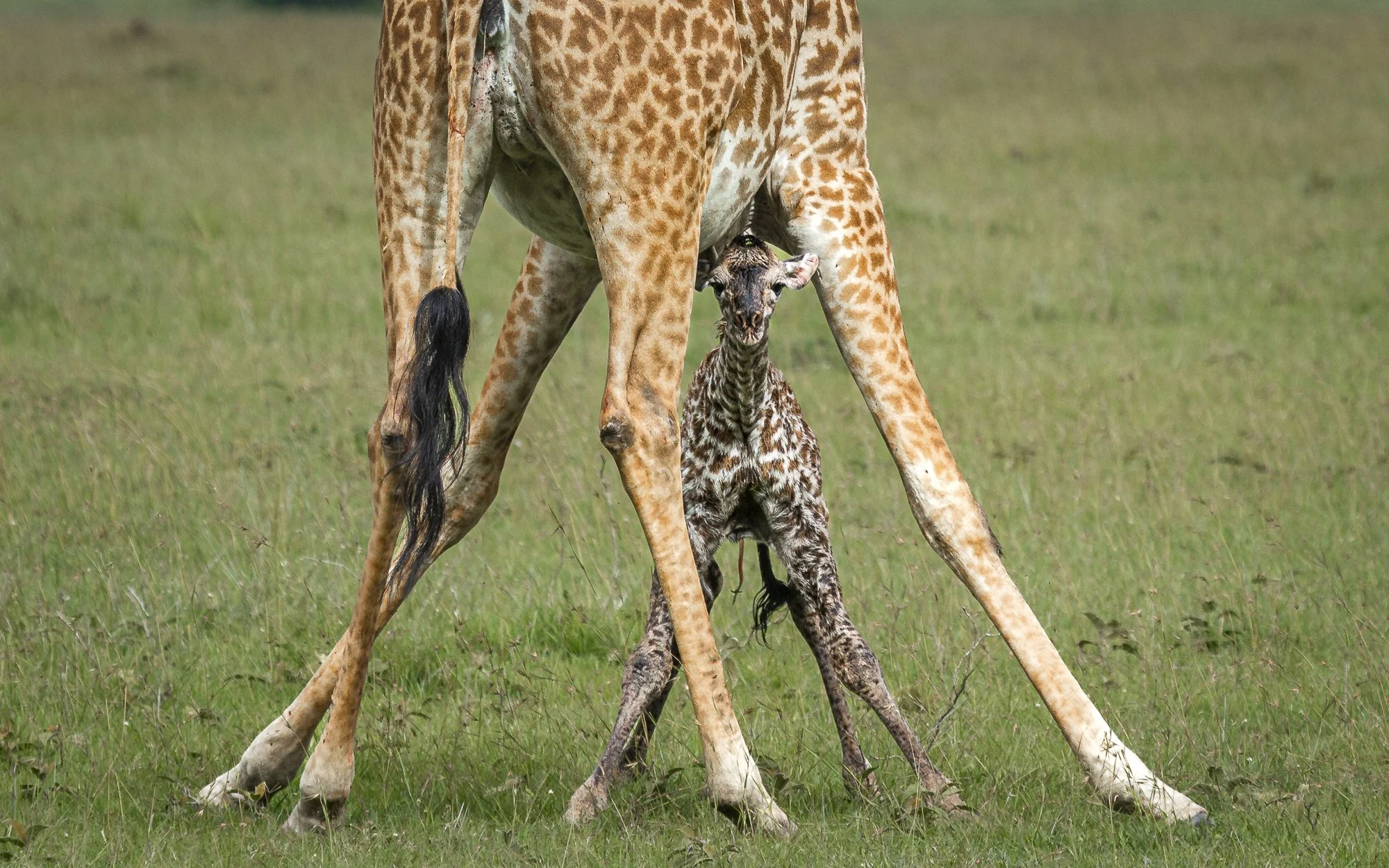
Newborn giraffe calf standing between its mother’s legs
MY GIRAFFE PHOTOGRAPHY TIPS
1. Focus on details, patterns and shape
The world’s tallest animal is often hard to fit into the frame, so the stronger composition is frequently focusing on details. Their shape is so recognisable that a torso and head, or just a mother’s legs with her newborn calf standing between them, still reads instantly as “giraffe”. Since every coat pattern is unique, you have endless creative freedom once a giraffe steps into the open.
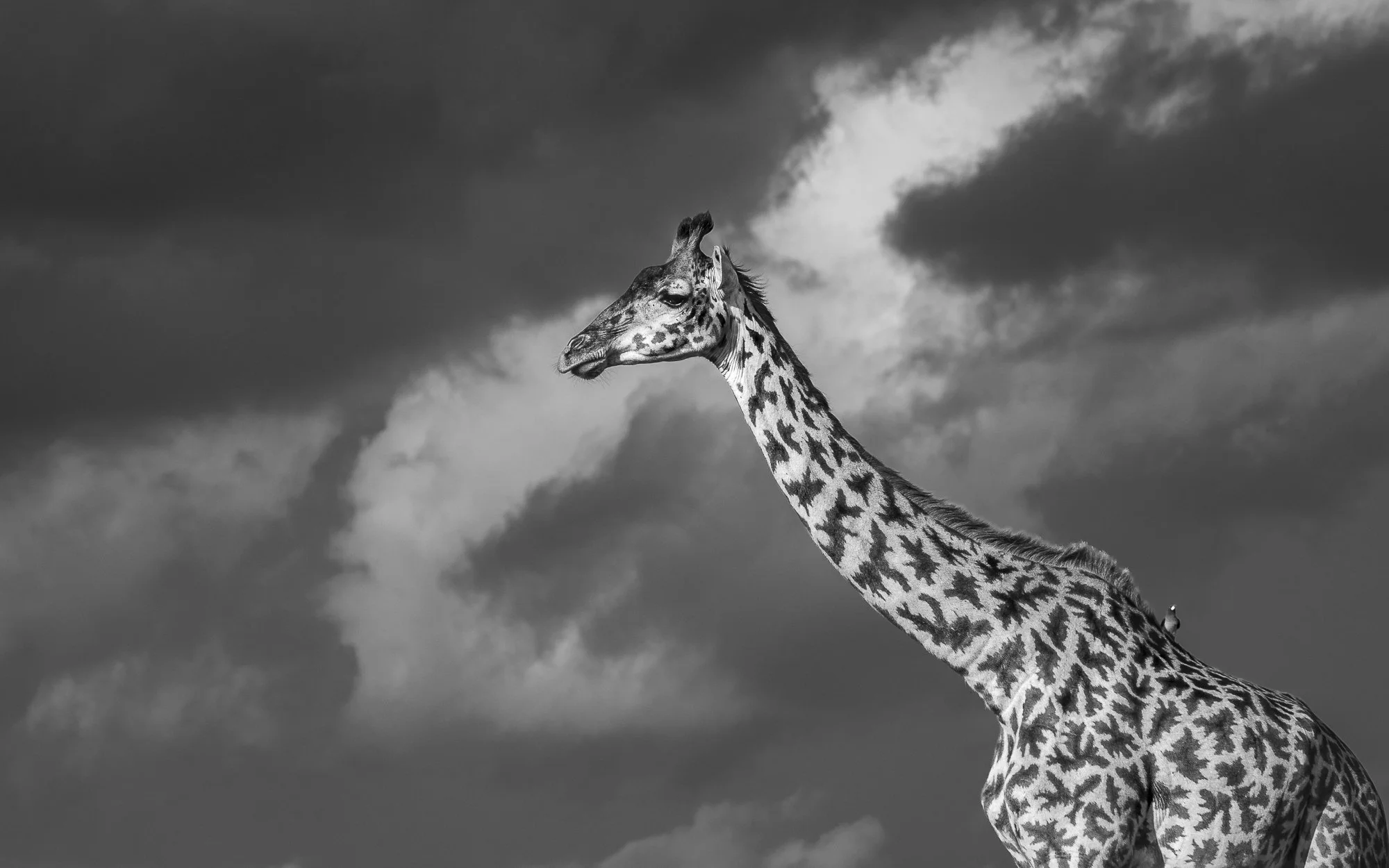
Black and White photo of Maasai Giraffe against a stormy sky
2. Look for silhouettes at sunrise and sunset
It’s also at sunrise and sunset that I am always on the lookout for a giraffe on the horizon.. A few minutes from Kicheche Mara Camp in Kenya’s Mara North conservancy there is a ridge where I’ve twice watched giraffes walk across the skyline as it turned orange with the rising sun.. No animal makes a better silhouette, with their tall elegant shape, for evocative African wildlife images, but the sky and light must cooperate too.
Tip: Expose for the bright sky, not the animal, so the giraffe falls to a clean black shape
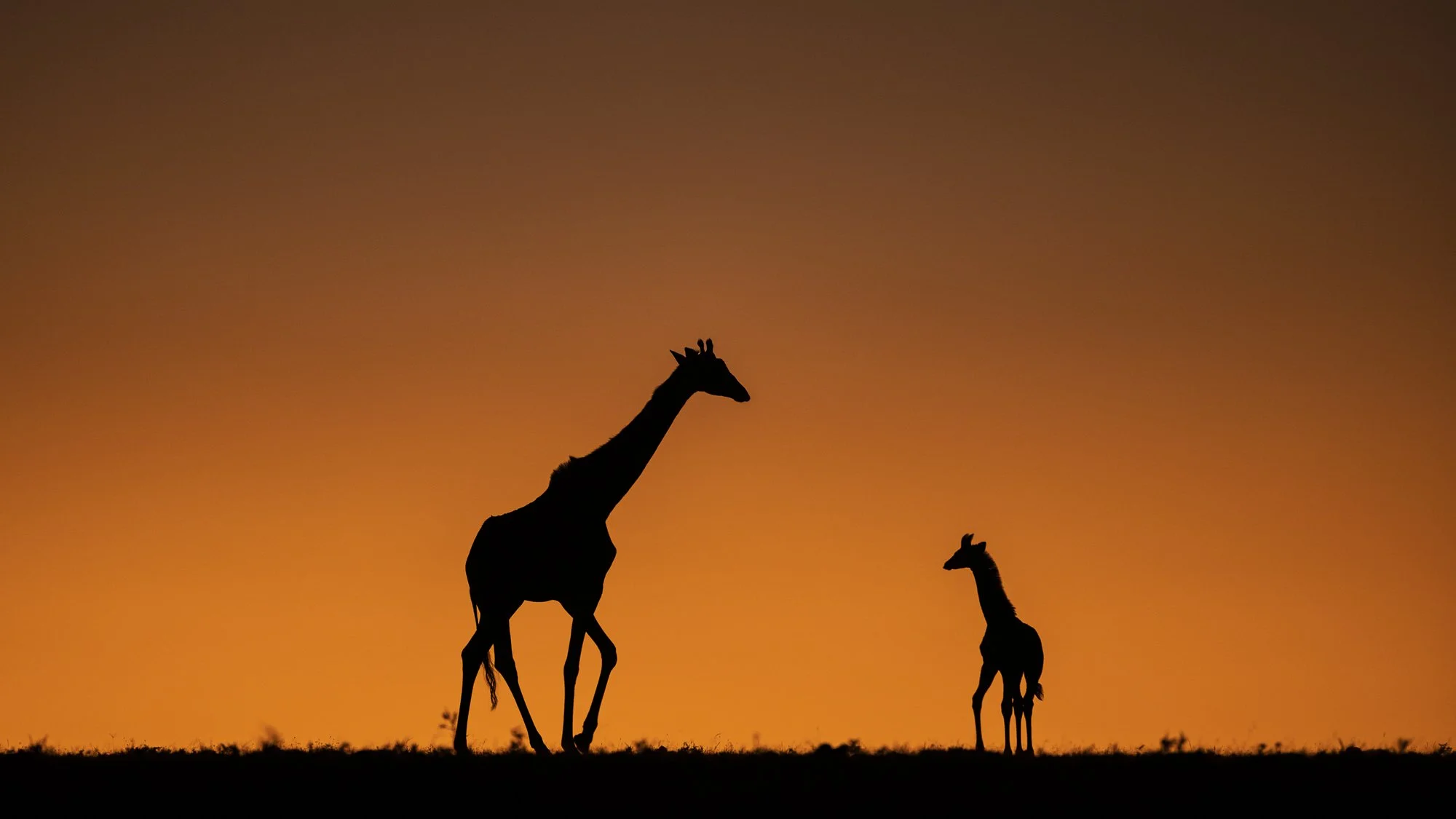
Sunrise silhouette photo of giraffe mother and calf
GIRAFFES IN ENVIRONMENT PHOTOGRAPHY
I am increasingly drawn to trying to capture animals in their environment and two of my favourite images features two giraffe species in the incredible environments they call home- the Reticulated Giraffe in Northen Kenya and an Angolan Giraffe in the Hoanib Desert.
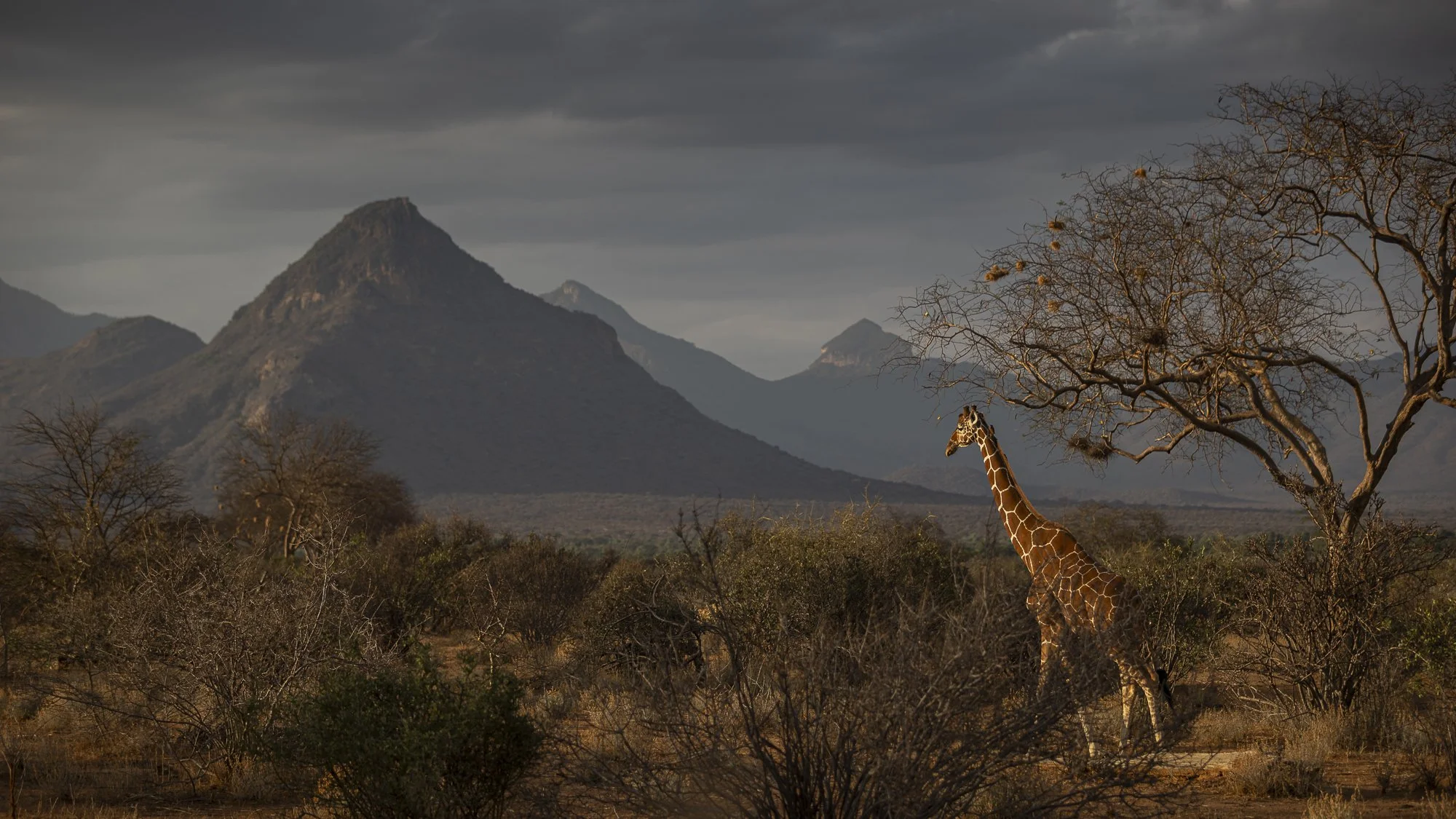
Image of Reticulated giraffe, Namunyak Conservancy, Northern Kenya
STORY BEHIND THIS AWARD WINNING PHOTOGRAPH
Whilst staying in Namunyak conservancy I had my first encounter with the reticulated giraffe, which is now my favourite for its rich caramel coat and crisp white net pattern. One afternoon everything came together as this solitary giraffe crossed the semi-desert, framed by the stunning Mathews Range, in late afternoon light so soft it gave the scene a painterly feel.
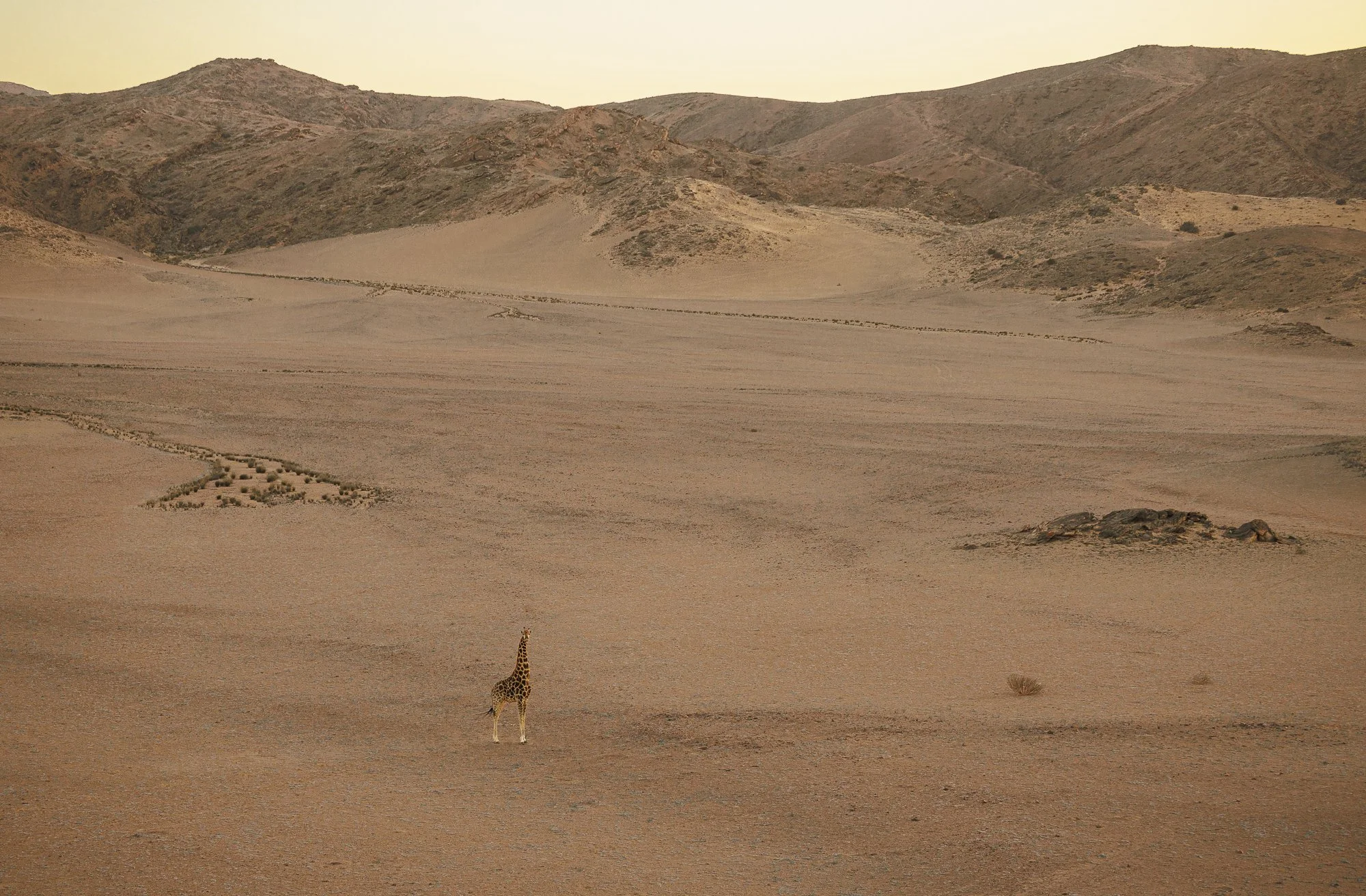
Angolan giraffe at sunrise in the Hoanib Desert, Namibia
STORY BEHIND THIS IMAGE
On a recent photo expedition to Namibia, two of my goals were desert-adapted elephants and Angolan giraffes in the Hoanib Desert. We were lucky that the elephants came more easily. Two bull elephants, Oliver and Arnold, were following a breeding herd near camp so we had several memorable sightings. Giraffes were harder. For days we found only tracks.
Then, as out time in the Hoanib was almost at an end, we got lucky. Our guides spotted a solitary giraffe in the distance. To avoid spooking it, we drove ahead and climbed up a hillside so we were out of sight as it approached. As the sun crested the mountains, it glanced our way for a moment enabling me to take this image before walking off in the stunning desert landscape.
Both backdrops give scale and context. In the Hoanib you sense how resilient a giraffe must be to survive such a harsh place. Wherever giraffes roam, look for the wider scene that tells their story for extra impact.
BE CREATIVE: HIGH KEY, BLACK AND WHITE AND INFRA RED PHOTOGRAPHY
With their graphic shapes and patterns, giraffes are ideal subjects for high-key and black-and-white photography, especially under flat, overcast skies. Deliberately overexpose to turn the sky white and make the coat pattern pop.
I’ve also been experimenting with infrared, which lets me keep shooting in harsh midday light when colour images fall flat. High cloud gives the best results, and because foliage renders white in infrared, acacia trees stand out dramatically against a giraffe’s dark patches. It’s something I will continue to experiment with in the right conditions.
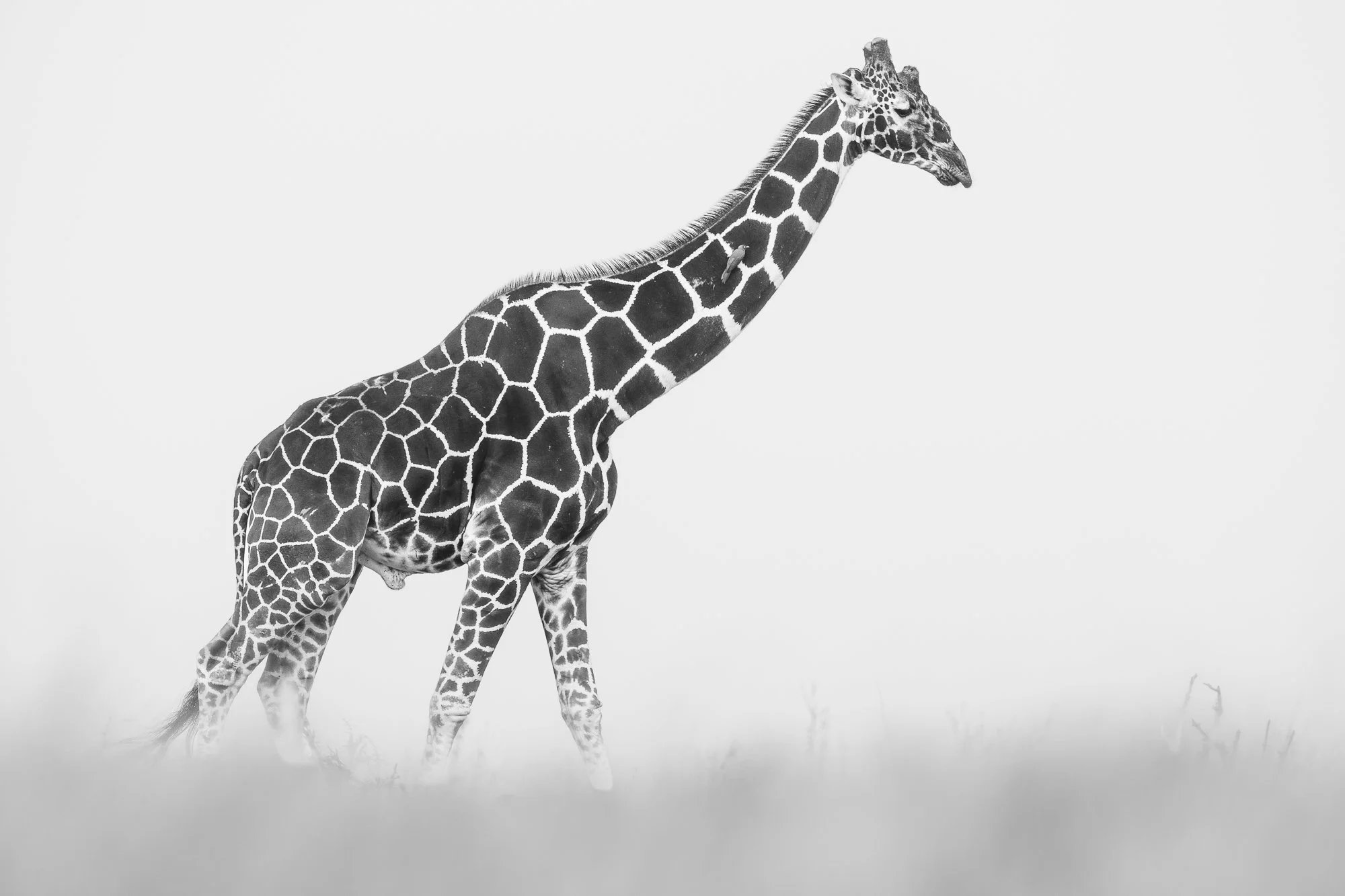
Black and white image of Reticulated Giraffe, Lewa Conservancy
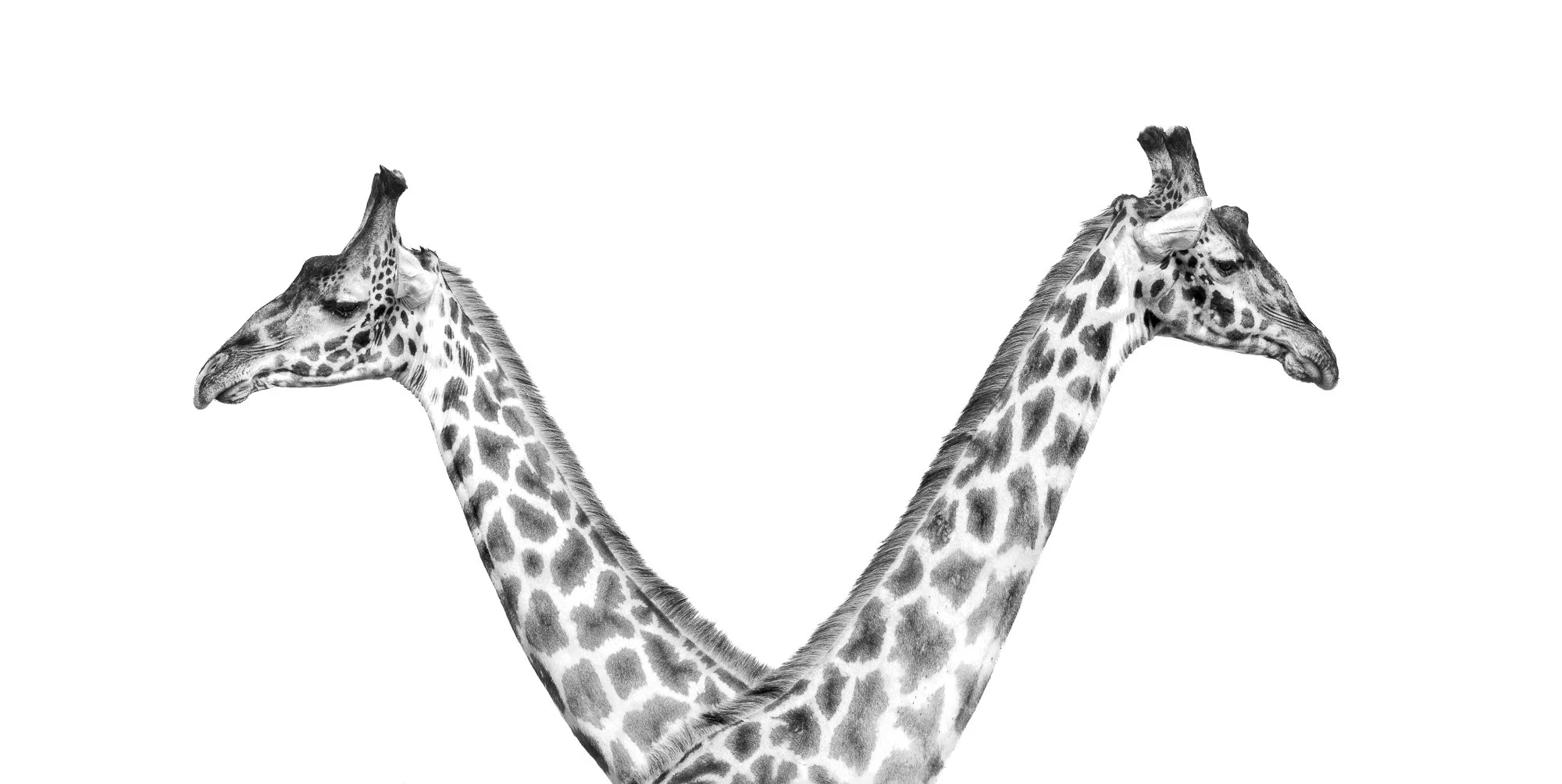
High key image of two Maasai bull Giraffe
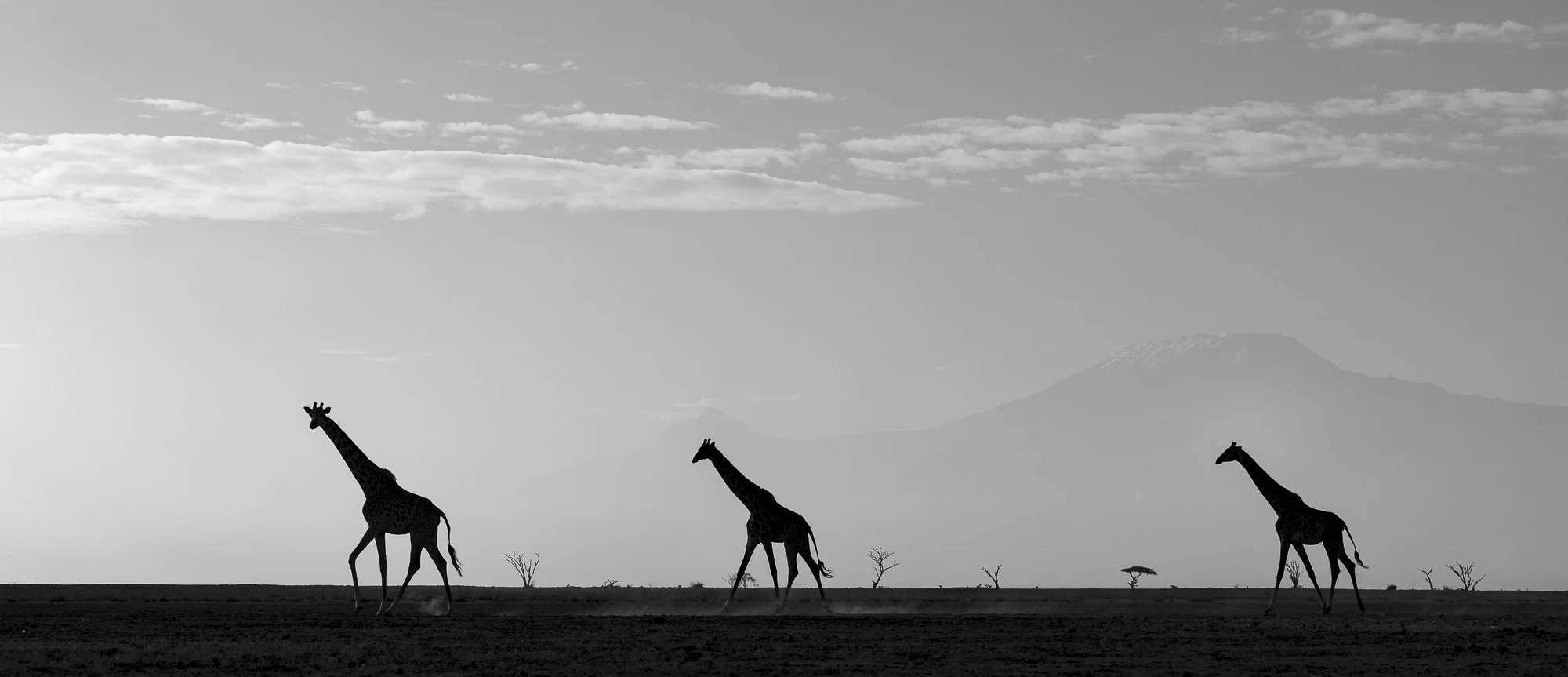
Silhouette of three giraffe crossing the Amboseli lakebed
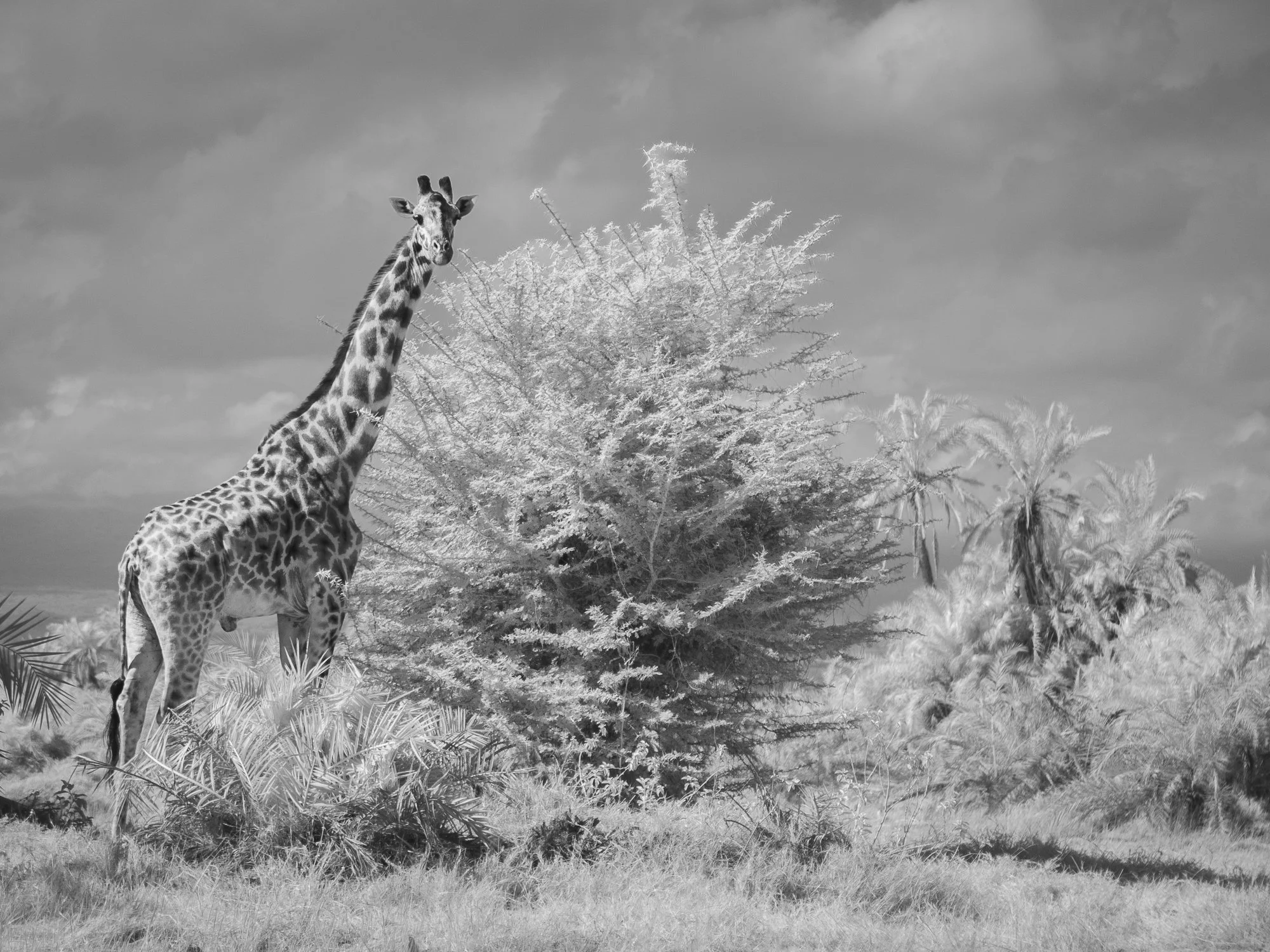
Infrared photograph of a Masai giraffe beside an acacia tree
MY AWARD WINNING GIRAFFE PRINTS
Three of my award-winning giraffe photographs including the image below are available in my Print Store. If you’d like any other image from this post as a print, get in touch and I’ll happily look at options
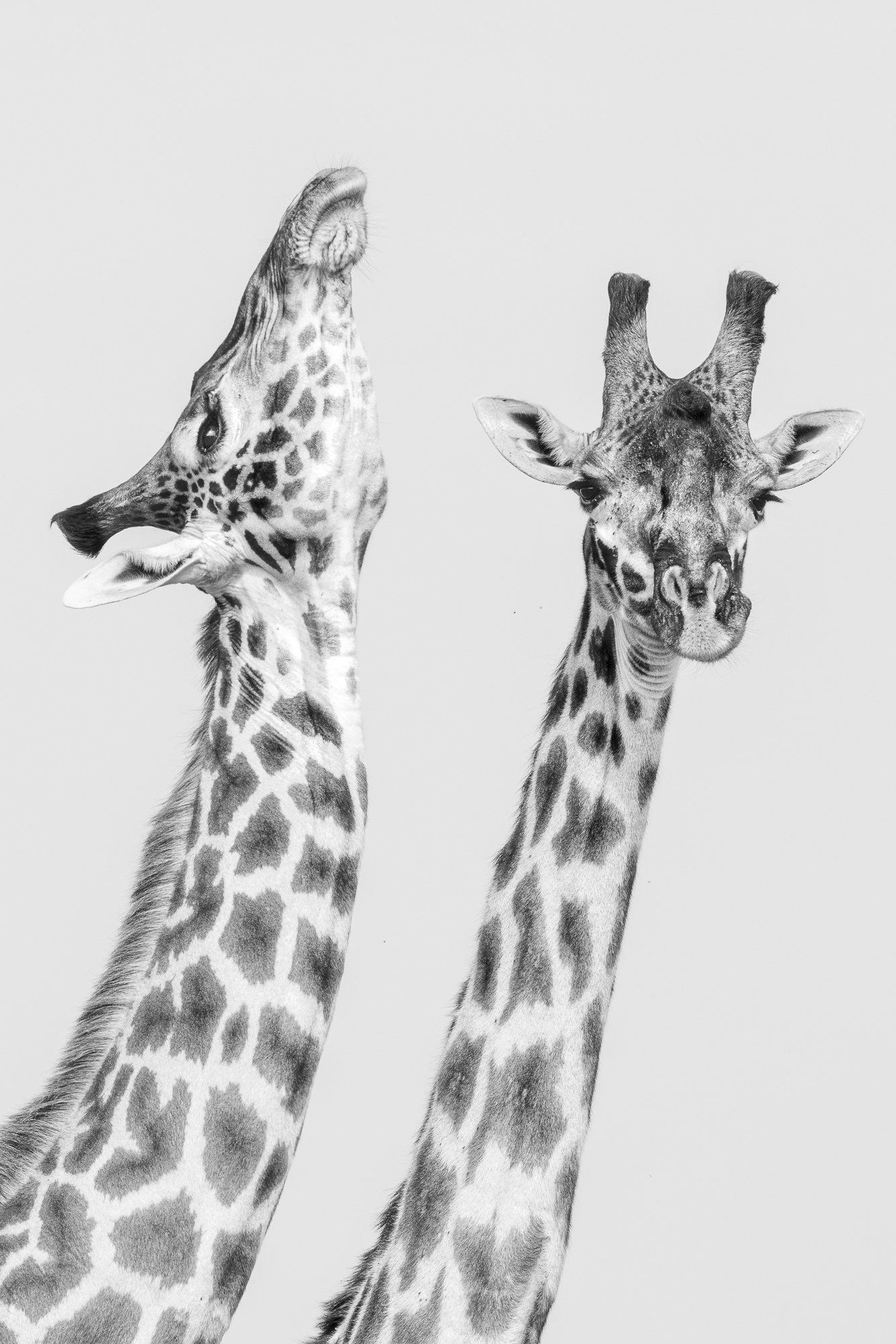
Image of Two Giraffe bulls "necking"
FASCINATING GIRAFFE FACTS
1. Giraffe are the World's tallest animals
Adult males can grow up to 5.5 meters (18 feet) tall, making them the tallest living land animals alive.
2. Their long necks evolved for food
The classic explanation is feeding. A giraffe can reach leaves, shoots, flowers and fruit high in the canopy that almost no other browser can touch, which gives it food with little competition.
3. They have the same number of neck bones as humans
Despite that enormous neck, a giraffe has just seven cervical vertebrae, the same as humans and most other mammals. Each one is simply much longer.
4. Males fight with their necks
Rival bulls “neck”, swinging their heavy heads into each other to establish dominance.
5. A giant heart drives very high blood pressure
A giraffe’s heart weighs around 11 kg (25 lb) and generates some of the highest blood pressure of any mammal to push blood up to the brain.
6. There are four species of giraffe
In August 2025 the IUCN formally recognised four distinct species, ending centuries of treating the giraffe as one:
Masai giraffe: jagged, irregular blotches that look like oak leaves or stars. Found in Kenya, Tanzania, Rwanda and Zambia.
Reticulated giraffe: rich orange-brown polygons outlined by a crisp white net that runs down the face and legs. Found in northern Kenya, southern Ethiopia and Somalia.
Northern giraffe: paler, more angular patches and white lower legs. Includes the Nubian, Kordofan and West African subspecies.
Southern giraffe: rounder, blotchier patches fading down the legs. Includes the Angolan and South African subspecies, with strongholds in Namibia, Botswana, South Africa and Zimbabwe.
7. No two coats are the same
Like human fingerprints, every giraffe’s pattern is unique, which is how researchers identify individuals.
8. Their spots work as camouflage and air-conditioning
The patches break up their outline in dappled woodland. Beneath each one sits a network of blood vessels that acts as a thermal window, releasing heat from the body.
9. Those aren’t horns
The knobs on a giraffe’s head are ossicones. These are bones covered in skin and fur, tipped with a tuft. Both males and females are born with them, lying flat at birth. Bulls often wear their tufts bald from necking.
10. A tongue built for thorns
Acacia leaves are part of their staple diet, including the thorns. A giraffe’s dark, prehensile tongue is around 45–50 cm long and threads between the spines to strip leaves. Thick saliva and tough papillae protect it.
11. They barely sleep
Wild giraffes sleep roughly 30 minutes to 2 hours a day in short naps, mostly standing. They lie down only briefly for deep sleep, curling the neck back to rest the head on the rump.
12. They can live for more than 30 years
The Giraffe Conservation Foundation has monitored giraffes in northwest Namibia since the late 1990s. That work has shown wild giraffes living past 30, well beyond the 25 years once assumed.
13. Giraffes once numbered over a million
In the 18th century, more than one million giraffes are thought to have roamed Africa. By the 1980s there were about 155,000.
14. They have lost almost 90% of their range
Giraffes have vanished from at least seven African countries and lost nearly 90% of their historical range over three centuries. In some once-prime areas, numbers have fallen by up to 95%.
15. Three of the four species are now increasing
Globally, the IUCN lists giraffes as Vulnerable overall with an estimated wild population of around 117,000 to 140,000 (The Giraffe Conservation Foundation’s State of Giraffe 2025 report).
Northern, Reticulated and Southern giraffe numbers are rising, and Masai numbers are stable. These trends are largely thanks to the conservation and science led work of organizations such as GCF, Born Free and AWF.
Maasai Giraffe- c43, 946. Threatened but showing resilience
Reticulated- c20,901. Increasing
Northern- c7037. Amongst the most threatened large mammals on the planet
Southern- c68837. Most numerous and generally increasing.
Sources: Giraffe Conservation Foundation, State of Giraffe 2025; IUCN.
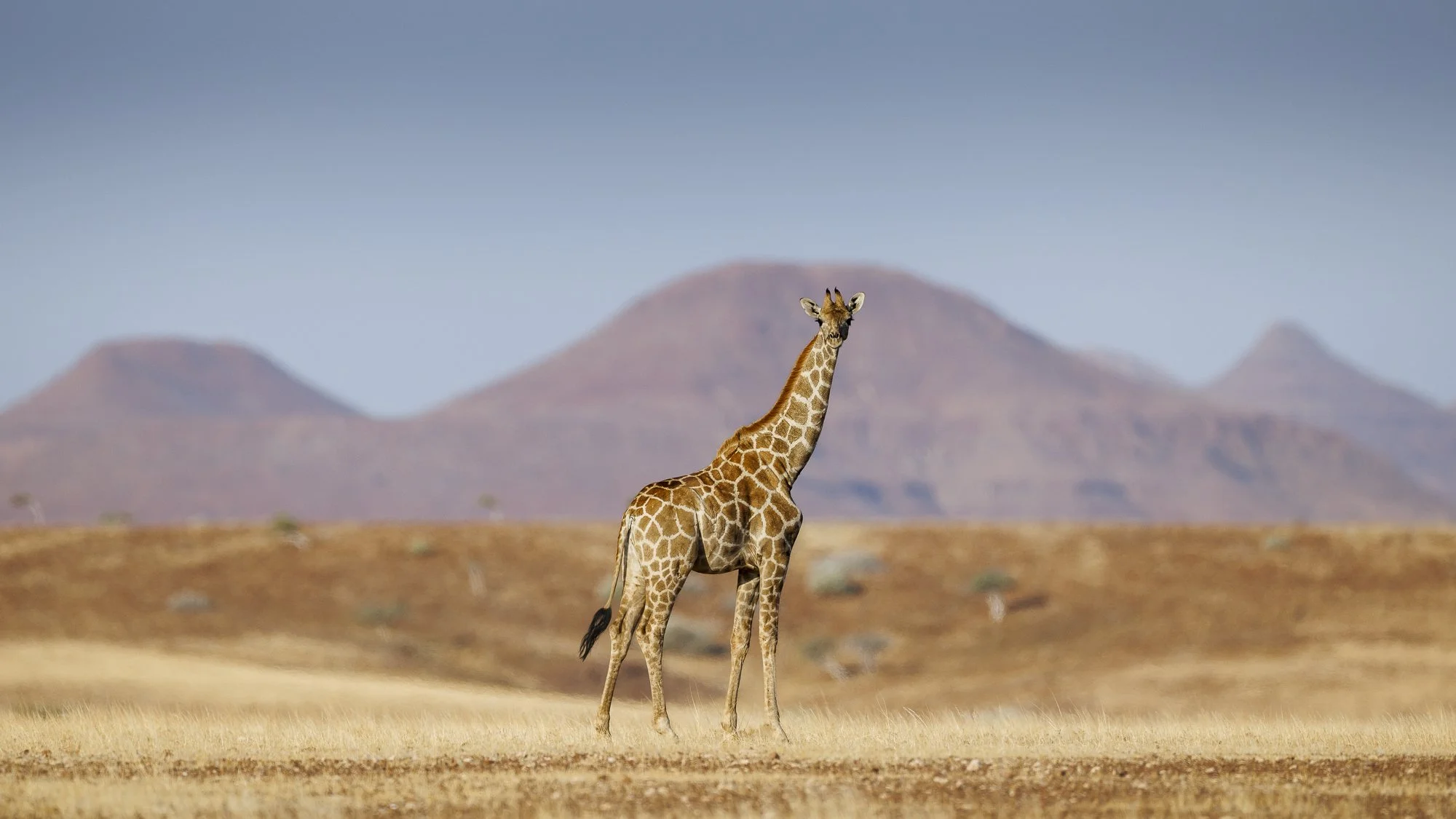
Angolan Giraffe calf, Damaraland, Namibia
HOW CAN YOU SUPPORT GIRAFFE CONSERVATION?
I was shocked to learn how far giraffe numbers had fallen with so little attention. GCF’s Dr Julian Fennessy called it a “silent extinction”, a phrase that reached a wider audience through Sir David Attenborough’s narrated BBC film Giraffes: Africa’s Gentle Giants. The recent recoveries show conservation works. These organisations are leading it:
Giraffe Conservation Foundation: the only NGO dedicated solely to wild giraffes across Africa. Its rewilding programme has returned more than 300 giraffes to landscapes they had lost. You can also symbolically adopt a wild giraffe.
Born Free Foundation: its Saving Meru’s Giants programme in Kenya funds the Twiga Team (twiga is Swahili for giraffe). The team patrols Meru National Park, removing poachers’ snares and monitoring reticulated giraffes.
Save Giraffes Now: field protection and habitat restoration.
African Wildlife Foundation: landscape-scale wildlife conservation across Africa.
You can also support giraffes through Remembering Giraffes, the 11th book in the Remembering Wildlife series, with all profits going to giraffe conservation. I’ve been proud to have images selected for earlier books in the series, and this one is a stunning gift for any giraffe lover. It’s available here from the Remembering Wildlife website and good bookshops.
Finally, a reminder that 15% of all my print sales goes to help support conservation charities. It’s a commitment that has helped raised thousands for conservation and one I am really proud of.
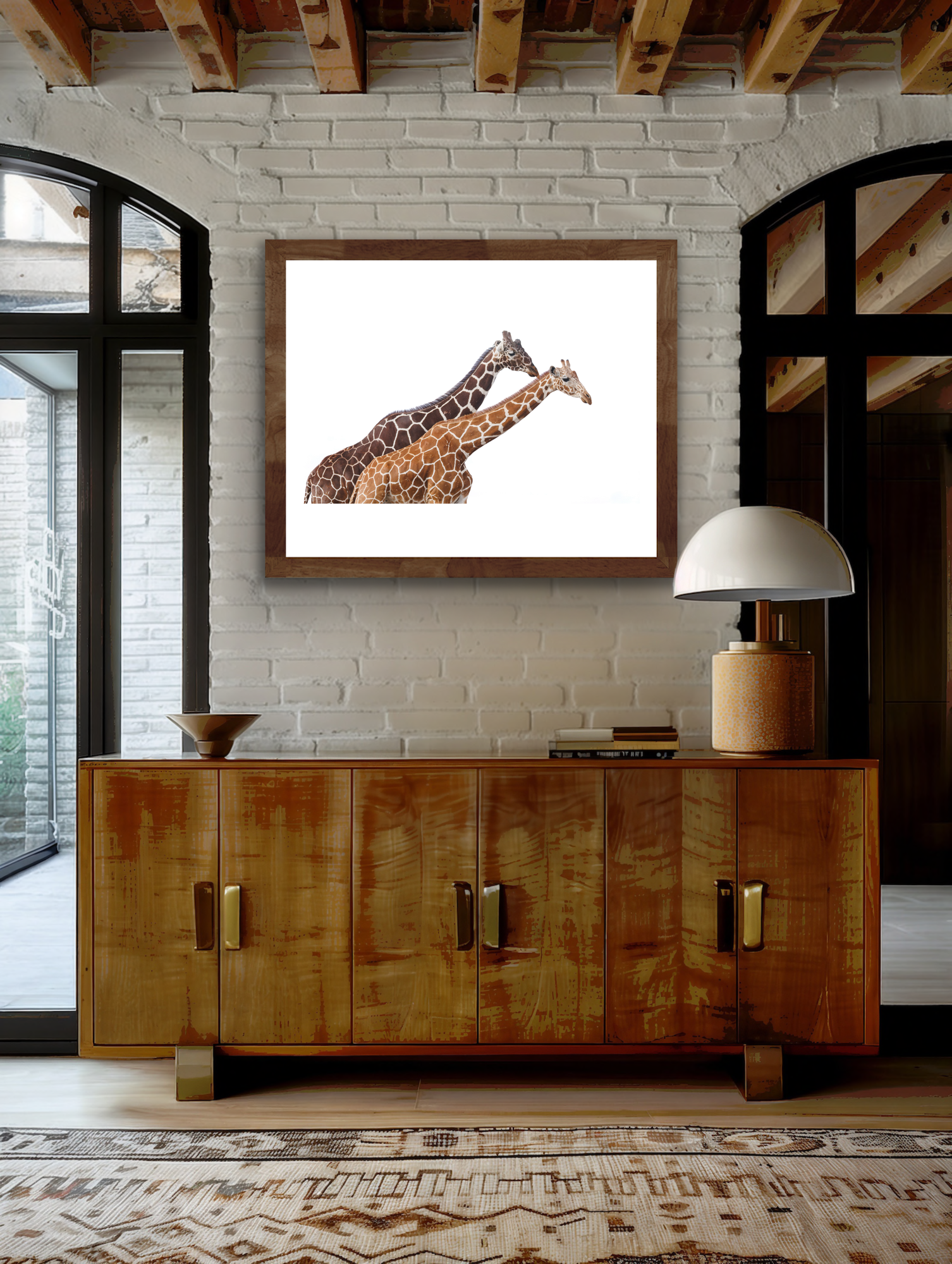
Room mock up with Giraffe print
I really appreciate you taking the time for reading this blog on Giraffe Photography and hope you got some useful tips and insights on just how special, but also vulnerable Giraffe are in the wild. If you are interested in purchasing one of these images, many are available as limited edition prints in my Print Shop. If there are other images you like in this blog, especially some of my more recent images please get in contact here as I also do bespoke print commissions.
As ever your time and feedback is always appreciated.
Thank you!
Jules

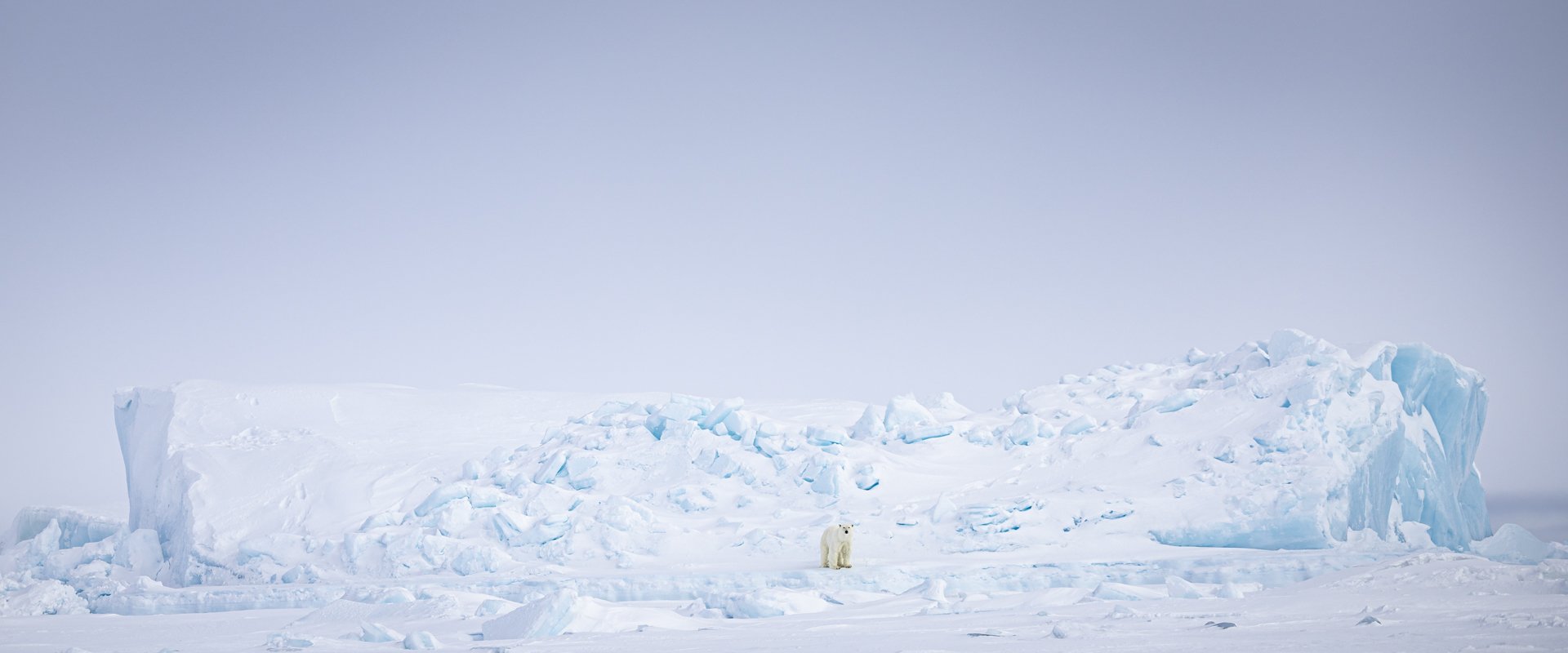
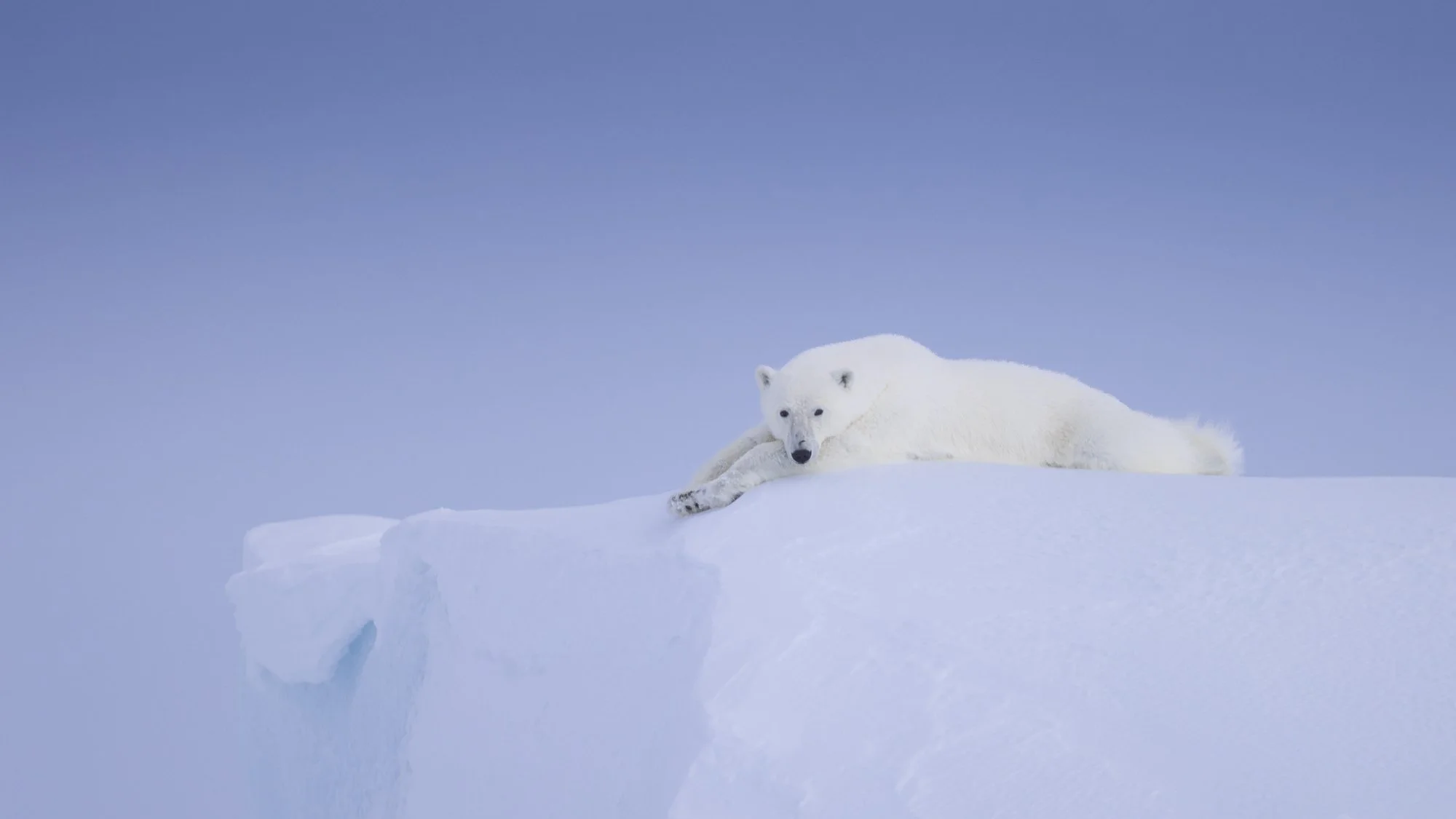
Svalbard, 2009
This was my first sighting of a polar bear taken nearly 20 years ago and I couldn't have asked for a more epic Arctic vista for my first encounter in Svalbard.
✓ Museum archival giclée paper
✓ Hand-signed & numbered by Jules
✓ Certificate of authenticity
✓ 15% to conservation
✓ Worldwide shipping
✓ Free UK delivery
The Full Story Behind The Photo
This was my first sighting of a polar bear taken in Svalbard nearly 20 years ago, yet I still remember it vividly. The excitement onboard our icebreaker the Vavivlov was palpable, especially as the scene itself was so breathtaking. The polar bear looked tiny as it walked along the shoreline framed by the towering glaciers. I couldn’t have asked for a more epic Arctic vista for my first Polar Bear encounter. I’ve had closer sightings of bears in Svalbard, but this image holds a special place for me as one of my favourite “animal in environment” images and reflects why it is so important to not only protect polar bears but also this pristine Arctic environment.
Print Specification
All prints are printed on Canson® Infinity Rag Photographique which is a 100% cotton museum grade white Fine Art and photo paper.
Canson® Infinity Rag Photographique offers a unique extra smooth surface with a sensual feel. It has been developed to address the need for continued longevity requirements in the Digital Fine Art market.
Shipping & Delivery
Delivery is from the United Kingdom and is included free with the purchase of all prints. Delivery is by FedEx, DHL, UPS, or DPD depending on location. Once your order is shipped you will receive an email with your tracking number. Please allow up to two weeks to fulfil your order plus one week for delivery.
Conservation Impact
As with all images in the collections, 15% of the proceeds from each image will be split between four charities- Kicheche Community Trust, Great Plains Foundation, Big Cat Initiative & Sheldrick Wildlife Trust. Learn more about giving back, here.