
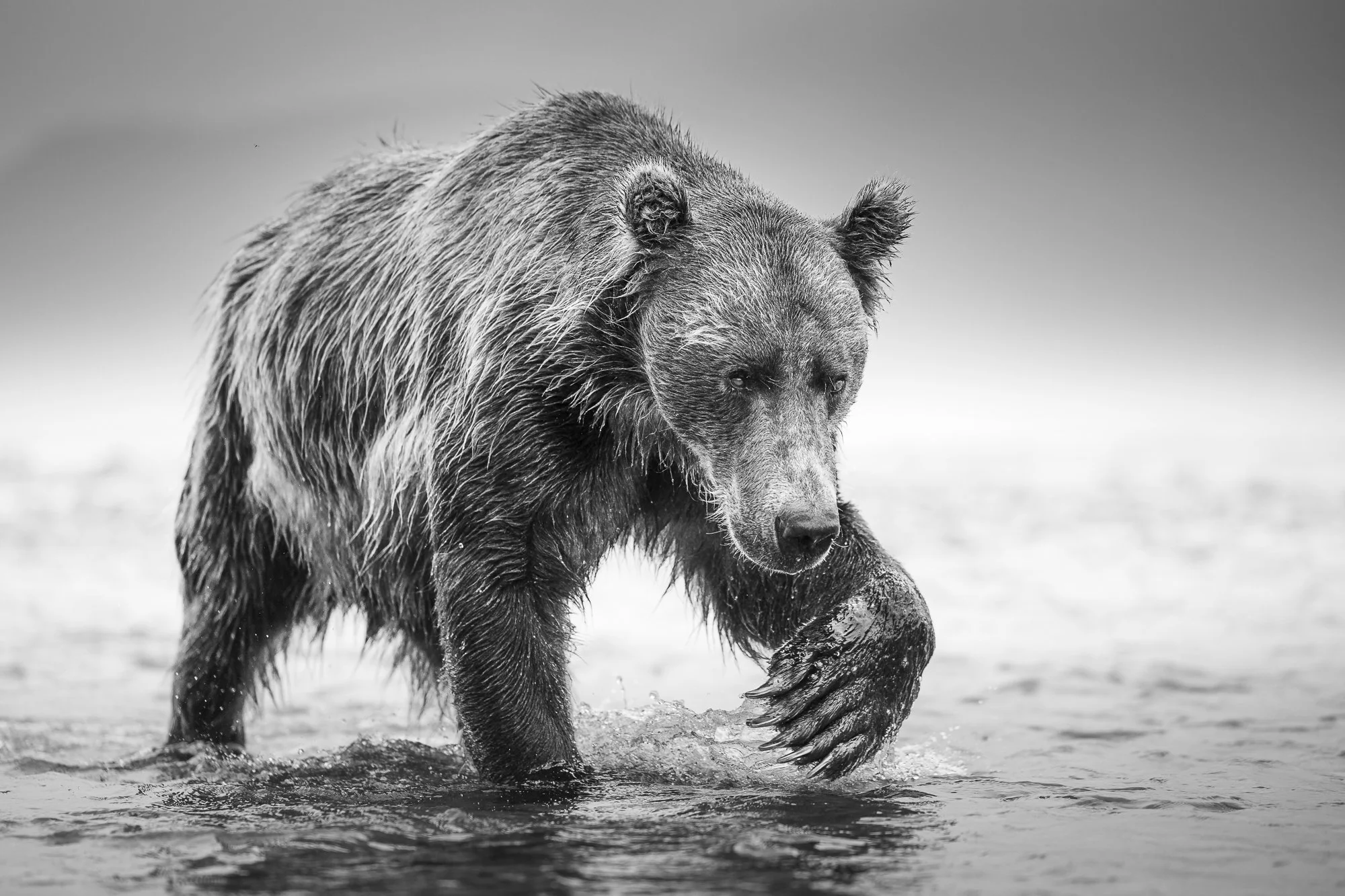
Image of Brown Bear in Geographic Harbor
I have been lucky enough to see Brown Bears in the Grand Tetons and European brown bears in Finland, but nothing beats the visceral thrill of photographing brown bears in the primal wilderness of Alaska.
Since my first brown bear photo expedition over a decade ago, I’ve returned to Katmai three more times, drawn back not only by the bears but by the beauty of this incredible landscape. These are my favourite images from my latest trip, and some of the stories behind them.
What makes Katmai Brown Bears so special?
It’s not just the density of bears that makes Katmai so special. Food is so plentiful that the bears show a rare tolerance for sharing space with each other. The result is one of the most profound wildlife experiences you can have, often spending hours close to one of the world’s apex predators. There’s nothing like it.
I’ve camped on the Katmai peninsula, living amongst the bears, which is a rough, raw and memorable experience. However, my favourite way of seeing Alaska’s brown bears is by boat.
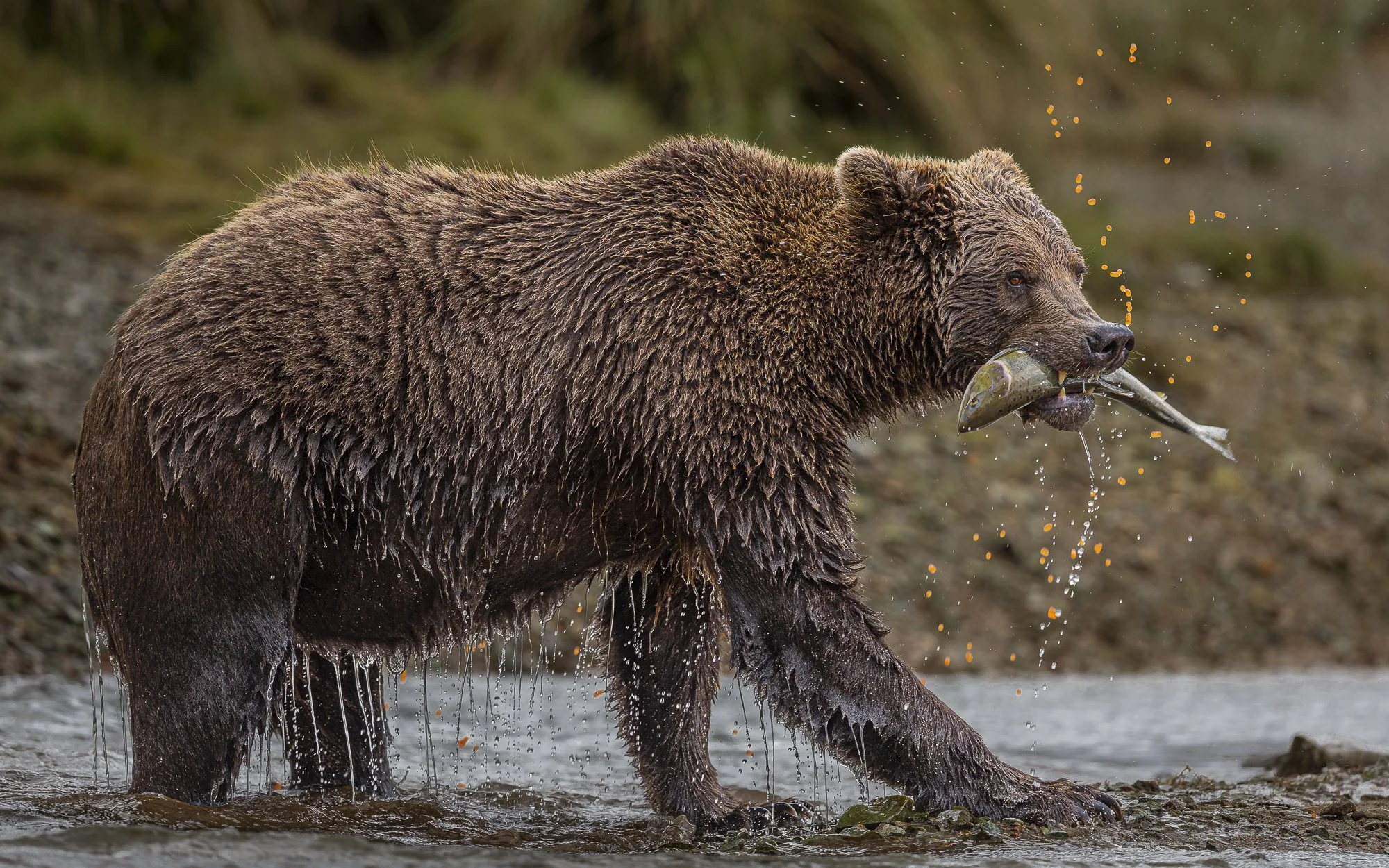
Brown Bear catching salmon taken on my first Alaska trip in 2013
Getting to Katmai: An Alaskan Wilderness Adventure
Just getting to Katmai is an adventure in itself. From London I flew to Seattle, building in time there before flying to Kodiak via Anchorage. Then it’s an overnight stay, everything crossed that the weather holds, and a float plane to your home for the next week.
Back in August I made this journey with a group of friends for a private charter on Le Canard, run by Alaska Coastal Excursions and guided by Carl Donohue of Expeditions Alaska. It turned out to be one of the best weeks of brown bear photography I’ve ever had.
When Is the Best Time to See Brown Bears in Alaska?
The Alaskan bear season runs from July to September, dictated by the salmon run. A run can last from a few weeks (pink and sockeye) to a couple of months (Chinook, 4-8 weeks), and the timing varies from place to place.
July might bring better sightings of mums and cubs, whereas later in the season can be better for male bears fishing. If you’re planning your own brown bear photo expedition, this is the first thing to get right. Decide what you most want to photograph, then ask your guide when and where to go.
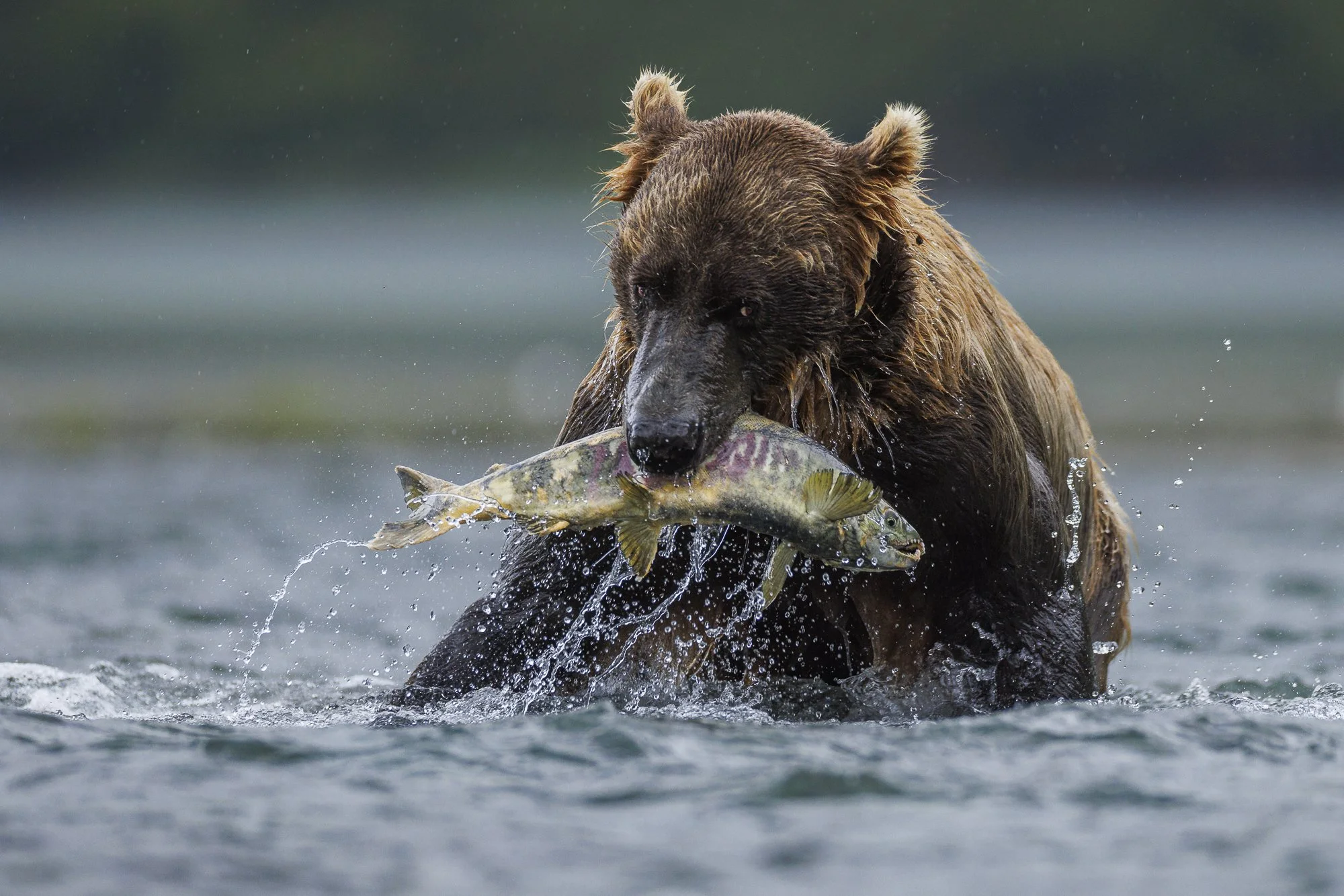
Brown bear with salmon at Geographic Harbor, Alaska
Photographing Brown Bears Fishing at Geographic Harbor
When we arrived in Geographic Harbor at the beginning of August, we were lucky that the salmon run was in full swing, drawing in several male bears and five different bear families. The bear action was so good that we stayed for two and a half days before moving on to another bay.
We’d head out after breakfast, usually around 9am, for 3-4 hours at a time. Whilst there were two other boats in the harbour, we were often the only ones on land photographing the bears. A couple of great spots gave all of us clear shots as the bears fished their way up and down the river.
With so long there, mornings and afternoons, we would start to see the same bears and get a real sense of their characters and behaviour.
One beautiful male was a prolific fisherman. He’d run up and down the river, catch a salmon, take it back to the sedge grass, eat what he needed and come back for more. Again and again.
Another male looked bruised and battered by many fights, and every bear gave him a wide berth. As soon as he came into view, younger bears would scarper into the grass. Others would move off upriver to find a different spot, then meander back down once he’d gone.
Mothers would fish while their cubs watched anxiously from the side of the river, but usually only when no other males were around. As soon as one appeared, mother and cubs moved away quickly.
To watch all this bear behaviour at such close quarters is a privilege. It also gives you so much freedom to experiment with focal lengths, shutter speeds and lenses.
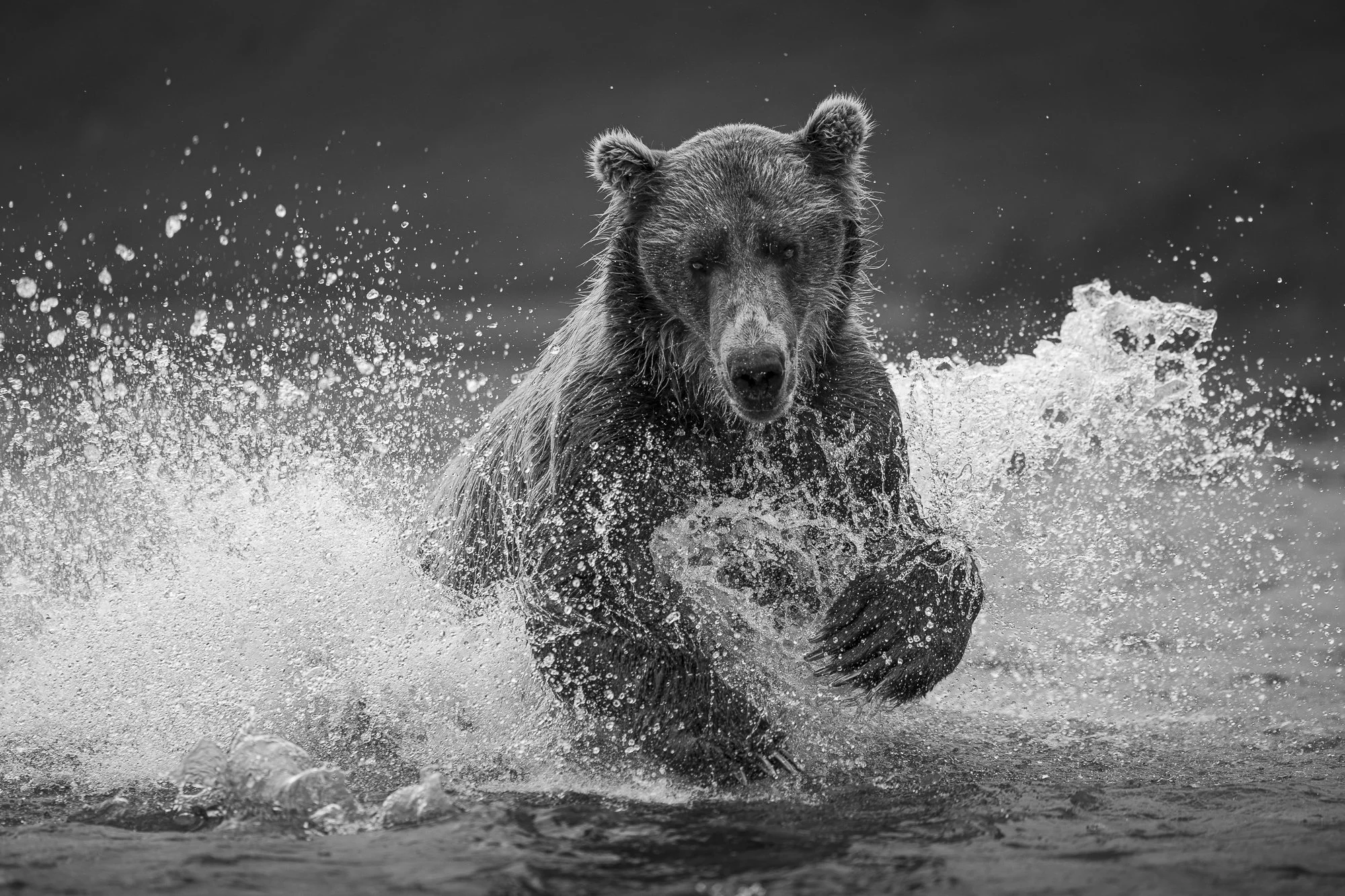
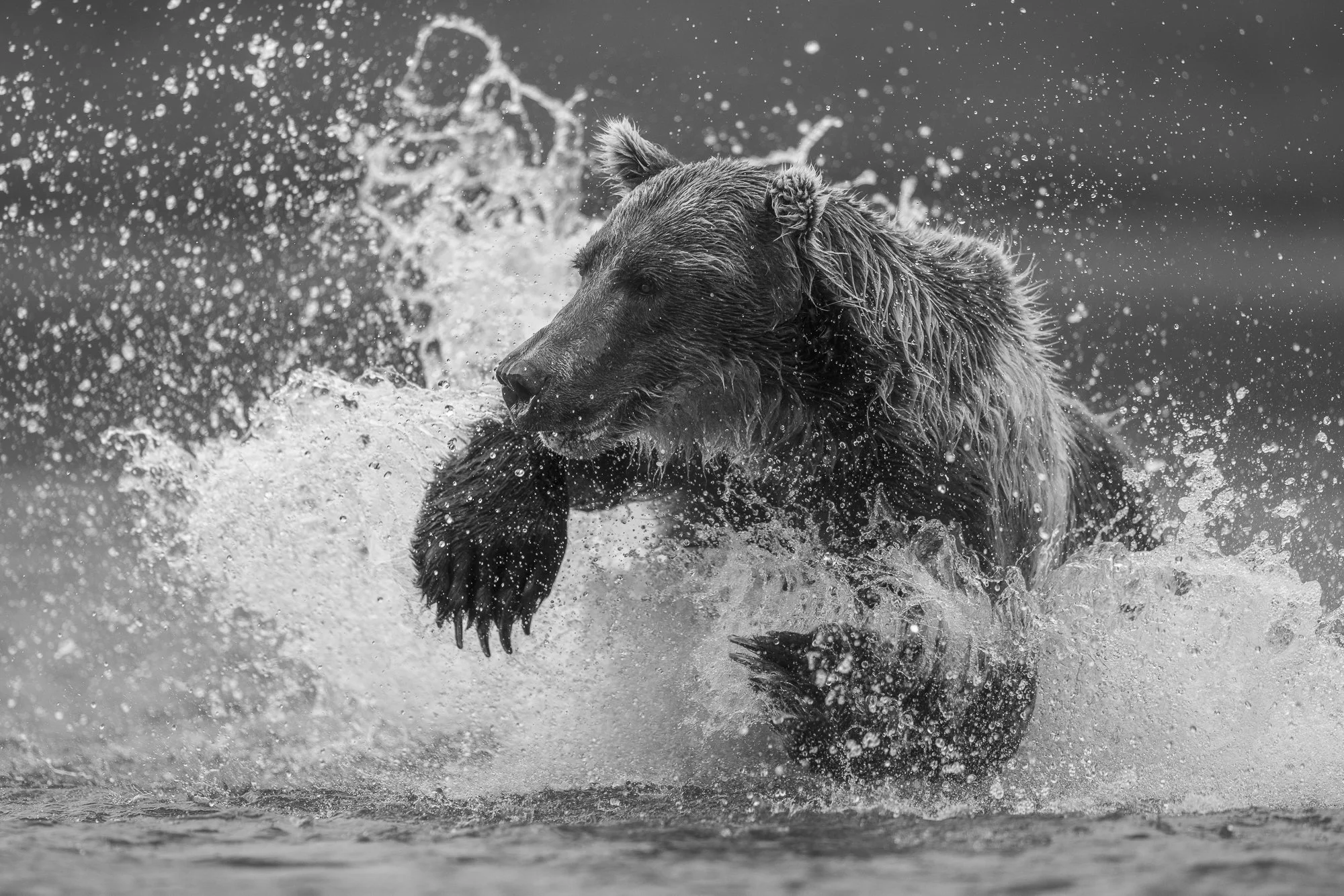
Brown Bear fishing for salmon at Geographic Harbor, Alaska
Brown Bear Photography Tips: Light, Lenses and Low Angles
The weather helped us hugely on my latest trip. The conditions were almost perfect. Overcast, but with enough light to shoot the bears at a high shutter speed without a ridiculous ISO.
I took my tripod out at first, but in the end I was either hand-holding my 400mm or 70-200mm lens, or lying down with my camera bag as a bean bag to get as low as possible.
In all these images, I wanted to show the bears’ power and vitality. These bears can eat up to 40 salmon a day as they fatten up for hibernation, and in full flow there’s a fluidity to their movements that is beautiful to see. I tried to capture this with strong eye contact, or by showing those impressive claws, which leave you in no doubt how powerful they are. Thankfully, I came away several images I was happy with.
Brown Bears in the Landscape: A Solitary Bear at Hallo Bay
The bear viewing at Geographic Harbor was exceptional, but it was an encounter with a solitary brown bear at Hallo Bay that sticks in my memory. It led to one of my favourite bear images I’ve ever taken.
Hallo Bay sits beneath the peaks of the Aleutian Range and is famed for its bear viewing. We were heading back to our boat after a morning with a couple of bears when we noticed a male sitting on the beach, almost enveloped by sea mist. It was such an atmospheric scene. I took some images with my 400mm lens, then switched to my 70-200mm as he moved along the beach.
The whole encounter lasted 10 minutes. Low tide and no wind gave the water a perfect stillness. Eight of us watched in silence, mesmerised by his movements. I’ve rarely witnessed a scene so peaceful and profound watching a solitary bear at home in his surroundings and oblivious to our presence.
To emphasise the peace I was feeling, I overexposed the image and when processing used colour sliders to further enhance the minimalist palette I was looking for. I’ve seen examples of Japanese minimalist photography, which strips a scene down to its essential elements using empty space and subtle light. That’s what I hope I’ve captured here
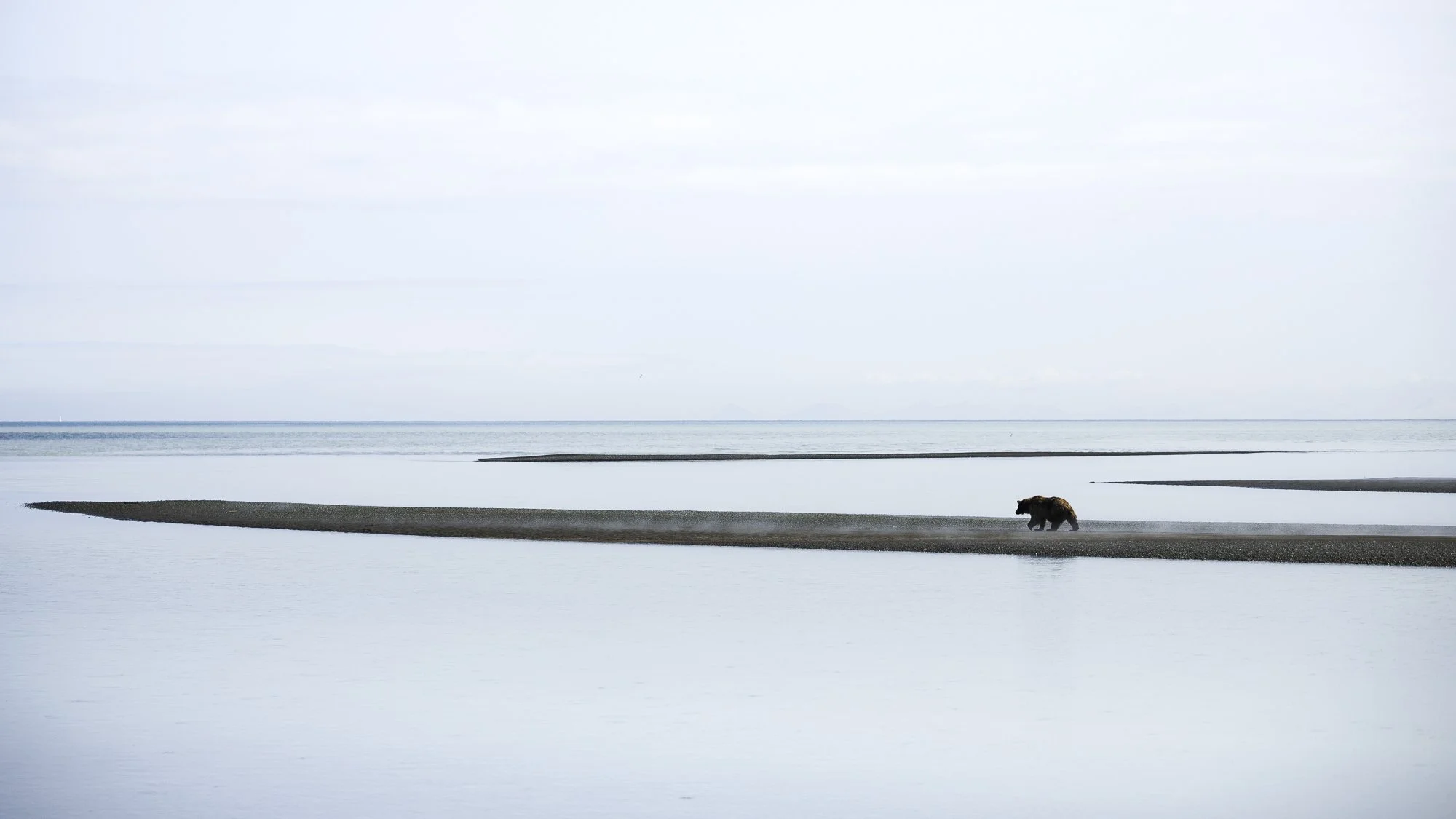
Solitary Brown Bear in sea mist on the beach at Hallo Bay, Alaska
I also went wider in other scenes, especially at Geographic Harbor, when fog and mist added a critical atmospheric element. These vistas are so typical of the Alaskan wilderness and its mercurial weather, and they’re what lead me back time and again.
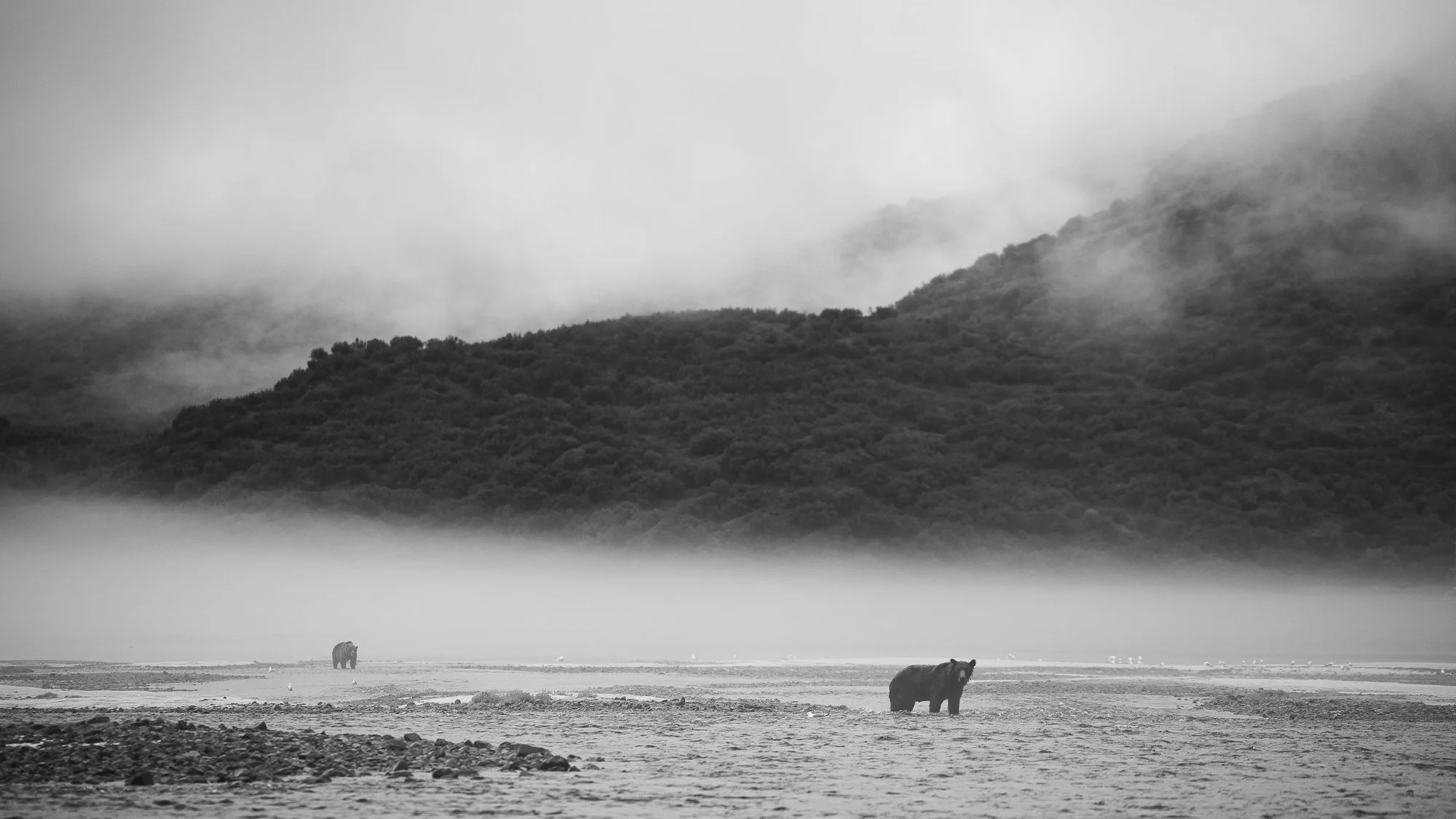
Brown bears in fog at Geographic Harbor in the Alaskan Wilderness
BROWN BEAR PORTRAITS
During my week in the Alaskan wilderness there were so many opportunities for different types of images from tight action shots to shooting wider to get bears in the landscape. However, I was also looking for portrait opportunities when I could capture the character and essense of these amazing bears, such as this black and white portrait of a male bear. To get this low angle image I was lying on the sand as the curious bear stood proud at the waters edge with his intense stare looking in our direction.
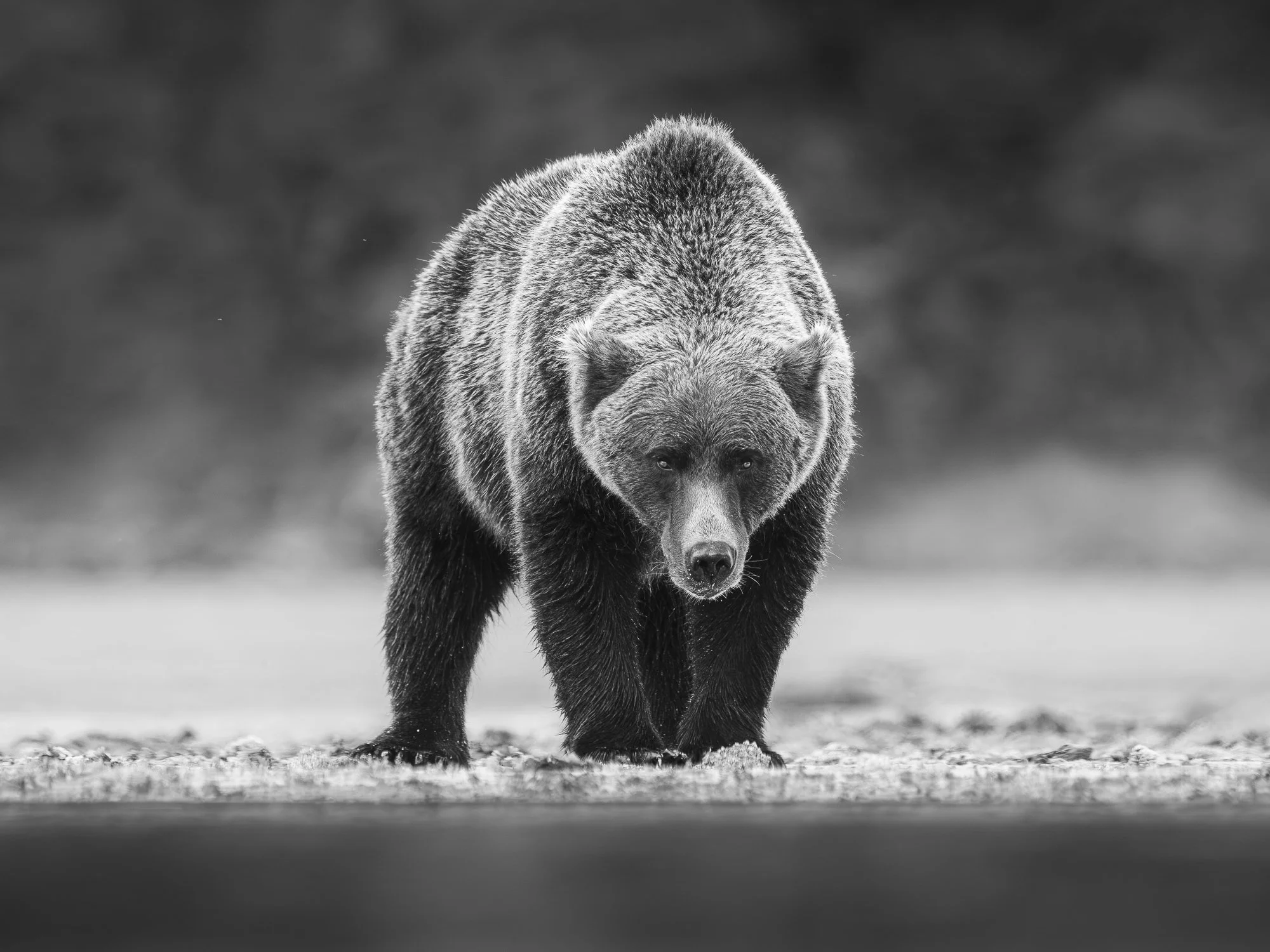
Black and white brown bear portrait
The colour portrait below is of a young brown bear who we nicknamed “Goldie” who gave us our closest bear encounter, and not necessarily in a good way! We had spotted her in a meadow at Kinak Bay and wandered over to get a closer look. We had been with her for 10 minutes or so when she started rolling and crawling towards us. Eding closer and closer until our guide Carl put a stop to it. She talked to her very gently and then asked all of us to slowly stand up. Realising we were going to stand our ground she wandered off to carry on eating grass and occasionally looking in our direction very nonchalantly. She was quite a character.
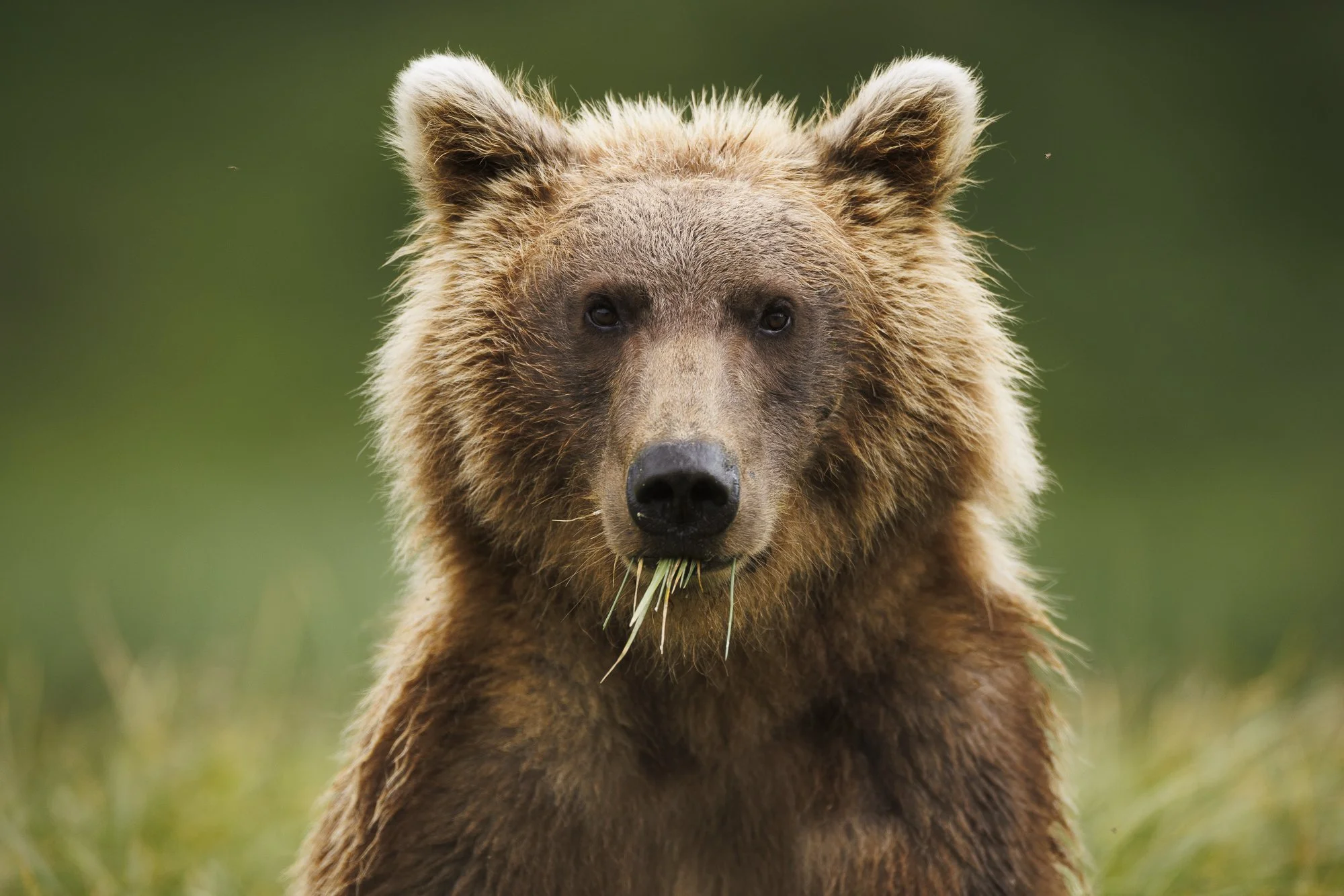
Brown bear portrait taken at Kinak Bay, Alaska
Black and White Brown Bear Photography
Most of my best black and white brown bear images were taken at Geographic Harbor, helped by overcast conditions that gave subtle lighting without the harsh shadows sunshine can bring. I also studied the backdrops to produce the cleanest frames I could, especially when the bears were walking towards me or looking straight at me.
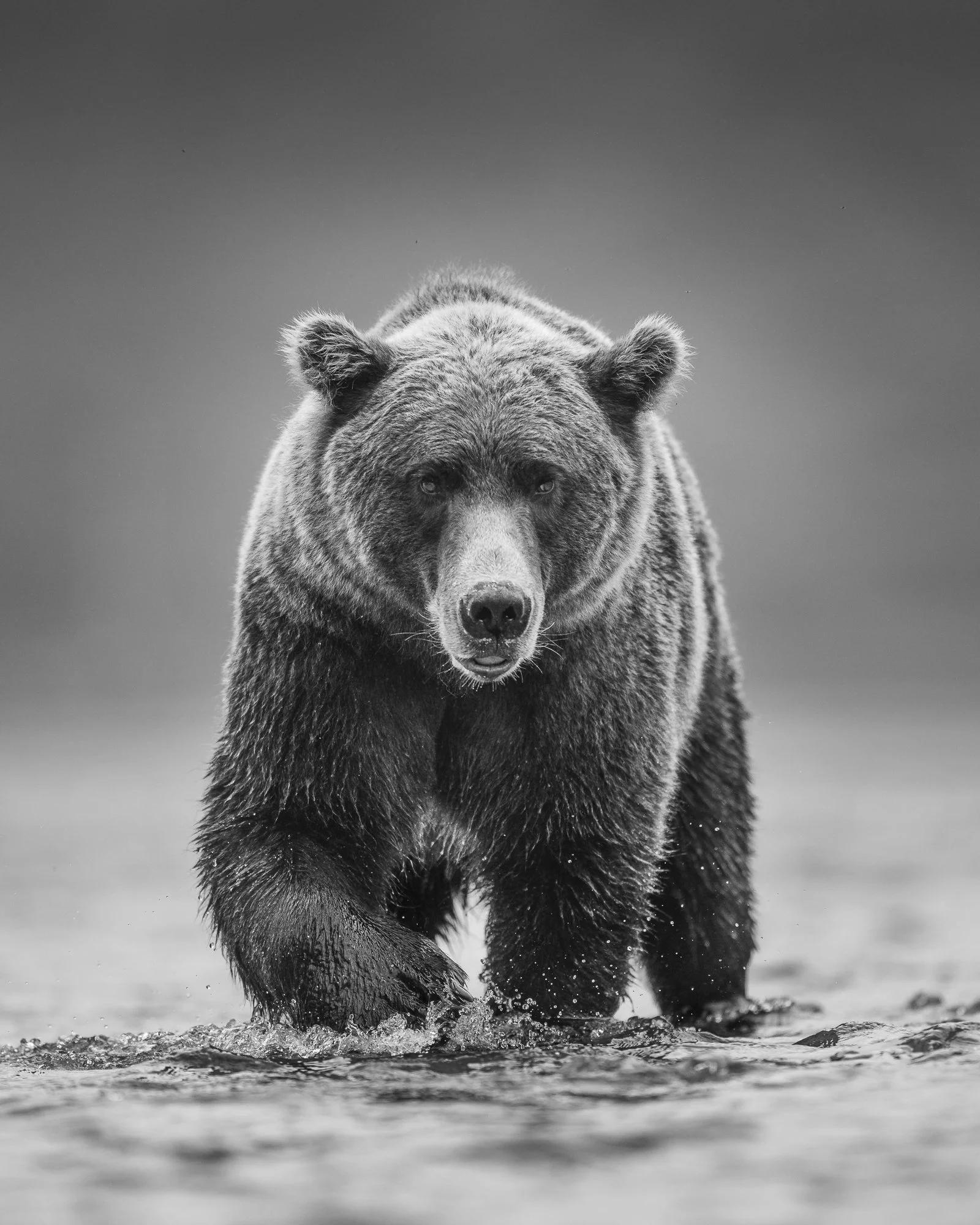
Black and white portrait of a Brown bear in Katmai, Alaska
The mist and fog often turned the scene naturally white, so I looked for opportunities to produce high key images like this one.
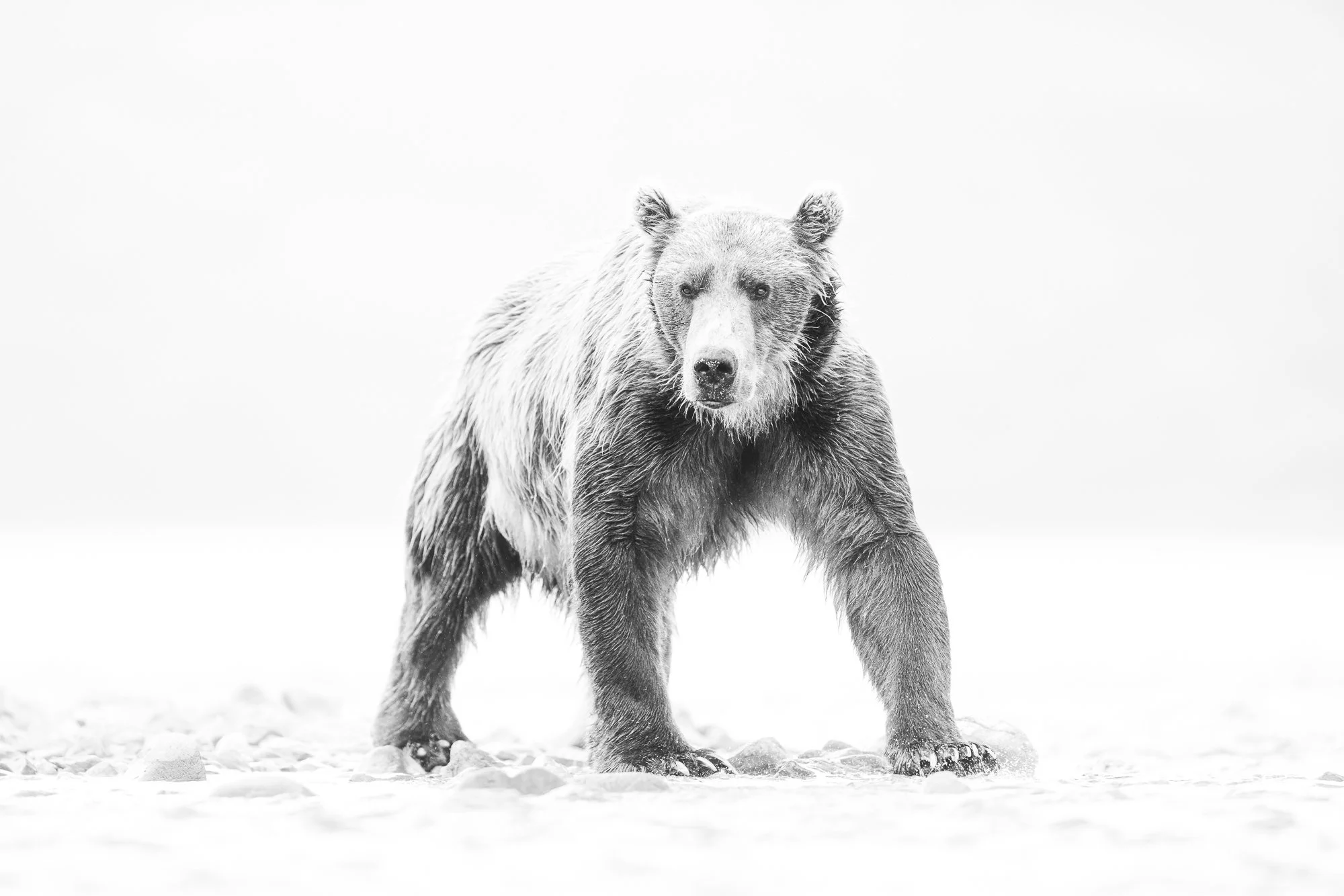
High key image of Brown Bear in mist, Katmai
On our last day, back at Geographic Harbor, we finally got some sunshine. In the late afternoon I used heavy underexposure to create this low key image of a bear looking upriver. As one of the final images of my bear adventure, it’s an appropriate closing scene. Fade out until next time.
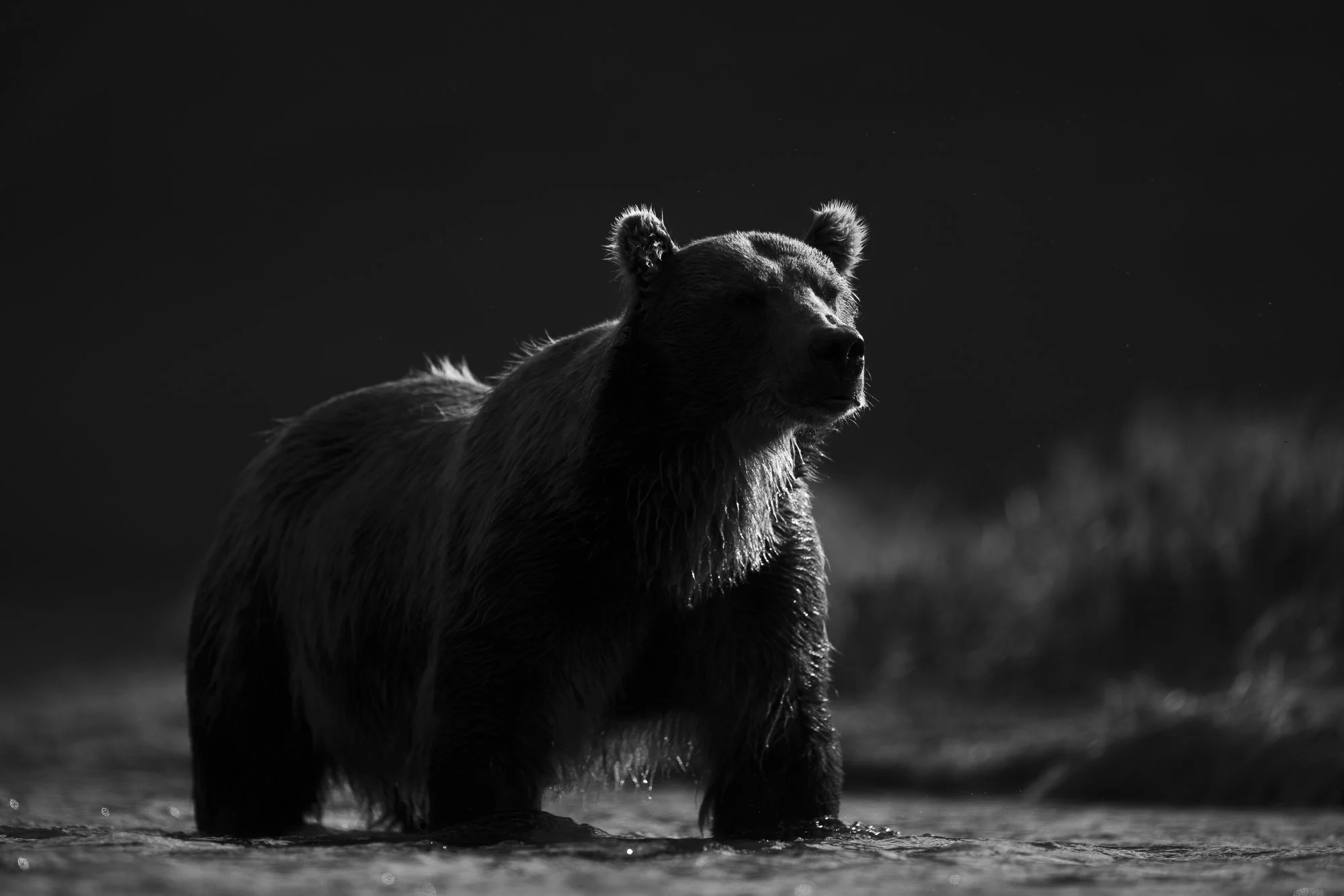
Low key image of brown bear looking upriver at Geographic Harbor, Alaska
Planning Your Own Brown Bear Photo Expedition
If this has tempted you to visit Katmai, here’s what I’d pass on after four trips:
Time it around the salmon. The season runs from July to September, but runs vary from place to place, so a good guide is worth everything. I have travelled with Carl Donohue several times over the last decade, so he’s a trusted guide for me. He runs several Brown Bear trips across the summer months from camping to chartering Le Canard for a week. Check them out here
Boat, camp or Lodge: Camping among the bears is raw and memorable, but the mercurial Alaska weather can make it uncomfortable for some. A boat lets you move with the bears and return to a warm meal and good company. Alaska Coastal Excursions run trips with other photographers who charter their boats for a week so you can contact them directly for availability if you have specific in mind.
Another place in Alaska that is on my bucket list for next time in Alaska is Lake Clark. Some friends of mine recommend Silver Salmon Creek Lodge which can be reached via Anchorage
Brooks Falls- Whilst Brooks Falls is one of the iconic spots to see Brown Bears, it hasn’t appealed to me because I think it’s hard now to get anything original and also it gets packed in the summer with visitors. I much prefer the isolation of being one of a few people with the bears on the Katmai coast.
Pack for flexibility. A 400mm (plus extenders) and a 70-200mm covered almost everything for me, and I soon left the tripod behind to have less to carry. A camera bag doubles as a bean bag for low angles.
Welcome the grey days. Overcast light is a gift for bear photography, and mist can make the image.
Gear- Waders and wader boots are a must. I can appreciate if this is your first time you may not want to spend a huge amount of money on them but these will keep you warm and dry all week so worth some investment. You can always resell on EBay.
Whilst we didn’t have rain on the week we were in Alaska, that’s not typical. I’ve been in days of heavy rain before so a good rain jacket is essential, as is either a good rain cover for your camera bag or a waterproof bag such as Fishpond.
Get Insurance & build in time- We almost got fogged in on our last day as the float plane couldn’t set off or land to bring in next guests. Luckily a window opened late afternoon and we made it back to Kodiak. On a previous trip to Alaska not only did I have to cut short a trip by two days but then got stuck in King Salmon another two days before being able to get a flight to Seattle. Having good insurance and building in leeway at the beginning and end of your trip is so critically important when dealing with Alaska weather.
Other resources to help-
Jen Ritichie Wildlife Conversations Podcast available via Spotify, You Tube or Apple- Jen Ritchie has a wonderful podcast where she talks to fellow photographers and conservationists. As a passionate advocate for bears in Alaska and co host herself of trips there, I would highlight the following episodes which are packed with info about boat and camping trips in Katmai.
Amanda Janes ep 49
Maureen Matsen and Jennie Cannon ep
Katmai Bear Camp Crew ep 52
Thank You
A huge thank you to Carl for an amazing week in Katmai. Carl is a long-standing Alaska guide who wants you to have the best experience and keeps you and the bears safety in mind. He does this in a low-key way that respects you and, more importantly, the bears. If you want to learn more about him and why he’s so passionate about Alaska then check out my interview with him here.
And finally, a huge thanks to our crew on Le Canard- captain Eddy and crew Amanda and Tracy. We were so well looked after, with Tracy’s amazing cooking and Eddy and Amanda working tirelessly to give us a bear experience we’ll never forget. What a great team. Couldn’t recommend them enough.
And finally thank you as ever for your time in reading this blog. Later in the month I will be releasing some of these images as limited edition prints. If you have any interest, then please subscribe to my newsletter for updates. Sign up below.
Watch this space.
Jules

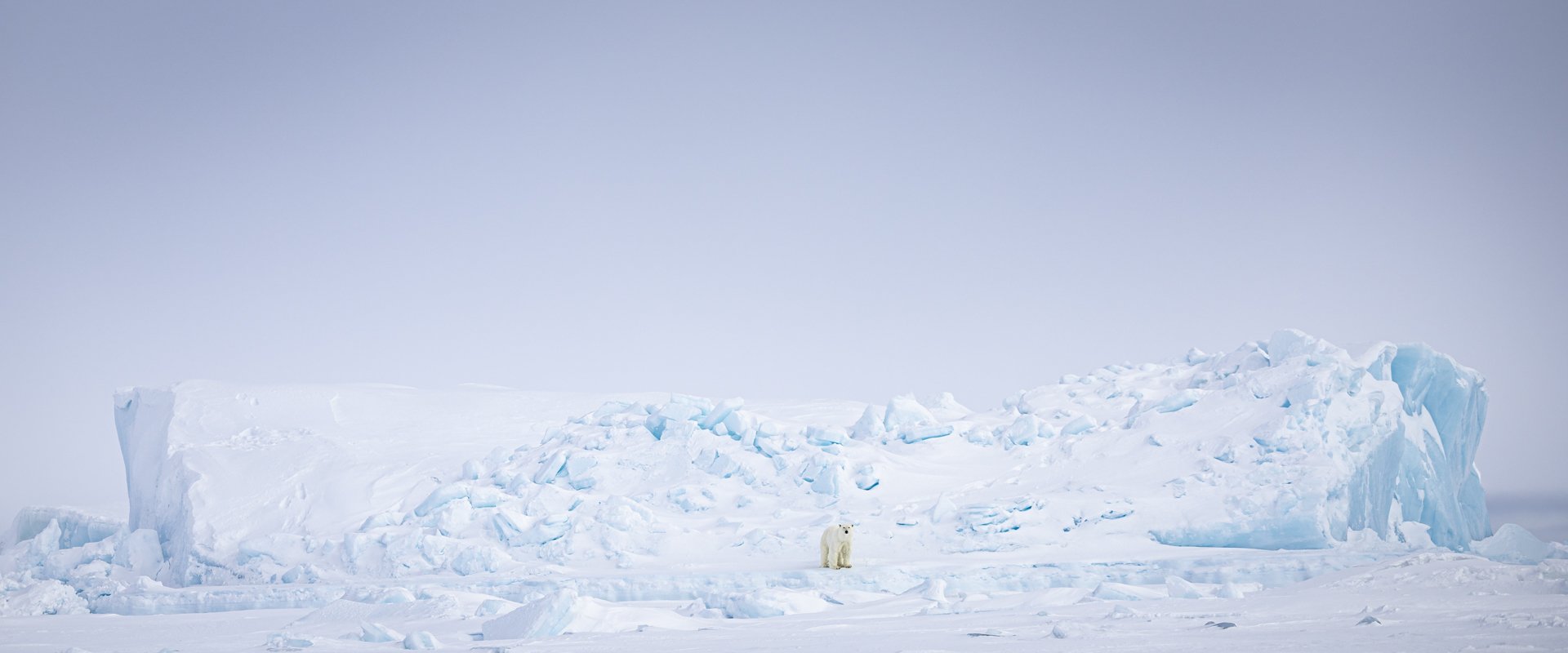
Svalbard, 2009
This was my first sighting of a polar bear taken nearly 20 years ago and I couldn't have asked for a more epic Arctic vista for my first encounter in Svalbard.
✓ Museum archival giclée paper
✓ Hand-signed & numbered by Jules
✓ Certificate of authenticity
✓ 15% to conservation
✓ Worldwide shipping
✓ Free UK delivery
The Full Story Behind The Photo
This was my first sighting of a polar bear taken in Svalbard nearly 20 years ago, yet I still remember it vividly. The excitement onboard our icebreaker the Vavivlov was palpable, especially as the scene itself was so breathtaking. The polar bear looked tiny as it walked along the shoreline framed by the towering glaciers. I couldn’t have asked for a more epic Arctic vista for my first Polar Bear encounter. I’ve had closer sightings of bears in Svalbard, but this image holds a special place for me as one of my favourite “animal in environment” images and reflects why it is so important to not only protect polar bears but also this pristine Arctic environment.
Print Specification
All prints are printed on Canson® Infinity Rag Photographique which is a 100% cotton museum grade white Fine Art and photo paper.
Canson® Infinity Rag Photographique offers a unique extra smooth surface with a sensual feel. It has been developed to address the need for continued longevity requirements in the Digital Fine Art market.
Shipping & Delivery
Delivery is from the United Kingdom and is included free with the purchase of all prints. Delivery is by FedEx, DHL, UPS, or DPD depending on location. Once your order is shipped you will receive an email with your tracking number. Please allow up to two weeks to fulfil your order plus one week for delivery.
Conservation Impact
As with all images in the collections, 15% of the proceeds from each image will be split between four charities- Kicheche Community Trust, Great Plains Foundation, Big Cat Initiative & Sheldrick Wildlife Trust. Learn more about giving back, here.