
BEST WILDLIFE IMAGES 2025
My Best Wildlife Images of 2025 and the stories behind them
2025 has been an incredible year for me, both creatively and professionally. I’m encouraged by how my work continues to evolve, not only in the pursuit of new and different images, but in creating photographs that carry strong stories. Central to that ambition is my ongoing search for places where wildlife and landscape exist in true harmony.
This year was bookended by two first-time destinations: Iceland at the beginning of the year and Antarctica at the end. Both left a lasting impression, and I’ve shared those experiences in Photo Stories – Emperor Penguin Photography and Land of Icelandic Horses for anyone who would like to explore what makes these wild places so special.
Alongside new species and locations, it remains important to me to deepen my work with subjects I’ve photographed for years. In 2025, that meant returning to Amboseli, the Maasai Mara, India, Baffin Island, and Peñalajo, with each rewarding me with images I’m excited to share in this story.
I hope you enjoy part one of this journey through some of the world’s most iconic wildlife and landscapes, and the stories they tell.
Happy New Year—and here’s to a wild and wonderful 2026!
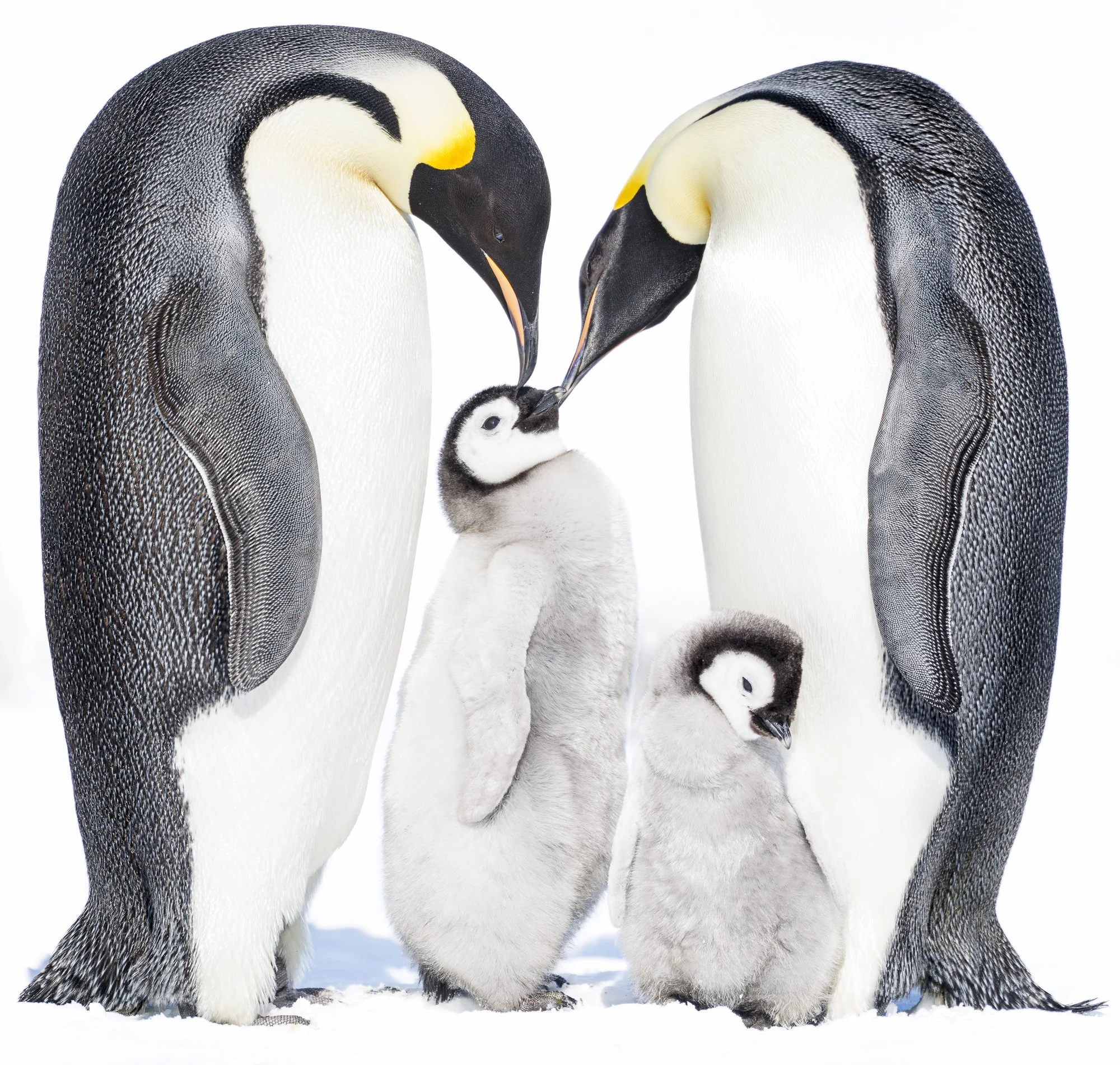
Emperor Penguins preen their chick whilst orphaned chick seeks comfort
Penguin Yearning
Of all the thousands of images I took at Snow Hill, this is my favourite one. It’s not only an emotional scene but has a more poignant story to tell…
I had been watching the Emperor Penguin colony for over an hour, scanning the group for moments of connection between adults, or between parents and chicks.
As I shifted position moving further round the group in front of me, two adults caught my eye, standing slightly apart. They greeted each other with mirrored movements. A chick appeared at their feet, slipping between them and leaning into its father. Then a second, smaller chick emerged, pressing itself against the female.
At first, I assumed both were theirs. The chicks begged for food, heads lifted in hope. The adults preened the larger chick but never fed either during the time I watched.
Slowly, the truth became clear. The adults’ attention remained fixed on the bigger chick. The smaller one lowered its head as if it was dejected, but was still heartbreakingly persistent asking for food. I suspected it was an orphan.
Later, Fabrice Genevois, our on-board Penguin Expert, confirmed it. Orphaned Emperor chicks often try to attach themselves to unrelated adults. But parents with their own chick will not feed another. Survival for the chick depends on finding an adult that has lost its chick, which a rare and fragile chance.
The entire exchange lasted just eight and a half minutes. It became one of the most poignant moments I witnessed, a quiet reminder that life in an Emperor Penguin colony is defined by a thin line between survival and loss. No wonder they are known as the toughest birds on the planet.
Settings: Canon R5 II, RF100-300mm F2.8 + 1.4 EXT, 1/1250, F4, ISO 100
Travelled to Antartica with Quark Expeditions on the MV Ultramarine
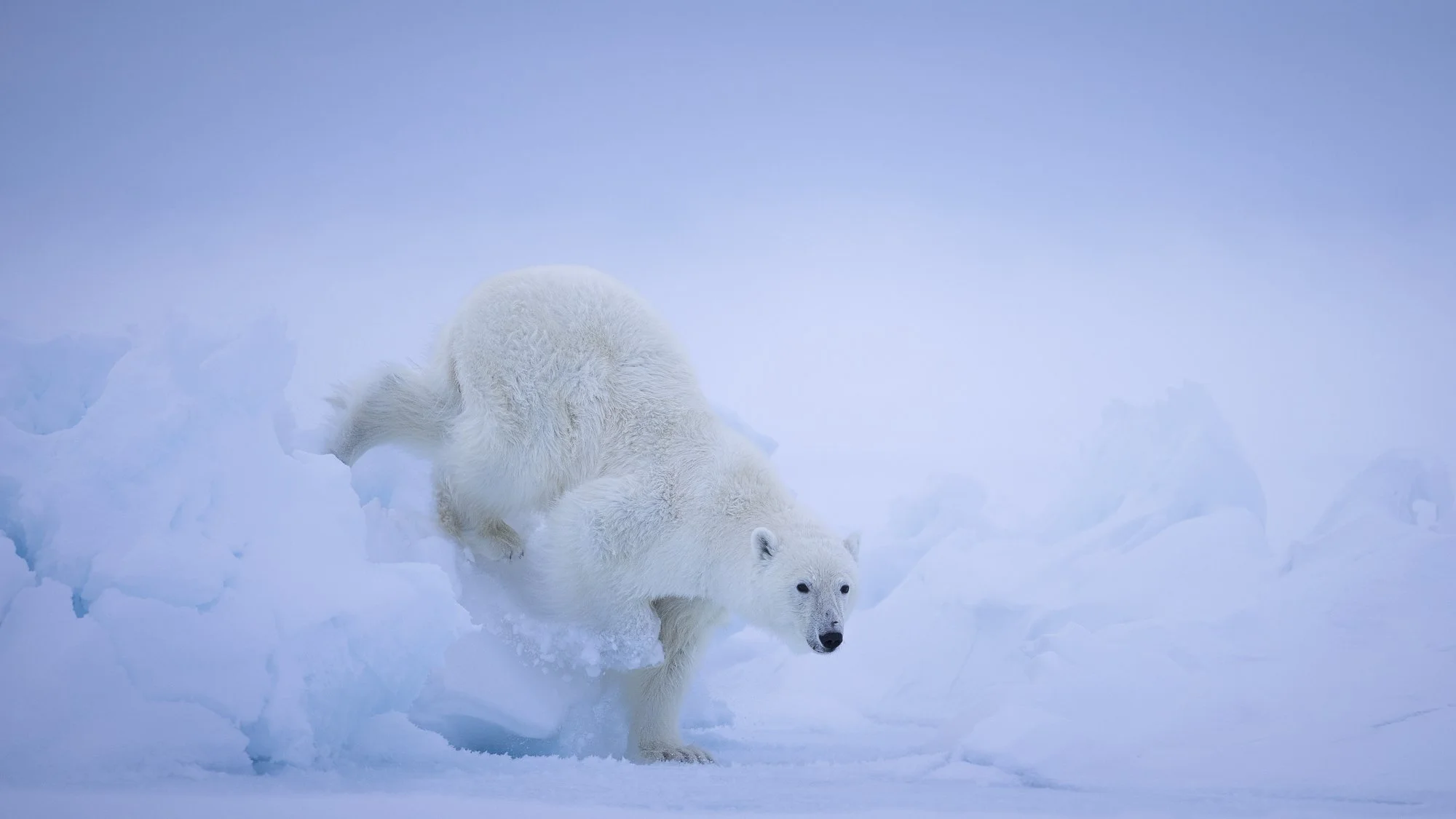
Arctic Wanderer: Male Polar Bear moves through the ice
Arctic Wanderer
I returned to Baffin Island in March, hoping once again to photograph polar bears. It was my third consecutive year camping on the sea ice in a place that is both majestic and pristine, yet brutally cold, with temperatures between -30°C and -40°C. Just pressing the shutter can be painful and a challenge in these temperatures.
Before breakfast, our spotters found tracks leading to a young four-year-old male bear on an iceberg just 30 minutes from camp. As we approached on skidoos, he walked calmly across the iceberg which is seared into my memory as our cameras were still in their protective cases.
He was remarkably relaxed in our presence, and so we had the privilege of spending the entire day with him. He shifted positions occasionally, napped, and kept a watchful eye on us. Male polar bears are true arctic wanderers as unlike females, they do not hibernate, but as solitary hunters, they can travel over 3,000 km in a month searching for seals.
After a day of resting on the ice and as the sun neared the horizon, he descended the iceberg so I then took my camera off my tripod and knelt on the snow so that I could shoot almost at eye level with the polar bear. He then continued his solitary journey across the ice floes as the sun was setting. It was a perfect ending to a day spent with this Arctic wanderer, giving me a fleeting glimpse into the life of one of the planet’s most extraordinary predators.
Settings: Canon R5, RF 600 F4, 1/1250, F4 ISO 250
Thanks to my guide Paul Goldstein & the incredible team at Arctic Kingdom
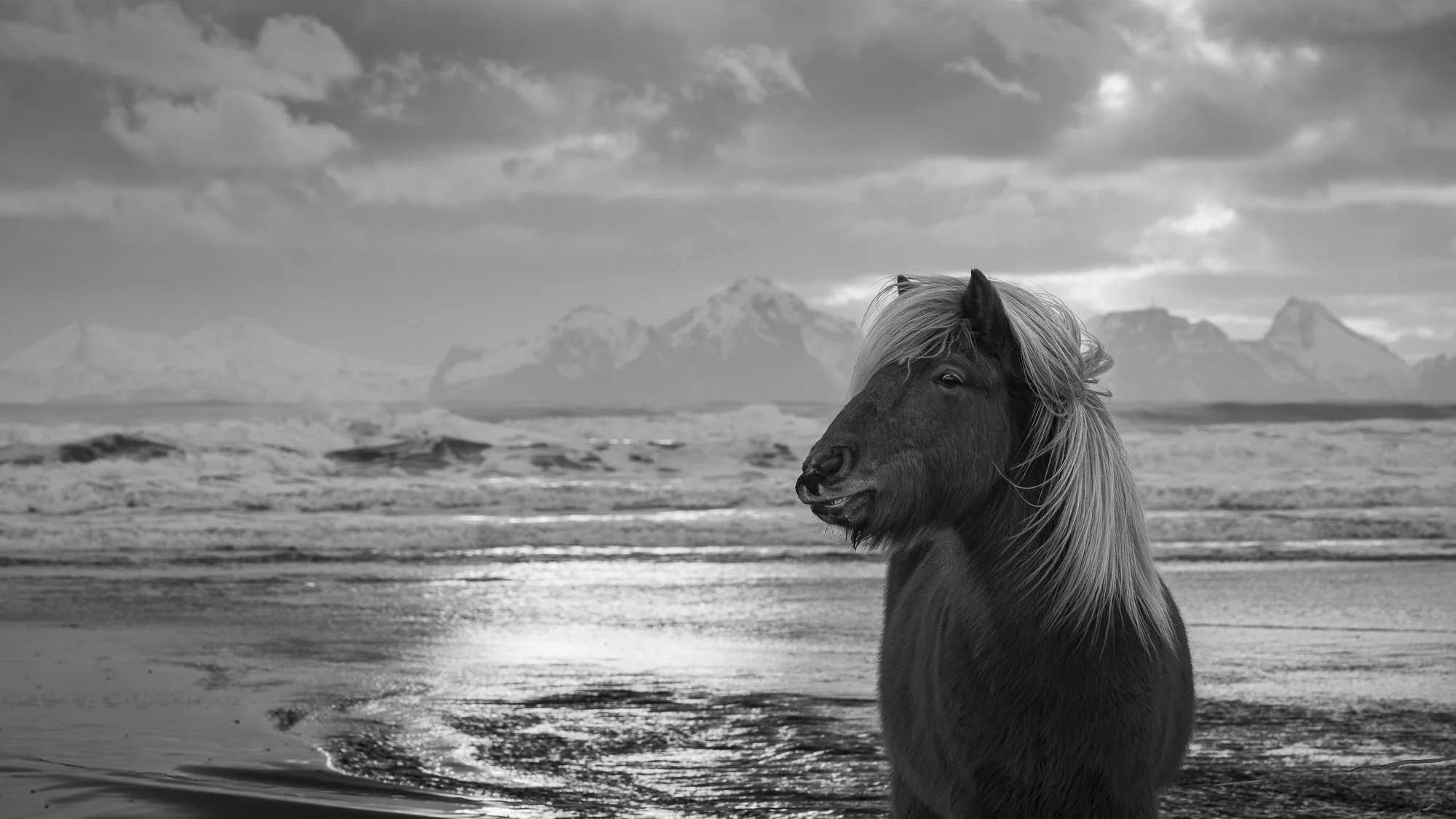
Icelandic horse Isar photographed on a beach in Iceland
Land of the Viking Horses
Icelandic horses are remarkable, being one of the oldest and purest breeds in the world. They were brought to Iceland by the Vikings over a thousand years ago, and since then no other horse has been allowed to enter the country. These horses have always been revered for their strength and endurance, capable of travelling long distances and enduring hard work. That respect continues to this day with Icelanders taking great pride in their horses, often considering them part of the family.
Powerful and resilient, these horses also possess striking beauty in their markings and colours. Isar was no exception, and we were fortunate to photograph him in several locations.
Iceland itself is equally extraordinary, particularly in winter, when its rugged landscapes are transformed by snow. I love photographing animals within their natural environment, so travelling over an hour to reach this beach, which was backed by the dramatic mountains of a nearby island was well worth the effort of trudging through deep snow.
With Isar constantly in motion, patience was essential. Eventually, his head aligned perfectly between the mountain peaks behind him. For me, the image captures an animal truly at one with this extraordinary landscape.
Settings: Canon R5, RF 100-300mm F2.8, 1/640, F8, ISO 1250
Thanks to my guide Jonathan Critchley
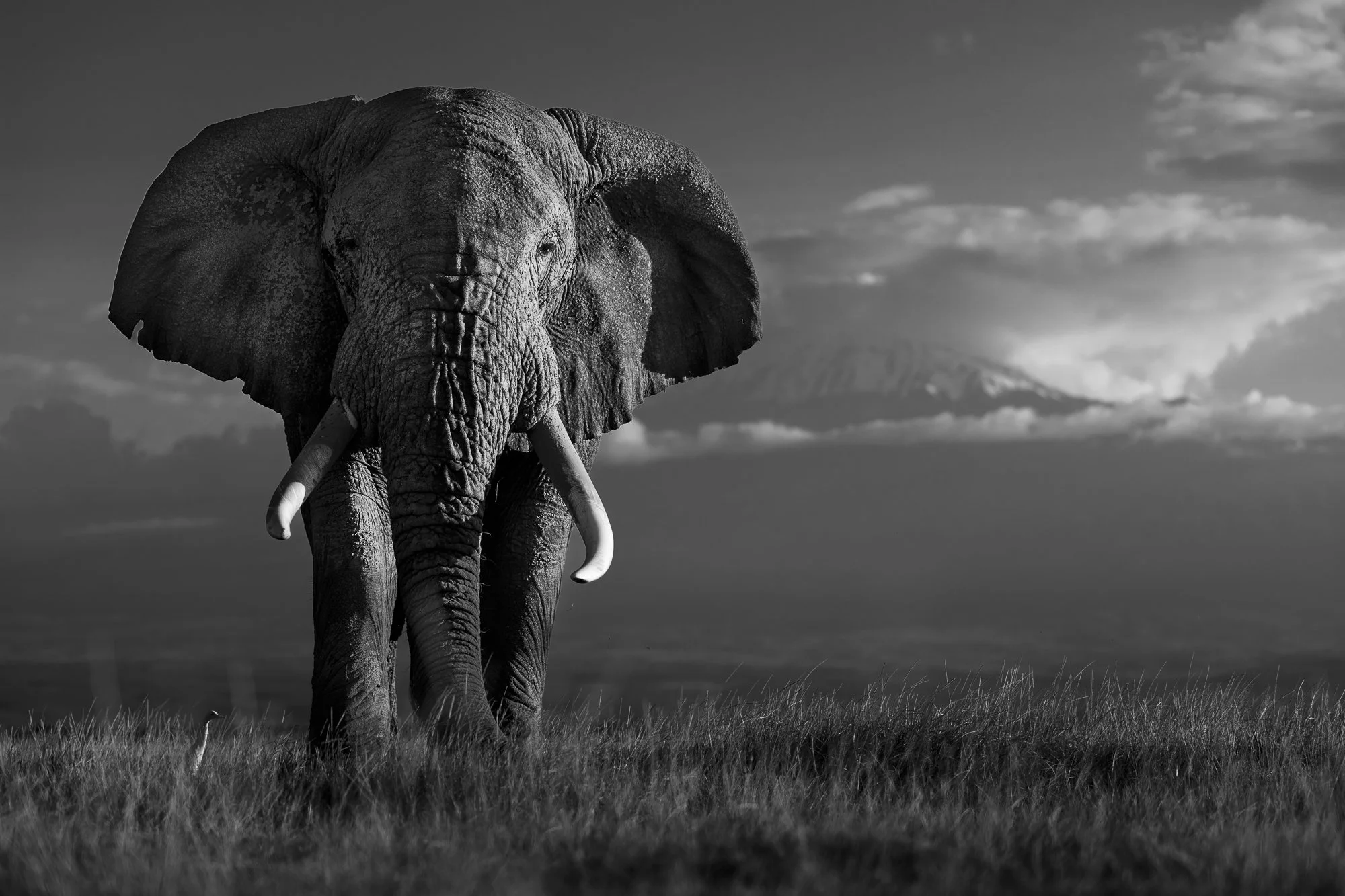
Bull Elephant Liaqat with Mount Kilimajaro in the background
Amboseli Icons
On this day, bull elephant Liaqat was in musth and fueled by testosterone and determination he was relentlessly covering ground in search of receptive females. However, the females in the herds were not interested. He eventually peeled away from the herds, striding off alone.
We followed him as I could see that there was enormous potential in the scene in front of me if we could get him in the right position. The savannah was bathed early morning light and Liaqat was walking parallel to Kilimanjaro which was visible. As he paused, I was able to frame him perfectly with the towering Kilimanjaro behind him, the light was soft, low, and angled just right. It is a portrait of quiet majesty, both of this impressive bull elephant & Africa’s highest peak in early morning light.
Settings: Canon R3, RF70-200 f2.8, 1/1250, f2.8, ISO 100
Thanks to my guide Eric Ole Kalama and the team at Elephant Garden Camp
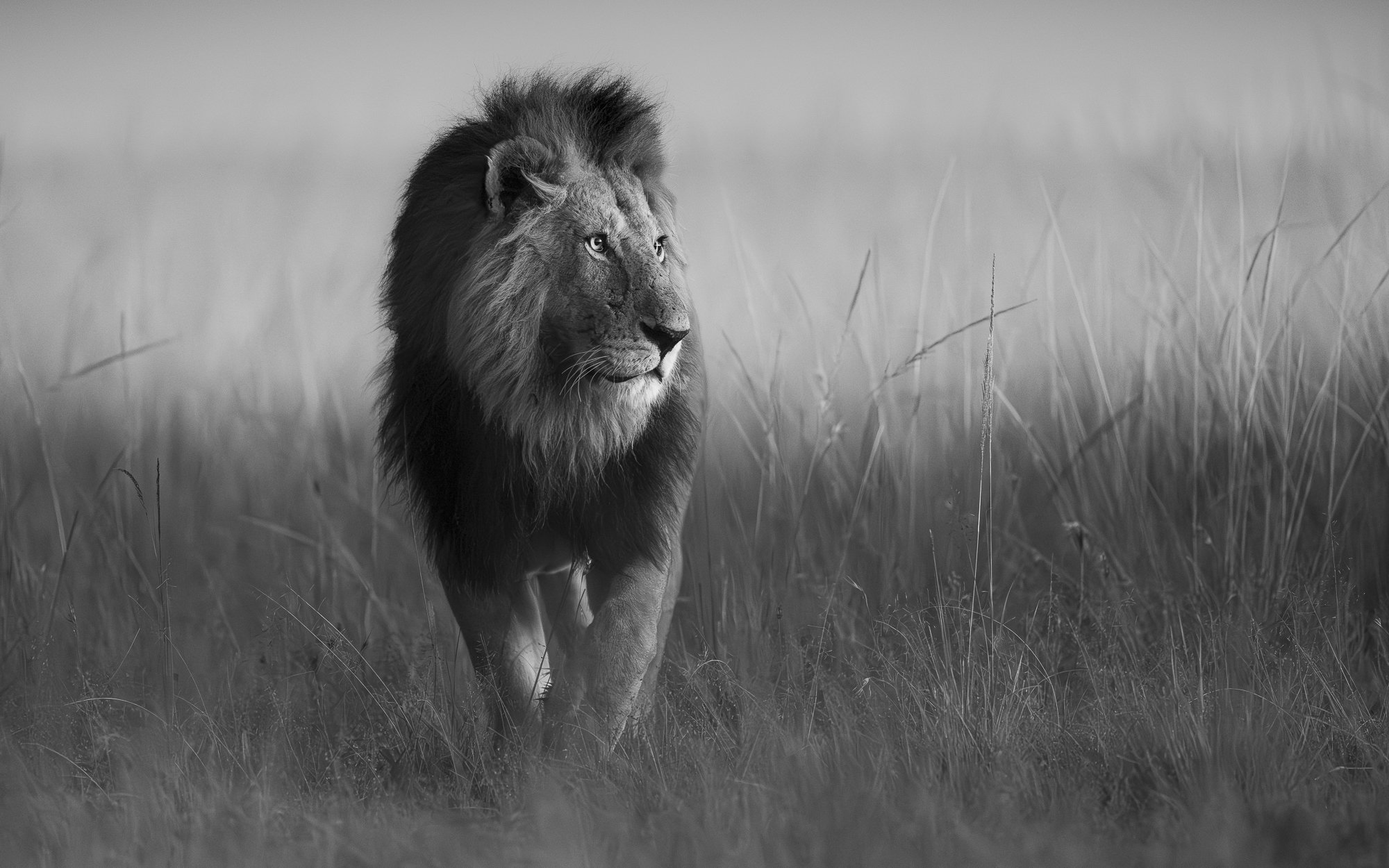
Male lion in early morning light
King at First Light
We had spent the previous afternoon with the River Pride, including the three males of the coalition—Lenkoe, Enkong’u, and Saning’o. However, photographically it wasn’t very productive as most of that time the pride slept, and by the time they stirred, the light had faded.
So the next morning, my guide and I set out early determined to find them, particularly the males. Fortune favored us as we spotted two of the male coalition while it was still dark. As they began to move, pre-dawn light softened the landscape, and I was able to capture this portrait of Saning’o, his face and mane gently illuminated in the quiet, ethereal glow. Moments later, he and his brother slipped into nearby bushes, disappearing for the remainder of the morning.
Saning’o and his brothers have forged a formidable coalition, challenging many of the males in other Mara North prides. They have become defined by power and dominance, so I like that this portrait presents a different side of this Lion King, giving him an a quiet, almost mystical presence.
Settings: Canon R5, EF 400mm F2.8 III, I1/320, F2.8, ISO 5000
Thanks to Nick Sikona at Kicheche Mara North
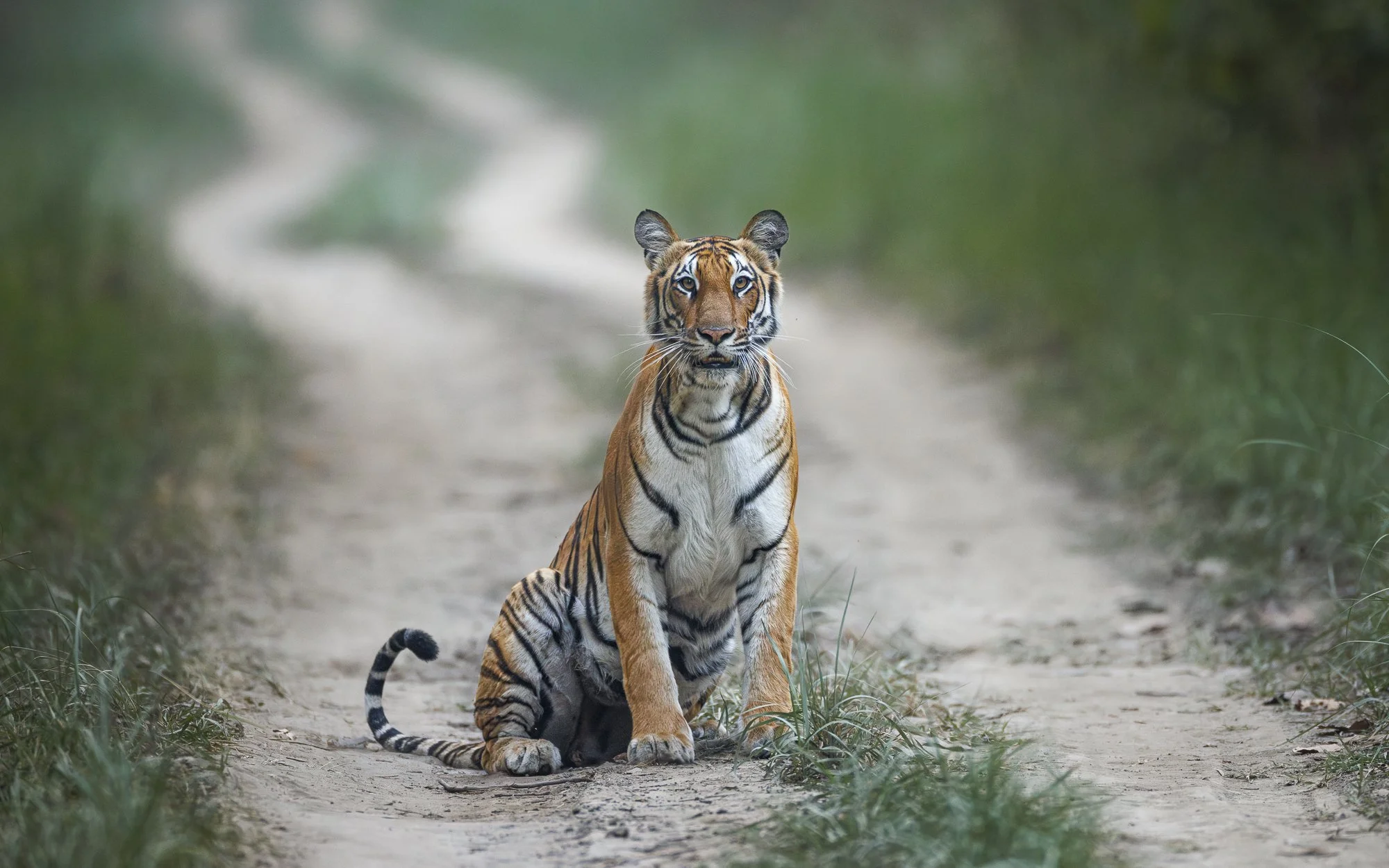
Tiger Queen Scissor poses in road, Dudhwa National Park
Tiger Queen
This striking portrait captures Scissor, a regal tigress of Dudhwa National Park, poised in a moment of stillness just before she rose and padded down the track. Our morning safari had barely begun when we spotted a jeep halted ahead which was a sure sign of a potential Tiger sighting. As we approached, our anticipation turned to pure excitement as there was Scissor, seated in the road with one of her 7-month-old cubs by her side.
The early dawn cast a soft, moody light, and we waited patiently for a moment of connection. Just as her cub melted into the undergrowth, Scissor sat up, turned her gaze toward us, and locked eyes, presenting us with a fleeting and unforgettable moment of connection between a tiger queen and a handful of observers.
Settings: Canon R5, EF 400mm F2.8 III + 1.4 ext, 1/320, F4, ISO 5000
Thanks to my guide Mithun Hunugund
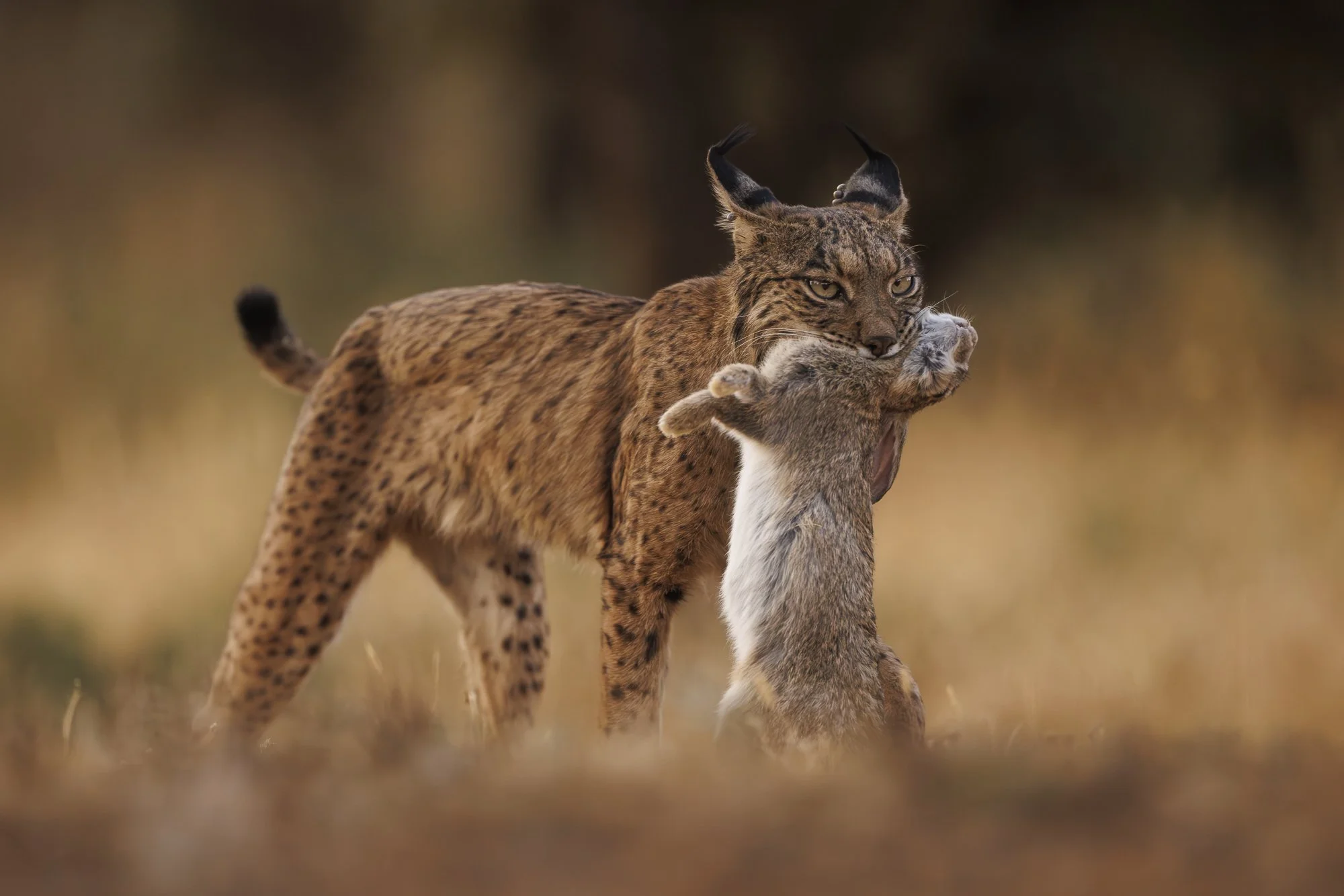
Lynx with her rabbit kill
Queen’s Kill
The first time I visited the hides at Peñalajo in Spain to photograph Iberian Lynx, luck was not on my side. The days passed quietly, with only one fleeting lynx sighting in the pre dawn light after three days. Still, I left knowing I would return. Some subjects demand perseverance and other hides had more luck so I knew the potential was there.
Earlier this year, I did just that, planning to stay for a week and arriving with renewed determination and the hope that this time luck would be on my side. However, once again my patience was tested. For two full days, the only regular visitors were rabbits and the resident birdlife. The hours stretched on, and doubt began to creep in.
Then, in the soft light of early evening, everything shifted. Queen who is one of the resident lynx mothers, approached the waterhole near the hide. Her presence was brief, almost teasing, and she disappeared as quickly as she had arrived. The moment left me frustrated, I couldn’t believe that we had such little time with her.
Minutes later, I couldn’t believe my eyes. She had returned and this time she was walking directly toward the hide. As I raised the camera and looked through the viewfinder, I saw the unmistakable shape of a rabbit held in her jaws. I could hardly believe what I was witnessing.
In more than a decade of wildlife photography, I have seen a predator carrying its kill only a handful of times. It is a moment both raw and profound, fleeting and extraordinarily rare. To experience it with Queen with my first truly meaningful lynx encounter was beyond anything I had hoped for. You can only imagine the excitement felt by everyone in the hide when she finally slipped out of view.
With that sighting, every hour of waiting made sense. Time and patience had finally paid off.
Settings: Canon R5, EF 400mm F2.8 III, 1/1000, F2.8, ISO 4000
Thanks to Antonio Liebana & the team at Wild Watching Spain
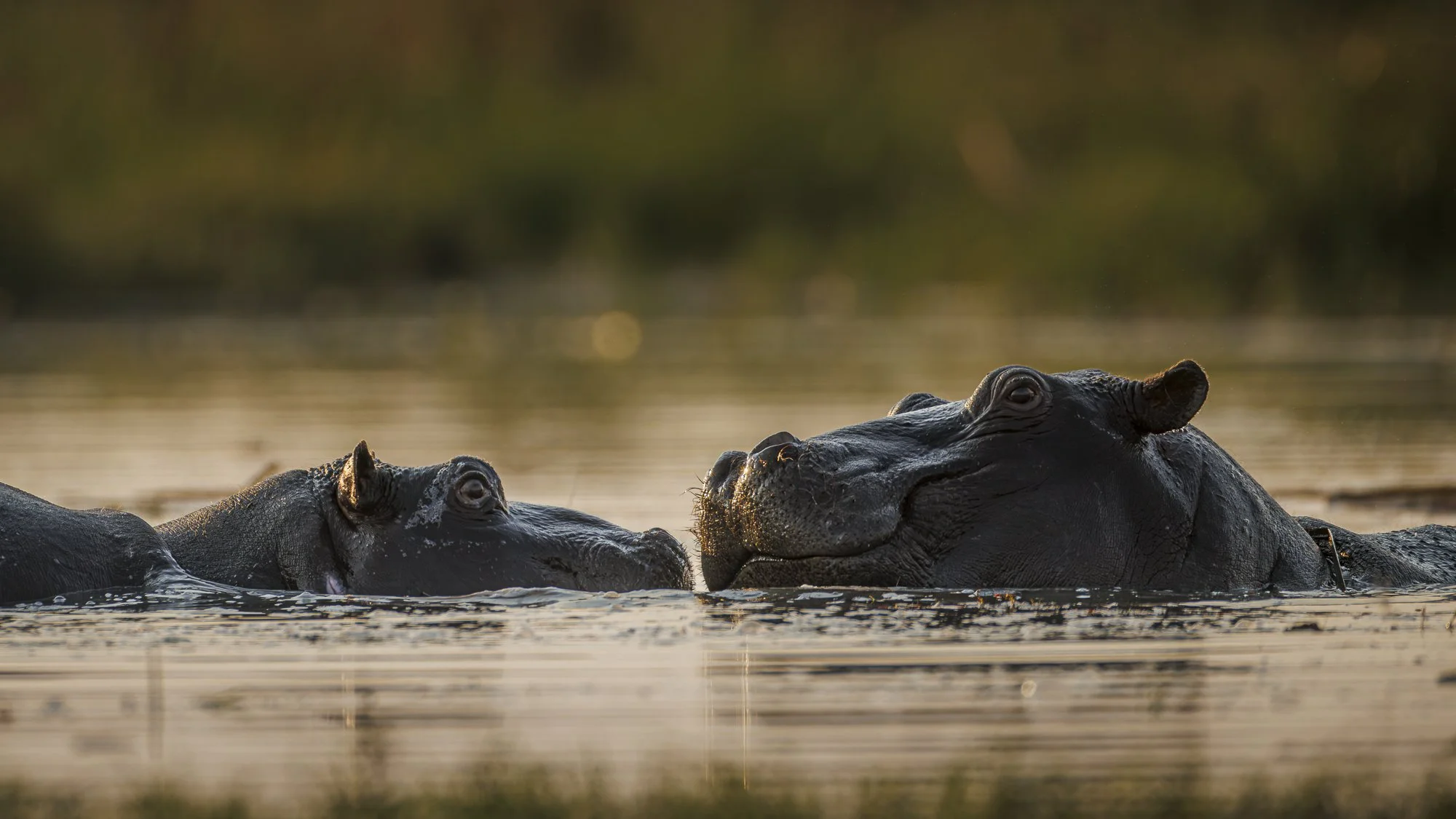
Hippo Mother and Calf in water
Unbreakable Bond
Hippopotamus are often perceived and regarded as dangerous and aggressive mammals, yet the private bond between mother and calf is rarely observed above the water’s surface. This image offers a brief glimpse into that quieter world.
I watched the pod from a distance, working low to the ground so the encounter unfolded at eye level. Within the group, the calf remained just behind its mother, where proximity during early life means protection. Hippo calves rely on their mothers not only for nourishment, nursing underwater, but also for safety within a tightly guarded social structure. A hippo mother’s tenderness is seldom seen.
After mirroring its mother’s yawn, the calf moved closer, and for a fleeting moment the two were almost nose to nose. The gesture was subtle, instinctive, and deeply human in its familiarity, providing an exchange of reassurance rather than dominance.
So, I was thrilled to capture this gentle, emotional interaction between mother and calf, the mood heightened by the late afternoon golden light. In contrast to the hippos fearsome reputation, the image speaks to parental care and attachment and that even among the most formidable animals, a mother will do anything to protect its offspring.
Settings: Canon R5 II, EF 400 f2.8 III + 2x EXT, 1/1250, F5.6, ISO 640
Thanks to Russell MacLaughlin whilst on location in Mokete, Botswana
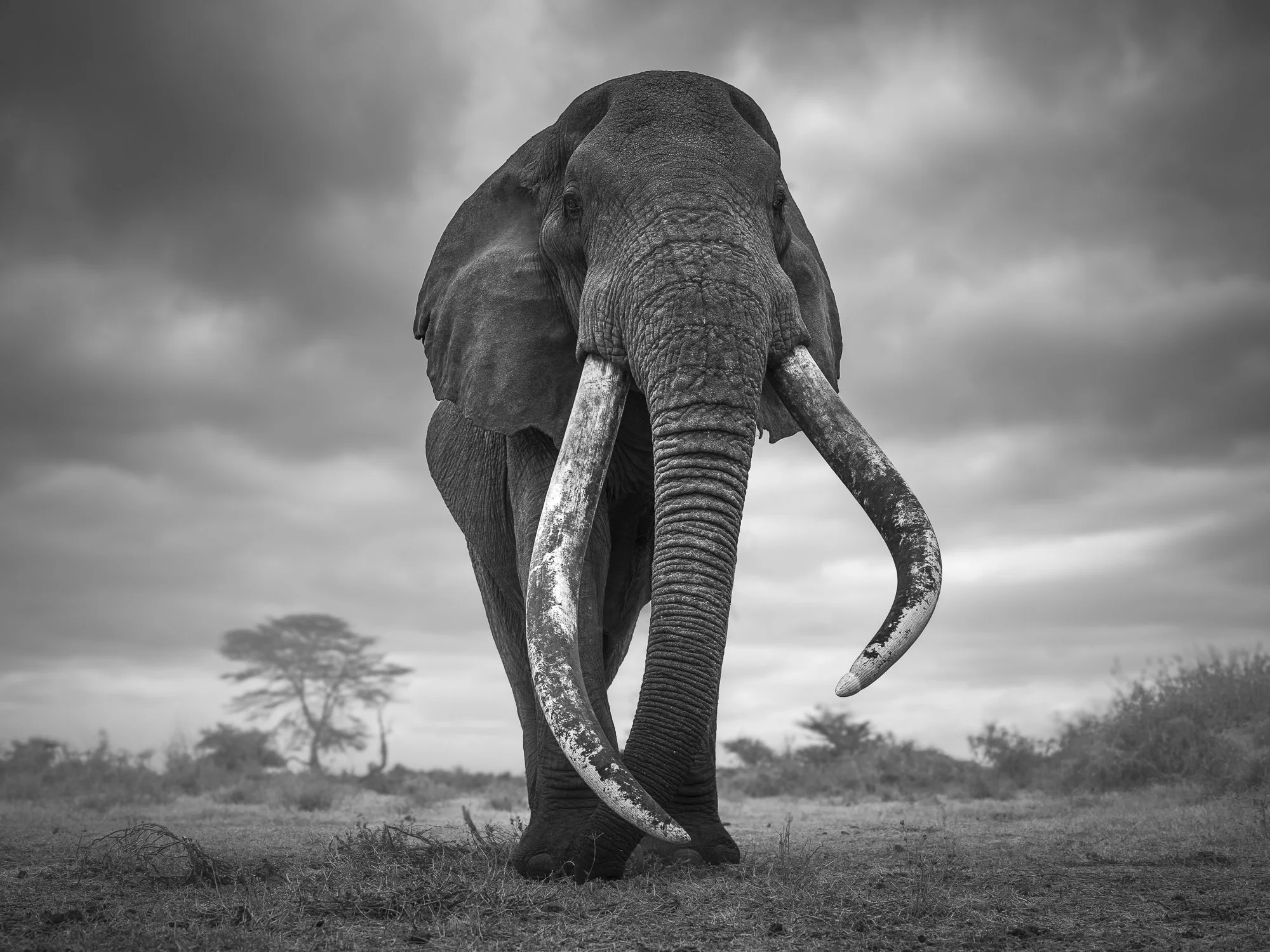
Image of Super tusker Craig
Craig
I first saw Craig in 2020, and over the past five years I’ve been fortunate to encounter one of the most photographed elephants on the planet on several memorable occasions. He’s impressive on every level with his massive tusks, unmistakable V tear in his right ear and yet Craig is also one of the gentlest of elephant giants. To be in his presence is a privilege that never dulls.
And yet, despite those encounters, my images of Craig never quite came together. More often than not, Craig was swallowed by thick bush. When he did step into open ground, the light was unforgiving and the image were often cluttered with distractions. The moments were powerful from a sighting perspective, but the photographs fell short of what I knew was possible.
Still, hope has a way of persisting. When word reached us that Craig was close to camp, I asked my guide Eric, if we could try again. When we located him, the situation was as before with Craig tearing down bushes and methodically feeding. The photographic potential seemed minimal, but Eric urged patience. He was certain that Craig was moving toward a small waterhole not far away. It might take an hour but could be worth it. The situation was helped by a cloudy sky so as the morning progressed we wouldn’t have the issue of harsh shadows.
Finally, the moment arrived. Craig emerged into a clearing coming towards us, and for the first time everything aligned. After years of waiting, I had got closer to an image of Craig I had been searching for. It’s not perfect by any means but it’s one that hopefully does justice to the quiet power and dignity of this extraordinary elephant.
Settings: Canon R5 II, RF24-70mm F2.8, 1/1000, F2.8, ISO 100
Thanks to my guide Eric Ole Kalama and the team at Elephant Garden Camp
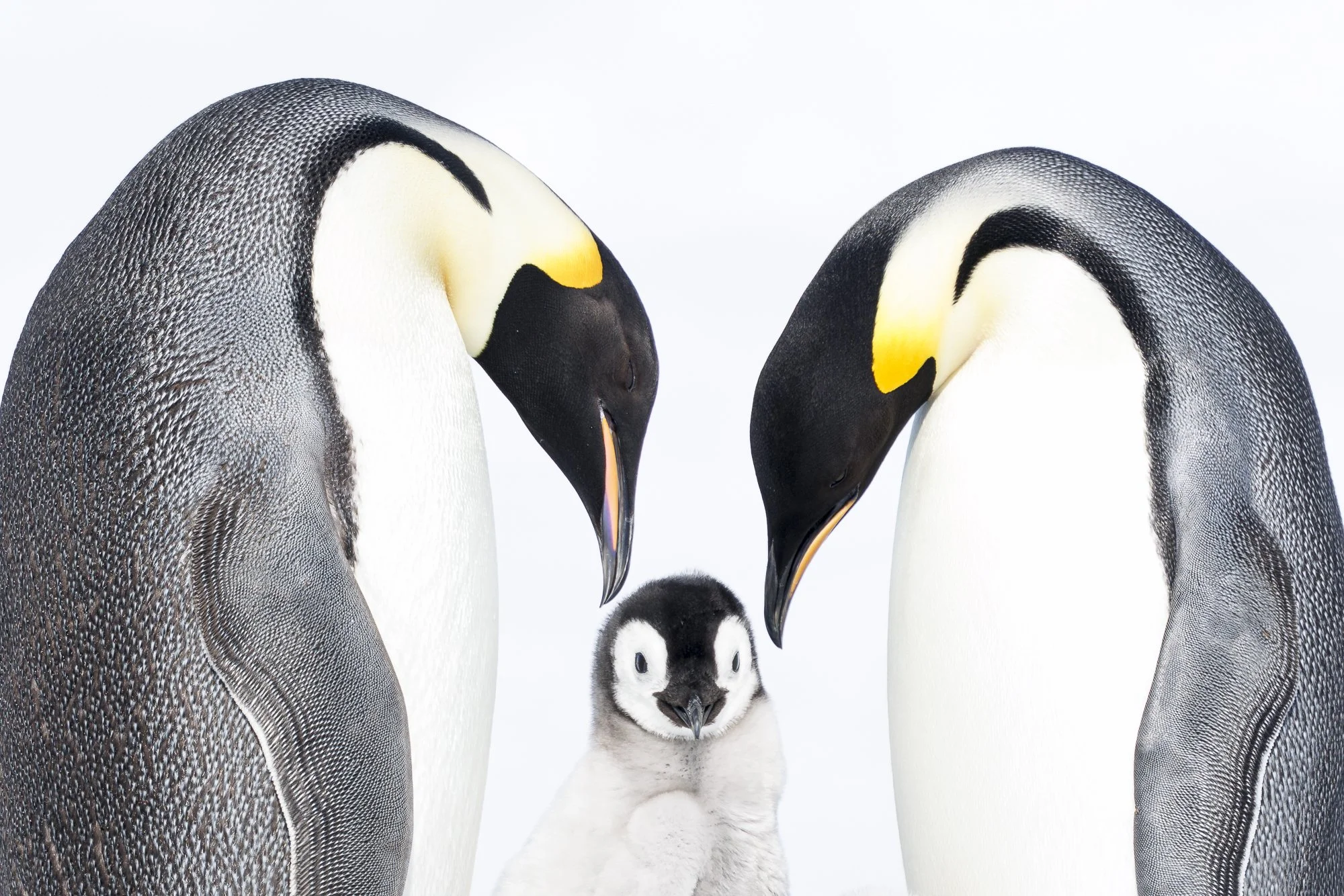
Emperor Penguins and their chick
Love
Emperor Penguins are among the most devoted parents in the animal kingdom. Before travelling to Snow Hill, one of the most remote Emperor Penguin colonies, I studied the work of photographers such as Stefan Christmann and Paul Nicklen, and watched documentaries such as Secrets of the Penguin on Disney +. With these as inspiration I was hoping to capture an image that reflected their love and devotion and also one that would bring a smile to your face.
After an hour at the colony, I noticed two adults standing slightly apart, greeting each other with mirrored movements. A chick appeared at their feet, leaning into its father. Then a smaller chick emerged, pressing against the female. At first, I assumed both were theirs, but the adults focused solely on the larger chick. The smaller one, likely an orphan, persisted quietly.
In the eight and a half minutes interaction, countless stories unfolded, but the simplest remained was also one of the most emotional and heartwarming, the tenderness of the adults toward their chick. When the chick turned its head toward my camera, seemingly delighted by their care, I knew I had captured the love and the special bond I had traveled thousands of miles to witness. What a gift.
Settings: Canon R5 II, RF100-300mm F2.8 + 1.4 EXT, 1/1250, F4, ISO 100
Travelled to Antartica with the incredible team at Quark Expeditions on the MV Ultramarine
Many thanks for reading this blog and look out for Part Two looking at my Best wildlife images of 2025. If you are interested in any of these images as limited edition prints please contact me directly here.
Wishing you a very happy New Year!
Jules

Svalbard, 2009
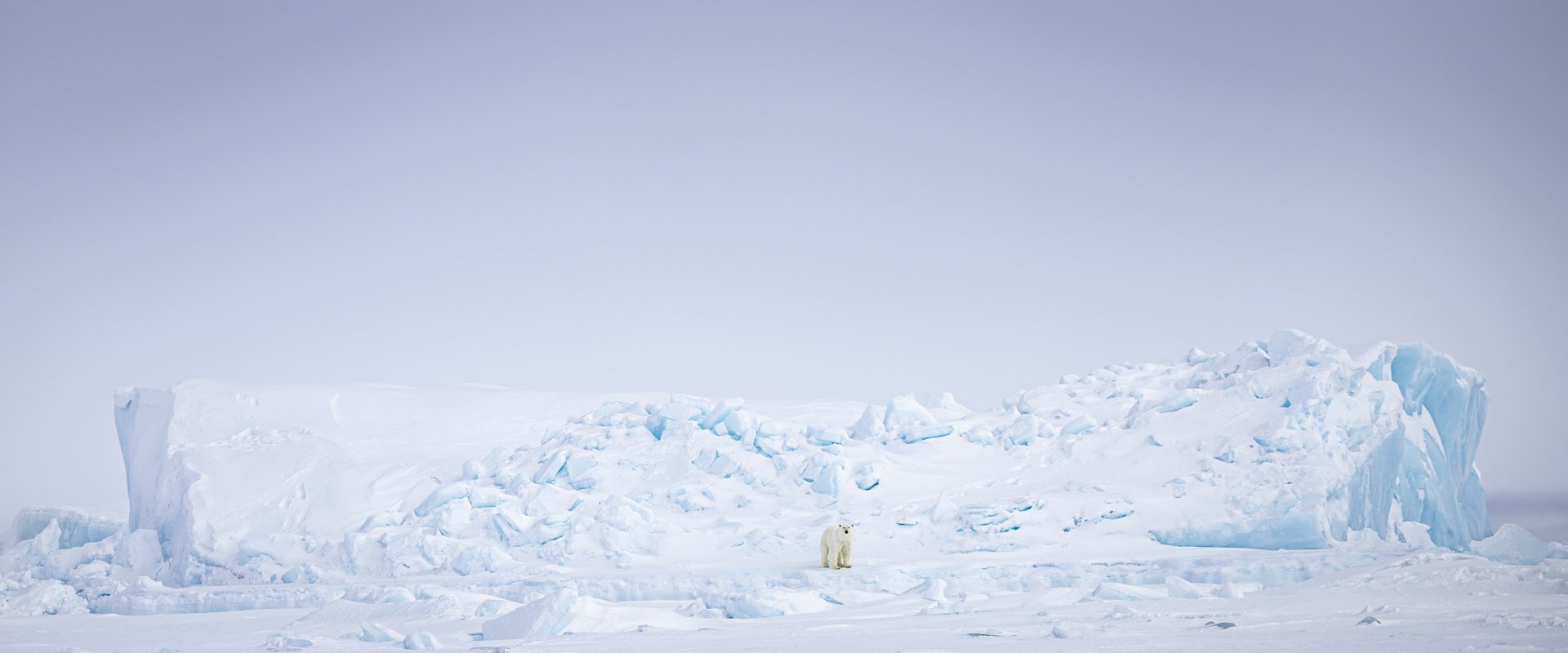
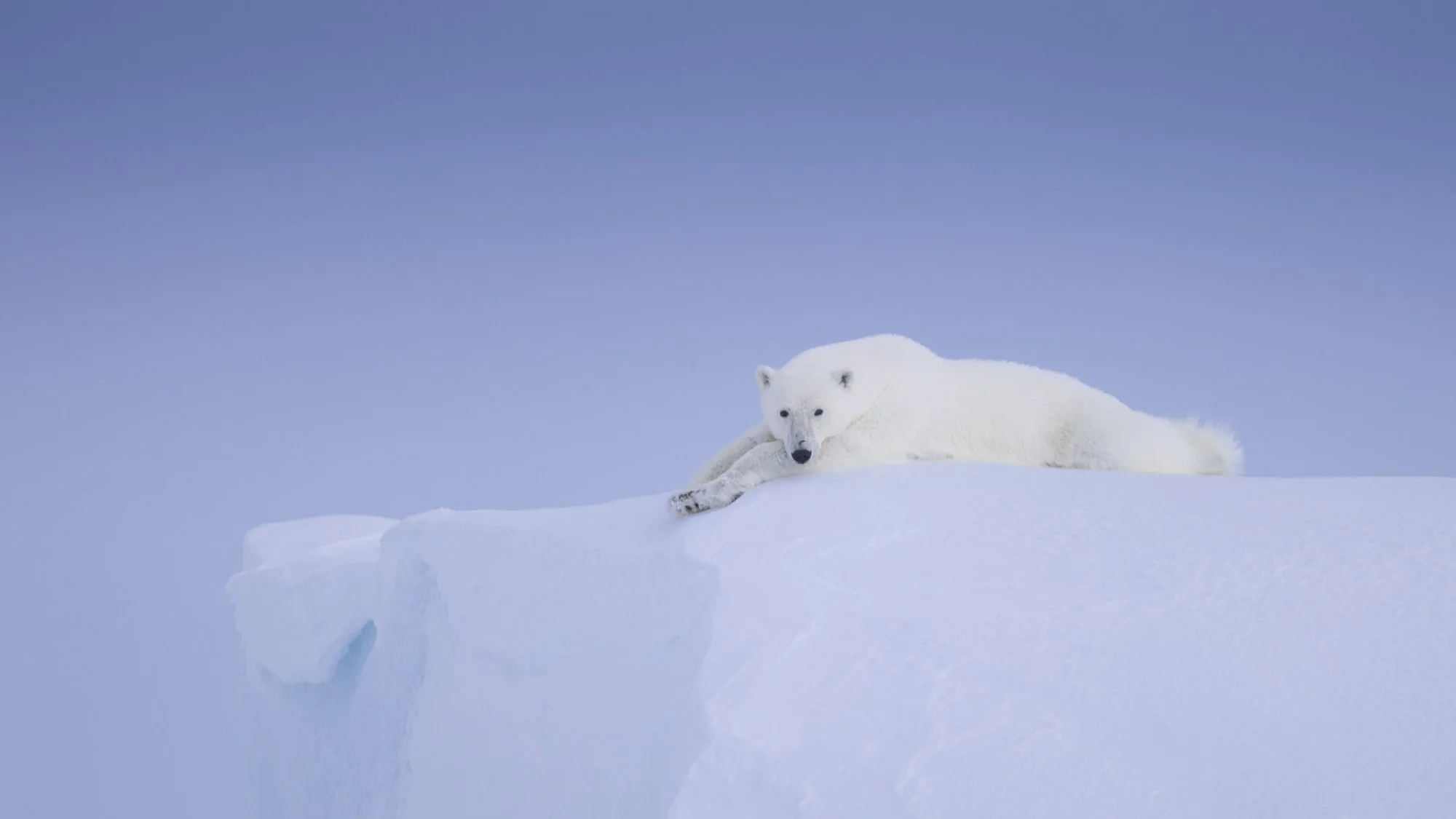
This was my first sighting of a polar bear taken nearly 20 years ago and I couldn't have asked for a more epic Arctic vista for my first encounter in Svalbard.
✓ Museum archival giclée paper
✓ Hand-signed & numbered by Jules
✓ Certificate of authenticity
✓ 15% to conservation
✓ Worldwide shipping
✓ Free UK delivery
The Full Story Behind The Photo
This was my first sighting of a polar bear taken in Svalbard nearly 20 years ago, yet I still remember it vividly. The excitement onboard our icebreaker the Vavivlov was palpable, especially as the scene itself was so breathtaking. The polar bear looked tiny as it walked along the shoreline framed by the towering glaciers. I couldn’t have asked for a more epic Arctic vista for my first Polar Bear encounter. I’ve had closer sightings of bears in Svalbard, but this image holds a special place for me as one of my favourite “animal in environment” images and reflects why it is so important to not only protect polar bears but also this pristine Arctic environment.
Print Specification
All prints are printed on Canson® Infinity Rag Photographique which is a 100% cotton museum grade white Fine Art and photo paper.
Canson® Infinity Rag Photographique offers a unique extra smooth surface with a sensual feel. It has been developed to address the need for continued longevity requirements in the Digital Fine Art market.
Shipping & Delivery
Delivery is from the United Kingdom and is included free with the purchase of all prints. Delivery is by FedEx, DHL, UPS, or DPD depending on location. Once your order is shipped you will receive an email with your tracking number. Please allow up to two weeks to fulfil your order plus one week for delivery.
Conservation Impact
As with all images in the collections, 15% of the proceeds from each image will be split between four charities- Kicheche Community Trust, Great Plains Foundation, Big Cat Initiative & Sheldrick Wildlife Trust. Learn more about giving back, here.