
EMPEROR PENGUIN PHOTOGRAPHY
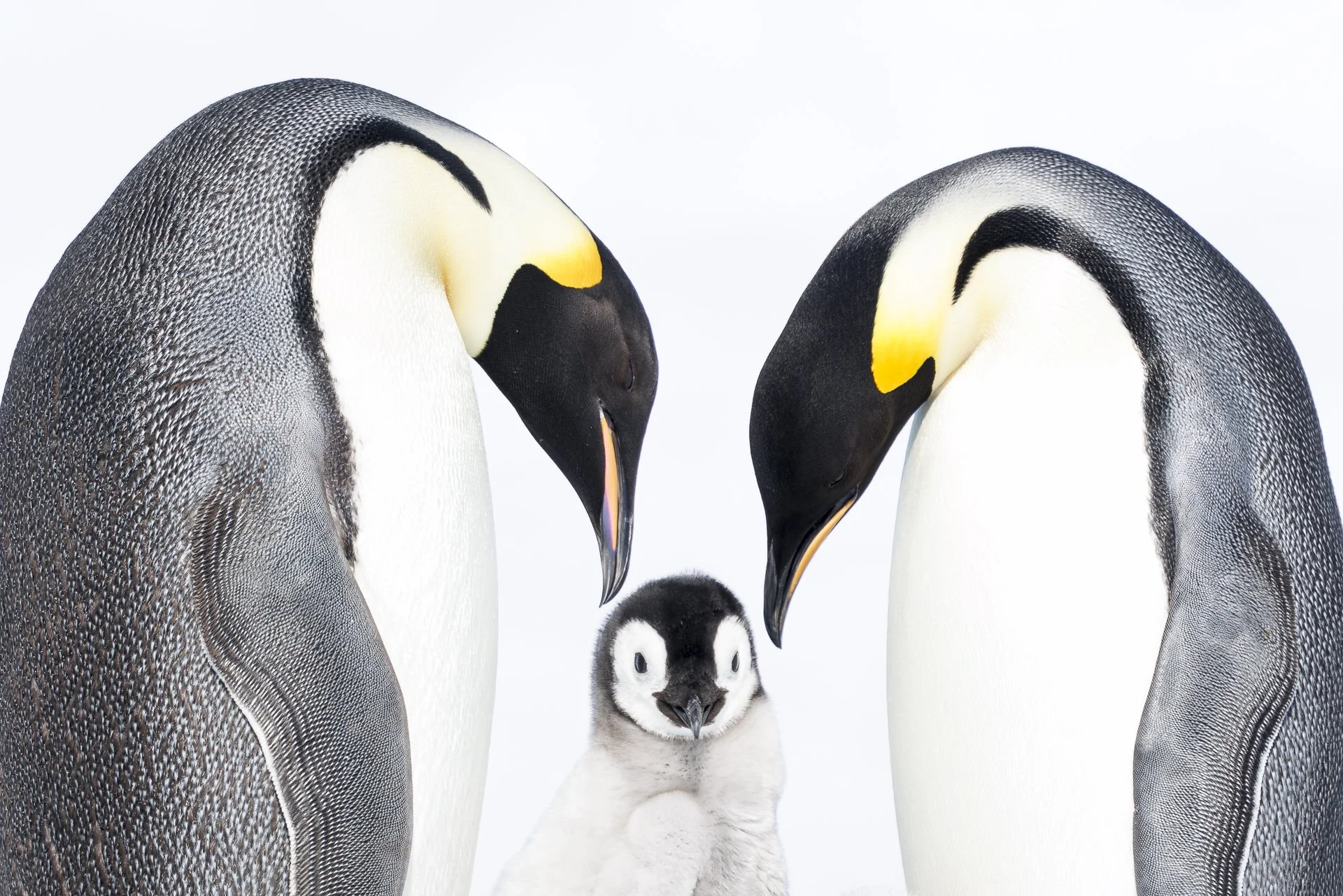
Emperor Penguins and chick photographed at Snow Hill, Antarctica
Emperor Penguin Photography at Snow Hill, Antarctica
Journey to Snow Hill
Three and a half hours. That’s how long I had on the sea ice.
I’ve just landed by helicopter at Snow Hill, one of the most remote wildlife sites on Earth and home to over 8,000 breeding pairs of Emperor Penguins and their chicks. My instructions are to return to the landing spot by 1pm. It’s not long so the pressure is on.
Getting here has taken me from London to Buenos Aires, on to Ushuaia, and finally across the Drake Passage aboard the MV Ultramarine. From there, we pushed south into the Weddell Sea. Thanks to calm seas, expert navigation by Captain Roy Laud, and the leadership of expedition leader Ryan McDevitt and his team, we arrived off the colony just four days into the expedition—becoming the first ship of the season to land at Snow Hill.
Excitement buzzed through the ship that night. So did my nerves. This was my first time in Antarctica, the most I’ve ever invested in a wildlife expedition, and I desperately wanted to return with images worthy of the experience.
A 5am wake-up call allowed everyone plenty of time to prepare for this once in a lifetime experience. The 122 passengers on board have been split into 4 groups, with two helicopters working in rotation to take 16 people at a time into the colony. Even though the flight was only five minutes, the logistics stretched over two hours. I was in one of the final groups, waiting, watching the clock and the weather.
At 9:30am, I stepped onto the sea ice.
First Steps into the Emperor Penguin Colony
Adrenaline surged. A one-kilometre walk lay ahead, and we’d been advised not to start shooting until reaching the colony to maximise time there. Easier said than done when you have the surreal sight of Emperor Penguins walking beside you or tobogganing past your boots.
By 10am I reached the colony. Layers came off as I’d overheated on the walk. The light had also shifted from overcast to brilliant blue skies. Not ideal for peenguin photography, but irrelevant. I was here and felt so privilged.
The sound hit me first. Thousands of Emperor Penguins stretching to the horizon. I filmed a short clip on my phone, knowing that I would never want to forget thsi moment. After a brief but invaluable introduction from our incredible on board penguin expert, Fabrice Genevois, I was ready to go. The clock started ticking.
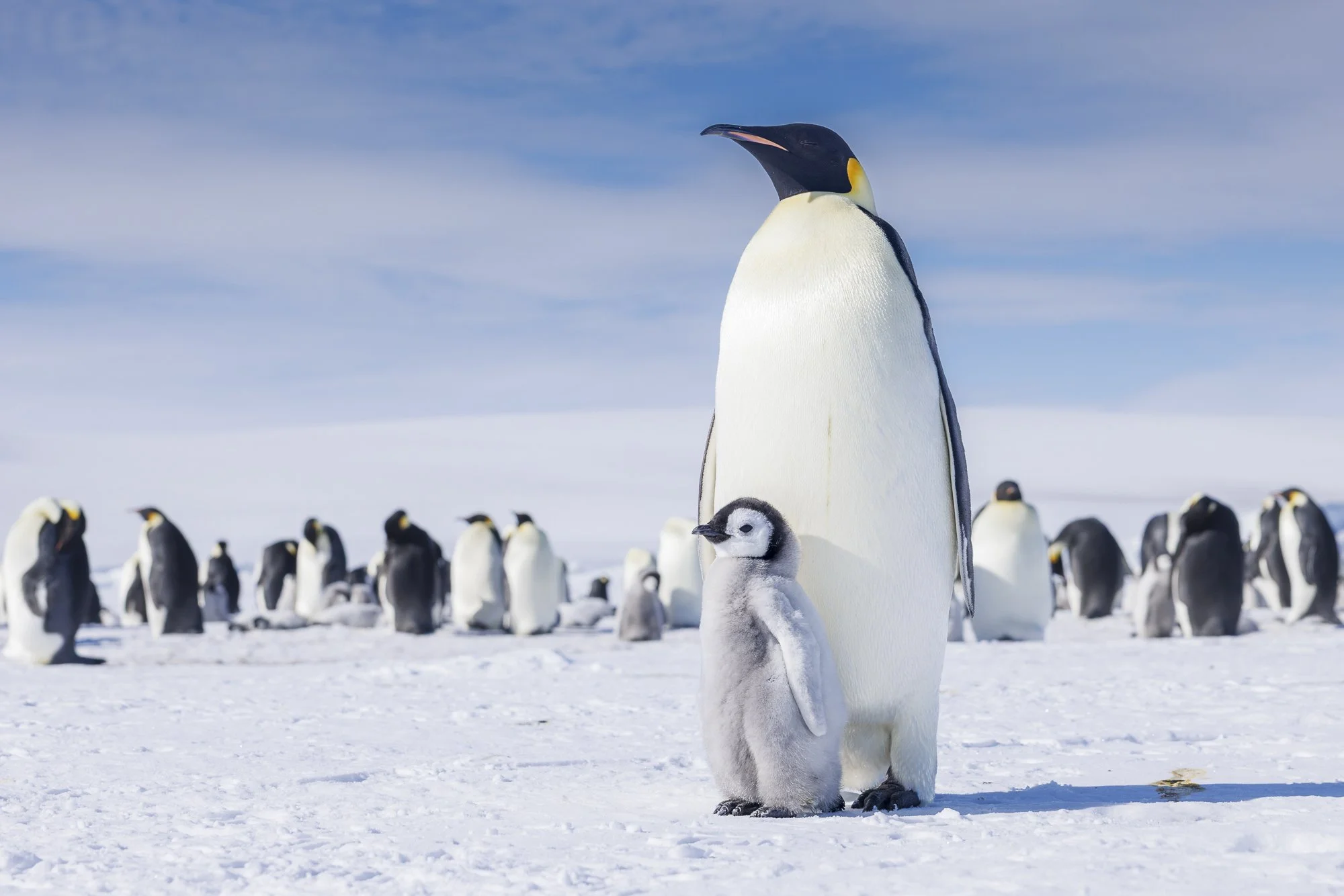
Emperor Penguin and chick at Snow Hill colony Antarctica
Finding Focus in Emperor Penguin Photography
Before every expedition, especially to a new destination, I research imagery that resonates with me. For Antarctica, this was essential. Stefan Christmann’s Penguin book was my primary reference, alongside the work of Paul Nicklen, Thomas Vijayan, Sara Jenner, and David Merron.
My goal was simple: clean, uncluttered compositions, using snow as both foreground and background, and focusing on emotional interactions—especially between Emperor Penguins and their chicks.
The colony was divided into smaller clusters, and photographers were spread out across the colony. My friend Anna and I chose one of the furthest groups, partly to avoid shooting into the sun. What we were told was a 20-minute walk became 30 after trudging through deep snow and carrying all our gear including tripods. Thank god I had taken layers off. Time was slipping away.
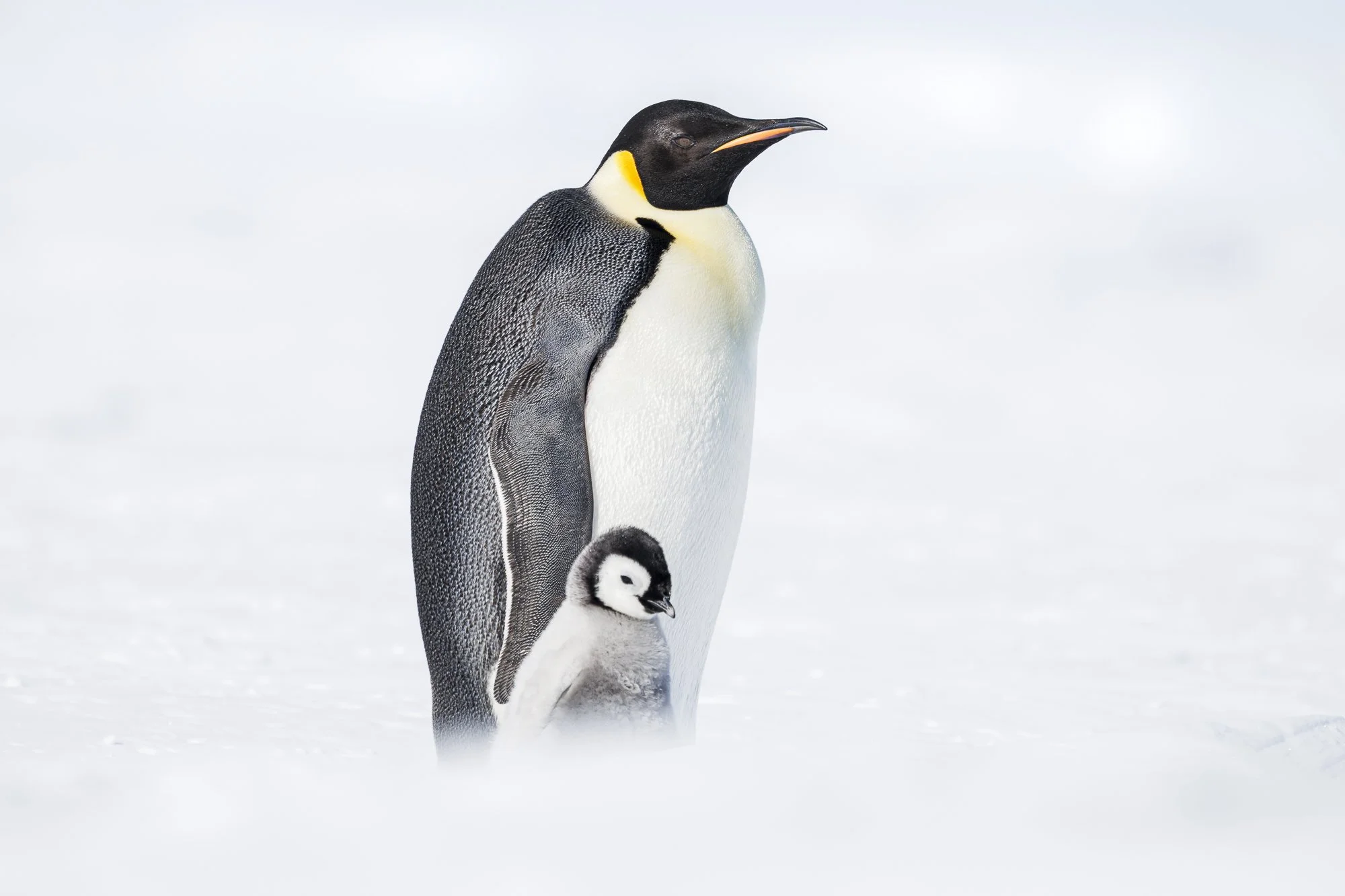
Emperor Penguin mother and chick at Snow Hill colony
Searching for the Moment
The group of Emperors in front of me was chaotic with hundreds of adults and chicks almost as a mass. The sound was incredible but at first it was difficult to see the photographic opportunities I was searching for. I scanned relentlessly for separation, hoping to use my Canon 100–300mm f/2.8 to best effect to isolate subjects and soften the background. I just had to be patient.
A mother and chick briefly moved into open space—enough for an environmental frame. A good start, but I wanted more intimacy.
Later, I found a beautifully isolated mother and chick and used a high-key approach, shooting low and letting the snow blur into the frame. The portraits were clean and graphic, but emotionally restrained.
Forty minutes passed.
Then an adult Emperor Penguin approached us, separated from the colony. It stretched, flapped its flippers, craned its neck—nearly my height. A powerful Snow Hill moment. I still can’t decide whether those images work best in colour or black and white.
And then, after an hour of arriving at this spot, everything aligned, though in the end the resulting images told a more complex, bittersweet story than first meets the eye…
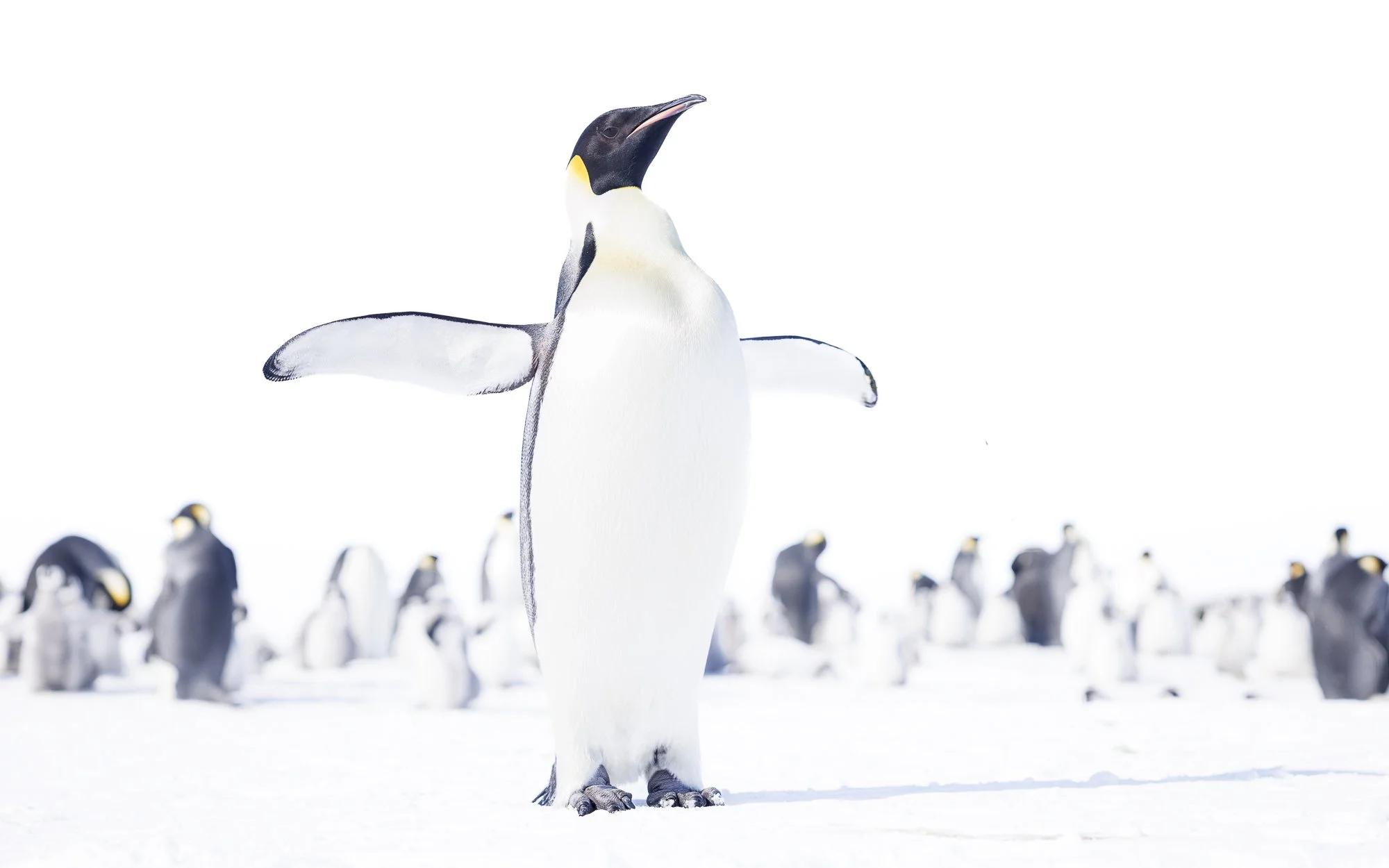
Emperor Penguin at Snow Hill colony, Antarctica
A Bittersweet Emperor Penguin Story
Two adult Emperor Penguins stood semi-isolated. Not perfect, as there were still distractions either side of them, but manageable. They greeted each other with mirrored movements, and a chick appeared at their feet, edging between them, leaning against its father.
Then another, smaller chick emerged and pressed against the female.
At first, I assumed it was their offspring. Both chicks begged for food, lifting their heads hopefully. The adults preened the larger chick—but never fed either.
The truth slowly revealed itself. The adults’ attention stayed fixed on the bigger chick. The smaller one bowed its head, rejected, heartbreakingly persistent. I suspected it was an orphan.
Later, Fabrice confirmed it. Orphaned Emperor Penguin chicks often attempt to attach themselves to unrelated adults. But parents with their own chick won’t feed another. Survival depends on finding an adult that has lost its own chick, but this can be a rare and fragile hope.
The entire interaction lasted just eight and a half minutes.
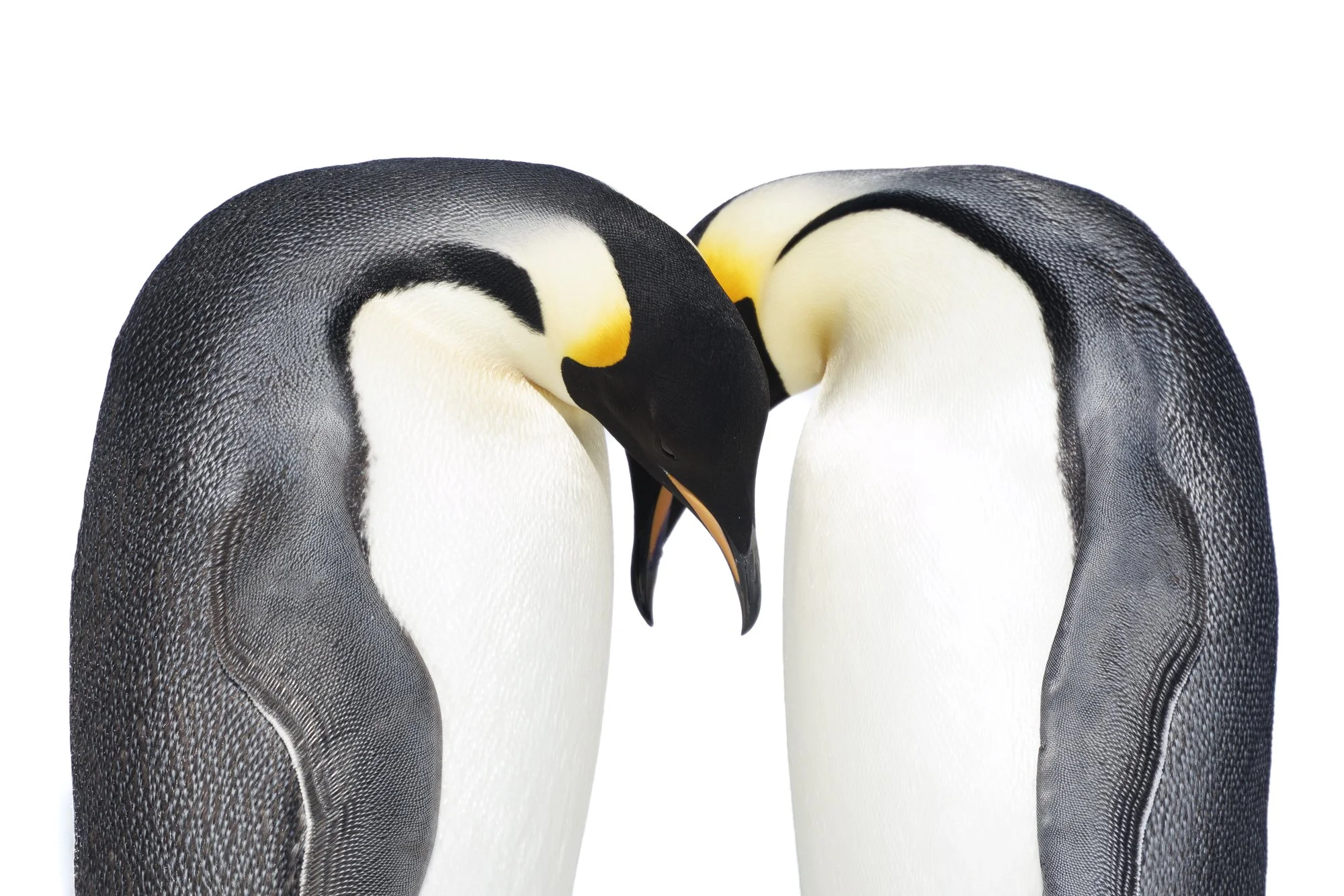
Emperor Penguin greeting at Snow Hill
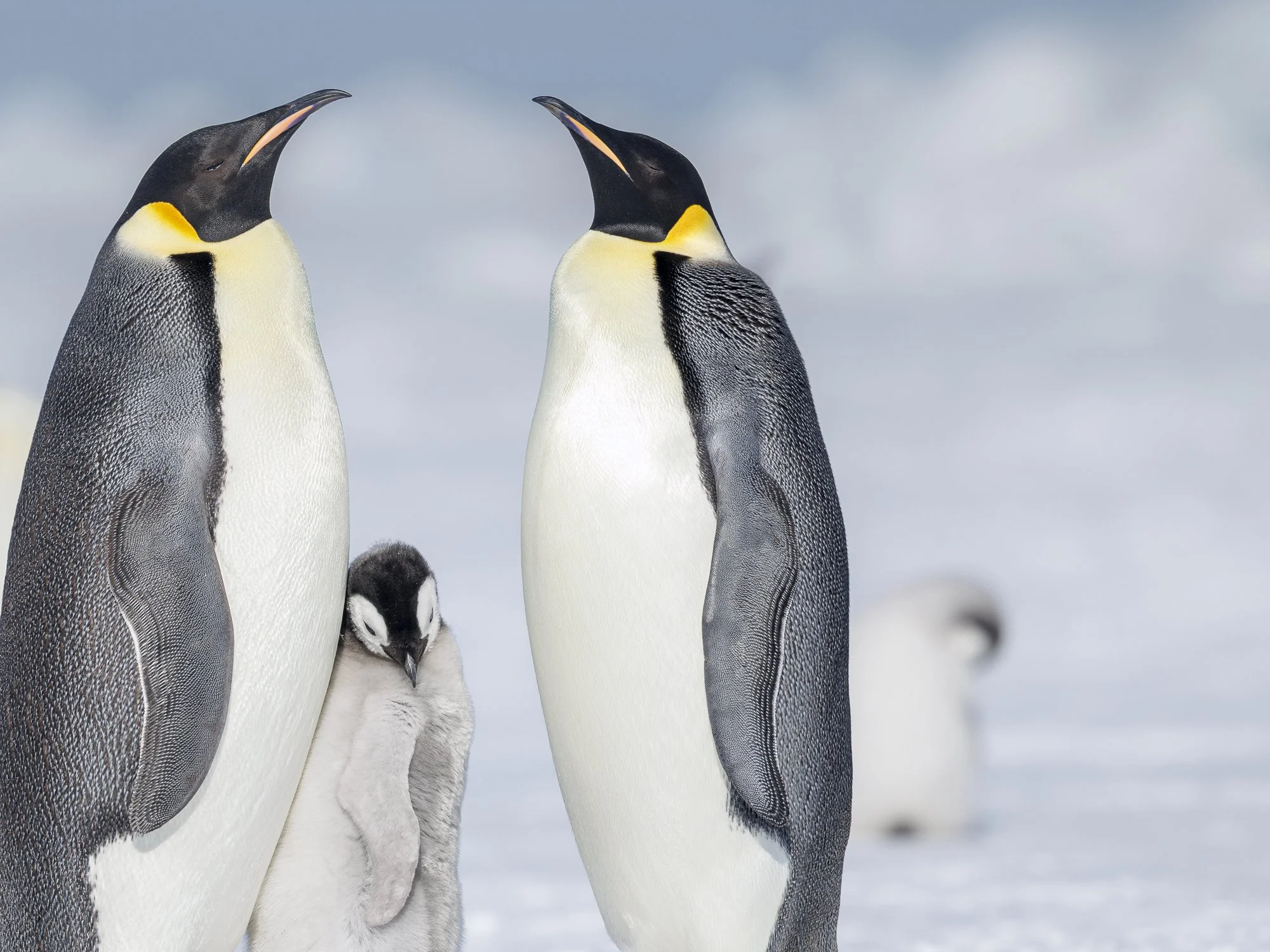
Emperor Penguin family at Snow Hill colony
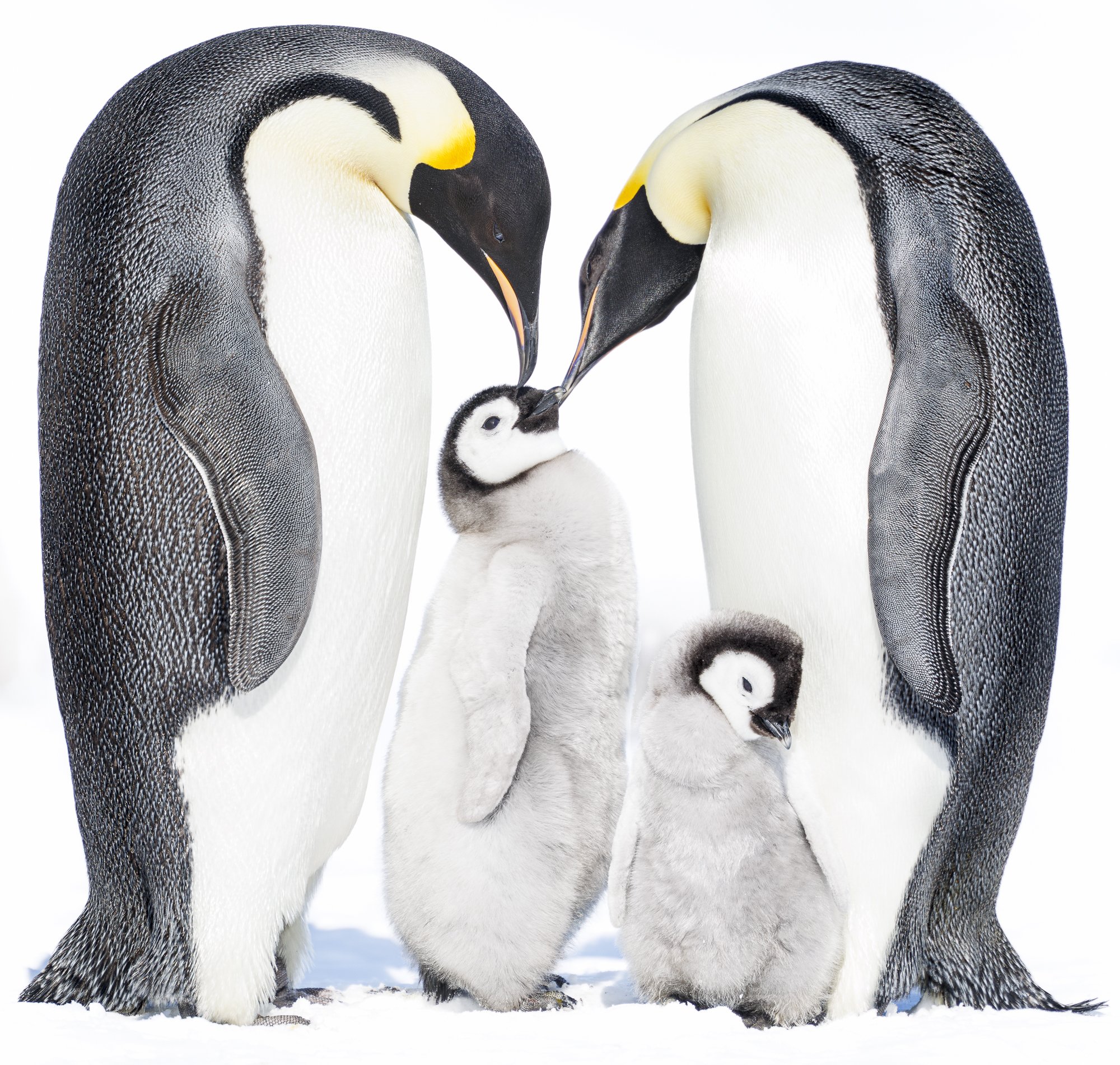
Orphaned Emperor Penguin chick amongst Emperor family at Snow Hill colony
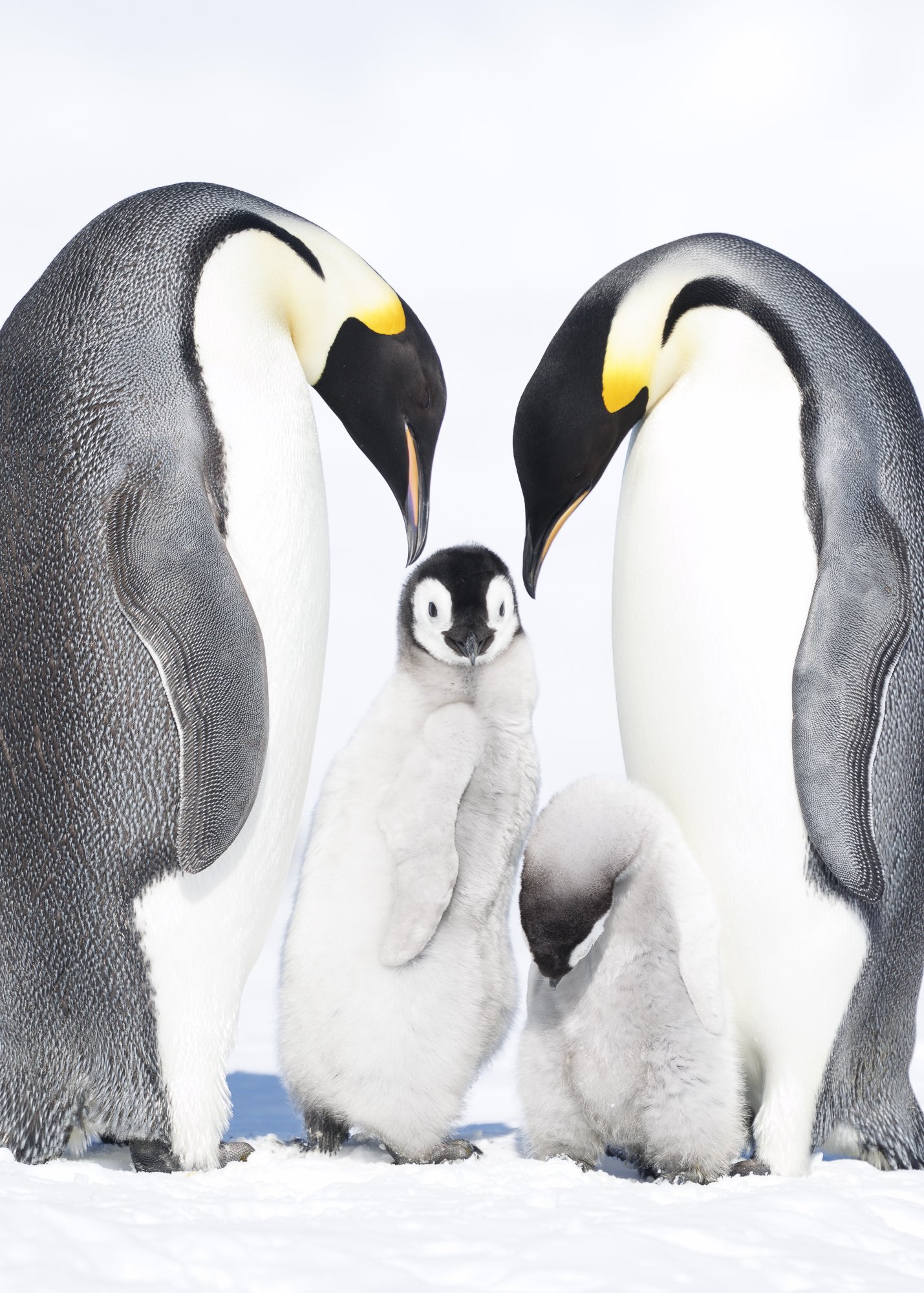
Orphaned Emperor chick looks forlorn amongst Emperor Penguin family
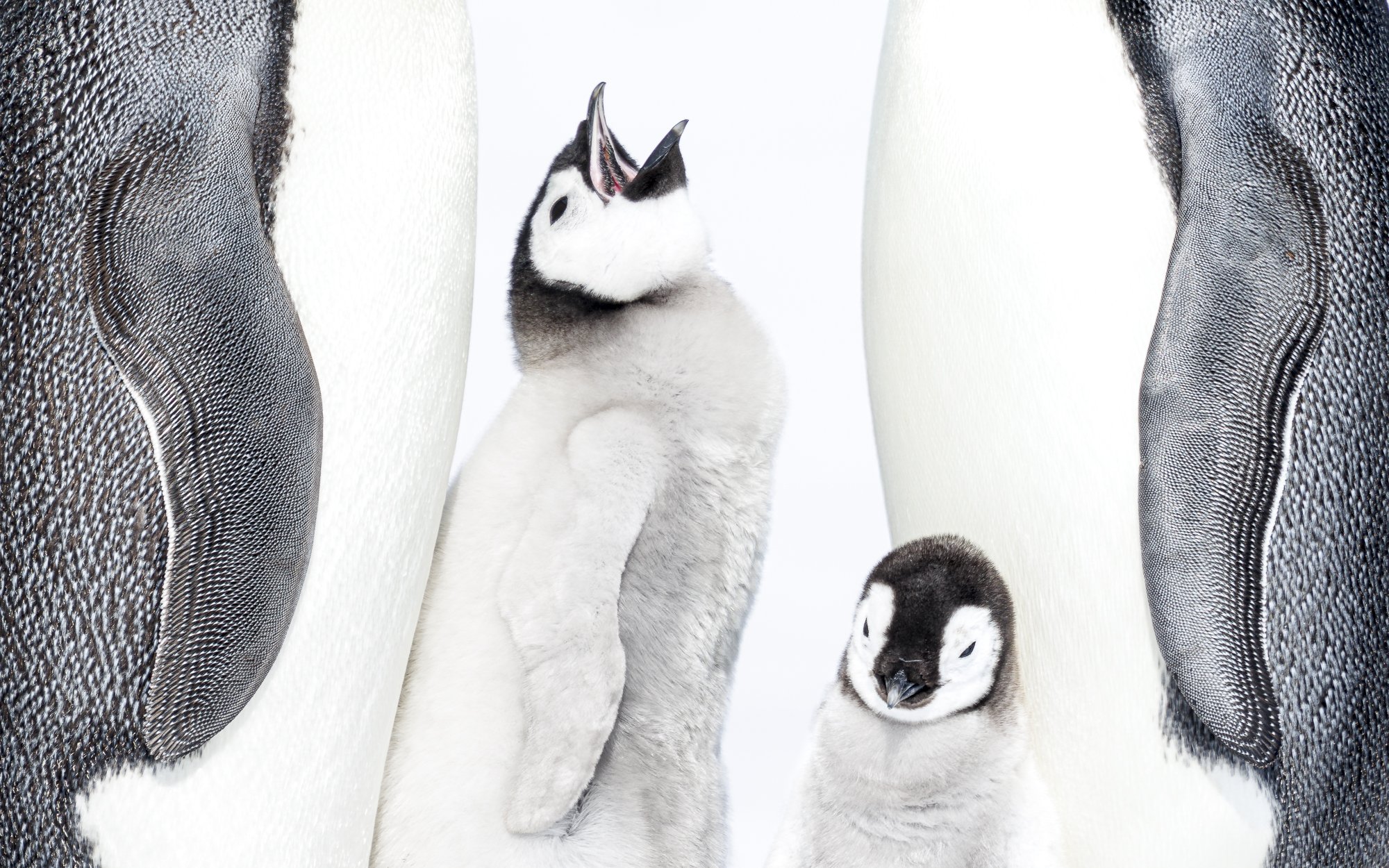
Emperor Penguin chick begs for food
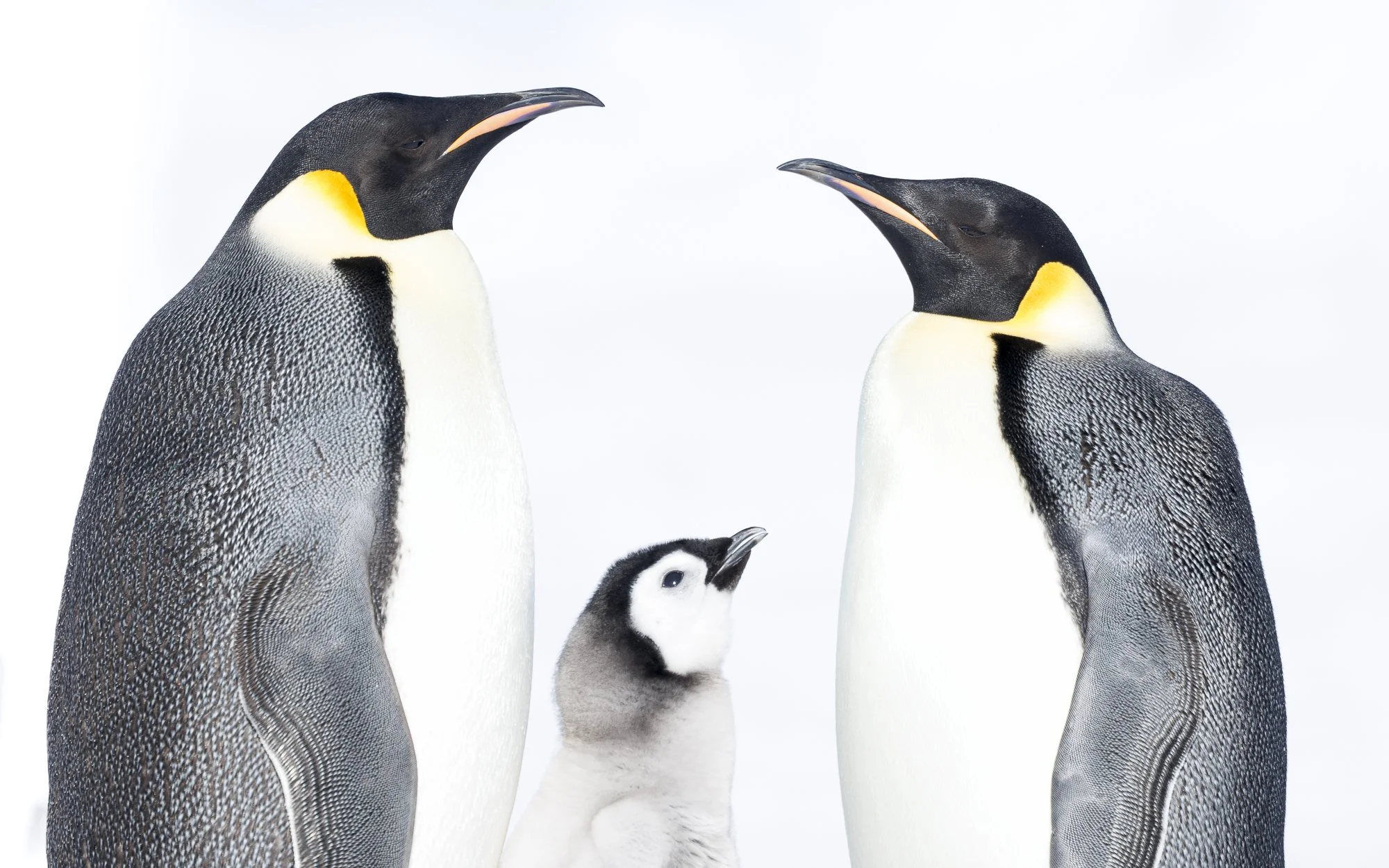
Emperor Penguin family at Snow Hill colony, Antarctica
A Bittersweet Emperor Penguin Story continued..
This entire interaction lasted just eight and a half minutes.
Through careful positioning, extenders, and creative cropping, I captured images that I hope do more than please the eye. They tell a quiet, devastating truth about life in an Emperor Penguin colony, and how thin the line is between survival and loss.
Leaving Snow Hill
By the time it ended, I had barely enough time to walk the hour back to the helicopter. I paused when I could for the odd photographic opportunity that caught my eye but there was no time to explore the chick creches on route that had been one of my aims. I hoped for another visit.
It wasn’t to be.
Ice charts showed rapidly changing conditions. Staying longer risked being trapped, as another ship would soon discover. It was time to explore more of Antarctica and leave Snow Hill behind us.
Reflections on Photographing Emperor Penguins
My time at Snow Hill was far shorter than I’d dreamed, but I left feeling profoundly privileged at have had one of the most amazing wildlife experiences on the planet. It also struck mw that whilst I’d seen television series and read books about how Emperor Penguins were the toughest birds on the planet, in a short time at the colony I had witnessed at first hand one of those stories unfolding.
I hope one day I’ll return.
Until then, these images and the emotions behind them will stay with me.
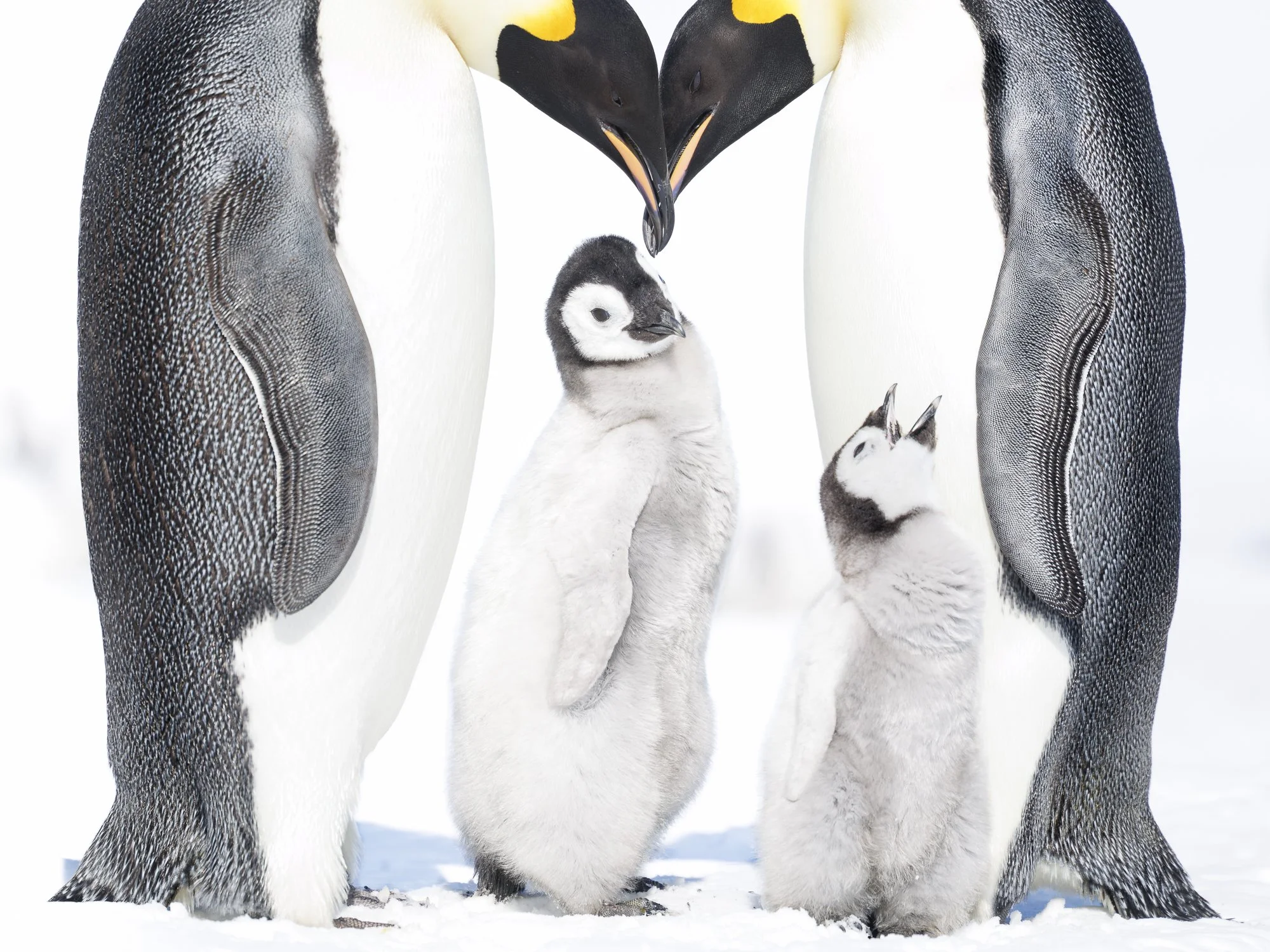
Orphan chick begs for food from Emperor Penguin adults at Snow Hill
FAQ: Emperor Penguin Photography
Where is Snow Hill, Antarctica?
Snow Hill Island lies in the Weddell Sea and hosts one of the largest known Emperor Penguin colonies.
When is the best time to photograph Emperor Penguins?
Our landing was in early November timed when the chick are a few. months old and before they are molting.
Why is Emperor Penguin photography so challenging?
Extreme cold, limited access, rapidly changing ice conditions, and strict time windows make photographing Emperor Penguins uniquely demanding.
Final thanks for my Emperor Penguin adventure at Snow Hill
Quark Expeditions - my three week expedition to Snow Hill and Antarctic Peninsula was everything I hoped it would be and more and was flawlessly executed by the team at Quark. Thanks again to Captain Roy, Expedition leader Ryan, the “Penguin Polymath” Fabrice Genevois, and photographers David Merron and Michelle Sole.
Paul Goldstein- has been a friend and mentor for over 15 years and an indefatigable tour leader on my polar journeys
Lenses for Hire- I hired the Canon RF100-300 F2.8 lens for this expedition and it was the perfect lens for me. Richie and the team at Lenses for Hire are the best in business for service and delivery when hiring lenses
If you want to see more images of Penguins of Antarctica including Adelies, Chinstraps and Gentoos check out my photo story- Penguins of Antarctica.
If you are interested in purchasing any of these images for your walls please check out my series Emperor Penguins: Love and Survival in the South Pole.
As ever thank you so much for taking the time to read this blog.
Jules
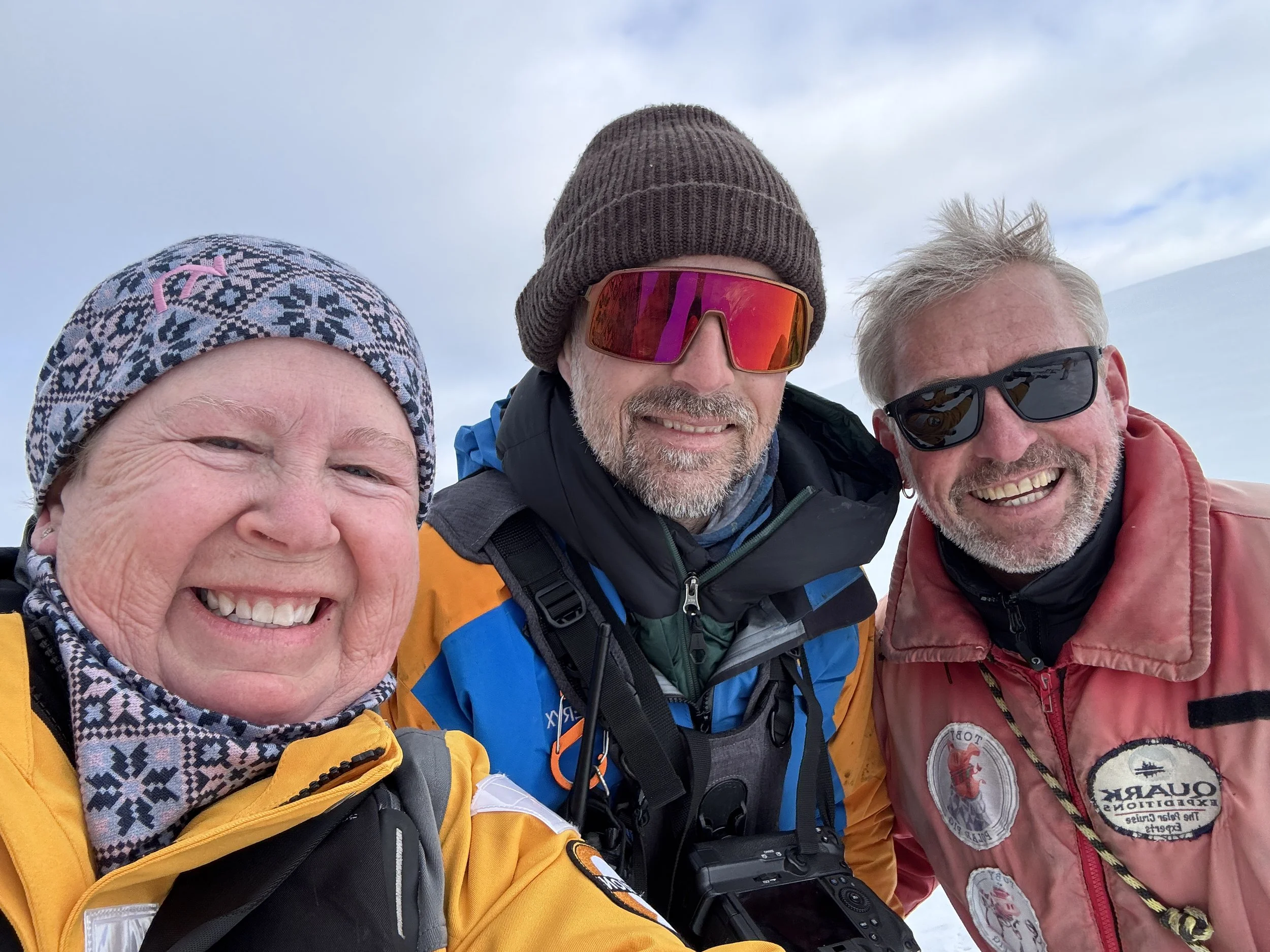
Jules with David Merron and Fabrice Genevois

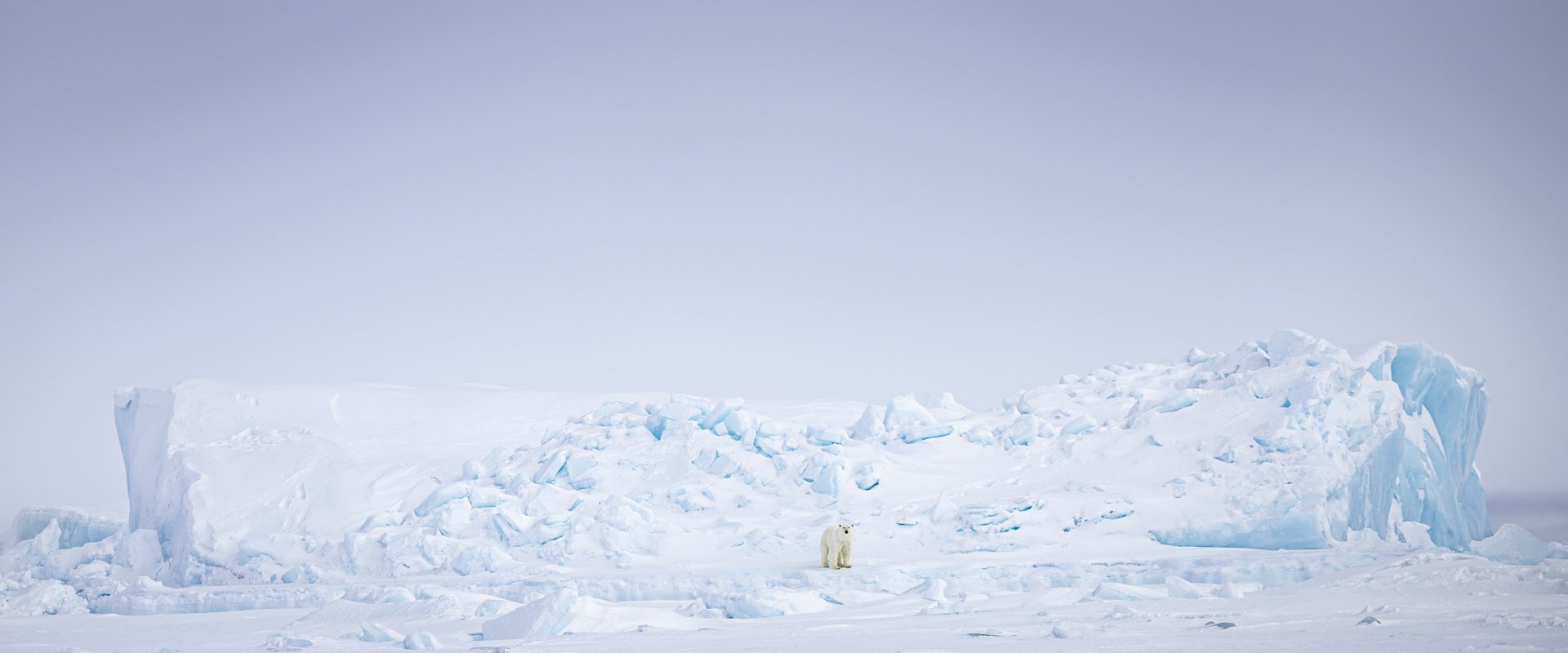
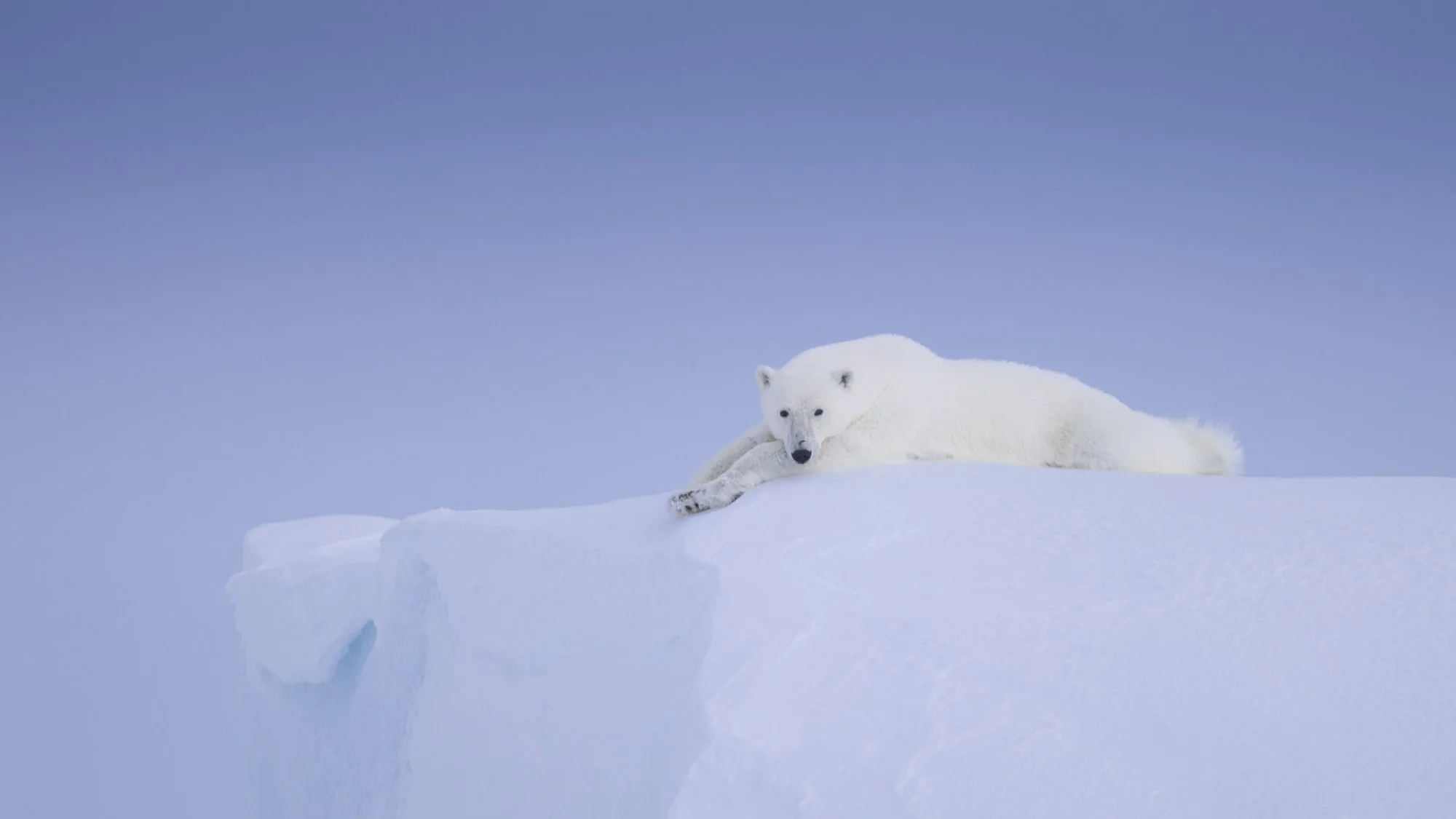
Svalbard, 2009
This was my first sighting of a polar bear taken nearly 20 years ago and I couldn't have asked for a more epic Arctic vista for my first encounter in Svalbard.
✓ Museum archival giclée paper
✓ Hand-signed & numbered by Jules
✓ Certificate of authenticity
✓ 15% to conservation
✓ Worldwide shipping
✓ Free UK delivery
The Full Story Behind The Photo
This was my first sighting of a polar bear taken in Svalbard nearly 20 years ago, yet I still remember it vividly. The excitement onboard our icebreaker the Vavivlov was palpable, especially as the scene itself was so breathtaking. The polar bear looked tiny as it walked along the shoreline framed by the towering glaciers. I couldn’t have asked for a more epic Arctic vista for my first Polar Bear encounter. I’ve had closer sightings of bears in Svalbard, but this image holds a special place for me as one of my favourite “animal in environment” images and reflects why it is so important to not only protect polar bears but also this pristine Arctic environment.
Print Specification
All prints are printed on Canson® Infinity Rag Photographique which is a 100% cotton museum grade white Fine Art and photo paper.
Canson® Infinity Rag Photographique offers a unique extra smooth surface with a sensual feel. It has been developed to address the need for continued longevity requirements in the Digital Fine Art market.
Shipping & Delivery
Delivery is from the United Kingdom and is included free with the purchase of all prints. Delivery is by FedEx, DHL, UPS, or DPD depending on location. Once your order is shipped you will receive an email with your tracking number. Please allow up to two weeks to fulfil your order plus one week for delivery.
Conservation Impact
As with all images in the collections, 15% of the proceeds from each image will be split between four charities- Kicheche Community Trust, Great Plains Foundation, Big Cat Initiative & Sheldrick Wildlife Trust. Learn more about giving back, here.